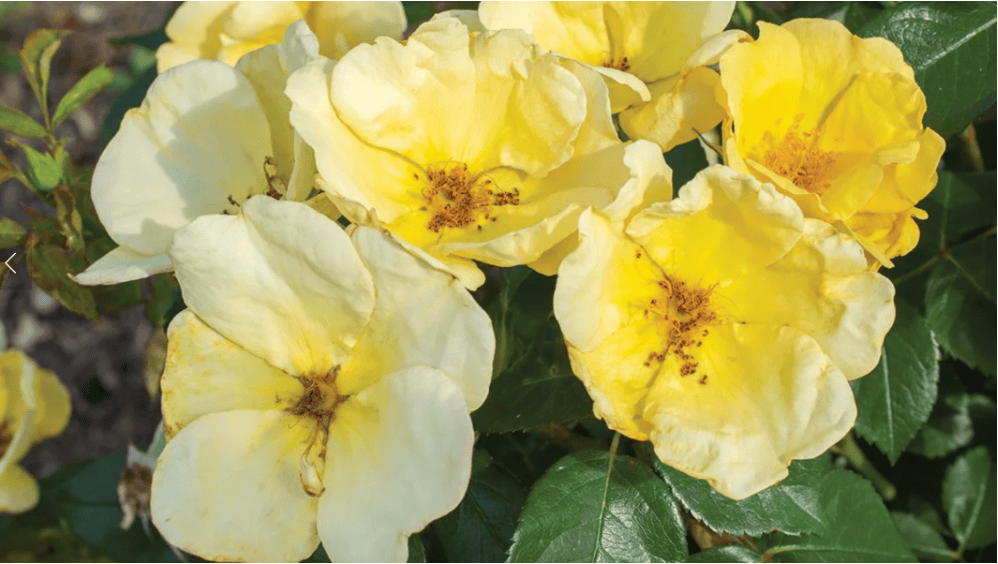
New Horizon Roses 2025
National Editor, New Horizon Roses 2025
Much of the country has seen very hot weather and as I write this, we are not done with June! Rosarians in the Deep South and Southwest select roses suited for hot climates although their roses still suffer some heat damage at this time of year. In the Midwest, Mid Atlantic and Northeast and Northwest, roses have traditionally been selected for cold hardiness instead of tolerance to heat stress. Recent changes in weather patterns over much of the U.S. have led to hotter temperatures which have made heat stress a more universal challenge for rosarians.
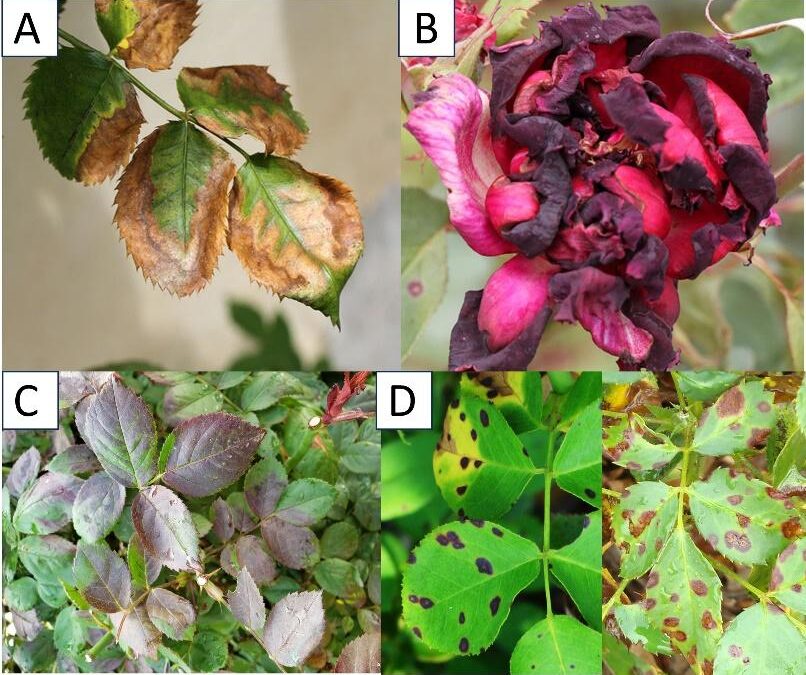
Heat stress can lead to scorched leaves (Fig. A) and blossoms (Fig. B). Scorching is a natural way for the rose to control water loss via transpiration as stomates (let water vapor out of leaves) are permanently closed in scorched areas of leaves. The scorched foliage can be tan to brown and may have a chlorotic border. Prune the scorched leaves and blooms off and pray for cooler weather.
Another form of heat stress is called black leaf. Black leaf is poorly understood but occurs in many rose cultivars. Foliage becomes bronze to black when temperatures are high (Fig. C). Black leaf may be due to a combination of heat, spraying pesticides during hot periods and possibly nutritional interactions. To date, black leaf has received little study by the scientific community although inquiries concerning roses with black leaf have increased in recent years. To remove all the black leaf from a bush in the heat of summer may require substantial pruning.
A disease associated with hot temperatures is Cercospora Leaf Spot (CLS). The disease is caused by the fungus Cercospora rosicola. Infection and subsequent symptoms occur in hot, humid weather. Spots from CLS have black/purple/brown borders and tan to gray centers (Fig. D). Unlike the cool weather disease anthracnose, there are no observable fruiting bodies in the lesion centers. Unlike blackspot that has diffuse borders, lesions of CLS have smooth borders. Plants with CLS can defoliate, but defoliation is not as common with CLS as it is with black spot. Resistance to CLS is available, but is controlled by different genes than those for black spot resistance. Therefore, resistance to one disease does not imply resistance to both diseases. Fungicides can be used and if needed; the ones for black spot control will work for CLS.
Mark Windham was a distinguished professor of ornamental pathology at the University of Tennessee, Knoxville. After retirement, Mark and his wife Karen love to walk beaches, visit with old rose friends, and enjoy grandchildren.
THE ROSE: OUR NATIONAL FLORAL EMBLEM!
June is National Rose Month. What a perfect time to celebrate our National Floral Emblem! Roses have a long and colorful history. Through the years they have been symbols of love, beauty, war and politics. Their beauty, romance, history and versatility is unmatched. She is the “Queen of Flowers!”

A FASCINATING JOURNEY, By Teresa Byington, Rose Chat Podcast, ARS Membership Committee:
It took some time to find just the right flower to be our National Floral Emblem. In 1901, President William McKinley sponsored the red carnation! While we don’t know too much about that, we do know quite a bit about the fight for the marigold. On January 12, 1959, the president of the W. Atlee Burpee Co., David Burpee, wrote to newly-elected Senate Minority Leader, Everett M. Dirksen, proclaiming the virtues of the marigold and calling it “the flower of the people.” David Burpee was vigilant in the fight. He was known for using P.T. Barnum’s model for promotion and advertising – just like his dad! For nearly 10 years Burpee and Dirksen campaigned for the marigold. Ten years is dedication! Many other flowers were considered too … there were even those who strongly suggested that the corn tassel be our national flower.
A ROSE IS A ROSE IS A ROSE: While the debate went on for at least 85 years, we are so pleased with the final decision. In 1986, President Ronald Regan signed a resolution making the rose the National Floral Emblem at a ceremony in the White House Rose Garden…
“Americans have always loved the flowers with which God decorated our land. More often than any other flower, we hold the rose dear as the symbol of life and love and devotion, of beauty and eternity. For the love of man and woman, for the love of mankind and God, for the love of country, Americans who would speak the language of the heart do so with a rose.


We see proof of this everywhere. The study of fossils reveals that the rose has existed in America for age upon age. We have always cultivated roses in our gardens. Our first President, George Washington, bred roses, and a variety he named after his mother is still grown today. The White House itself boasts a beautiful Rose Garden. We grow roses in all our fifty States. We find roses throughout our art, music, and literature. We decorate our celebrations and parades with roses. Most of all, we present roses to those we love, and we lavish them on our alters, our civil shrines, and the final resting places of our honored dead.
The American people have long held a special place in their hearts for roses. Let us continue to cherish them, to honor the love and devotion they represent, and to bestow them on all we love just as God has bestowed them on us.
The Congress, by Senate Joint Resolution 159 has designated the rose as the National Floral Emblem of the United States and authorized and requested the President to issue a proclamation declaring this fact.
NOW THEREFORE, I, RONALD REGAN, President of the United States of America, do hereby proclaim the rose as the National Floral Emblem of the United States of America.”
Thank you, President Regan. It is our pleasure to continue to represent all aspects of the rose. Yes, the rose is in good hands with the American Rose Society and our local societies.
The American Rose Society has scheduled some excellent ways for you to help celebrate June is Rose Month, nationally and at our garden home, the American Rose Center:
1. Join us for a webinar, free of charge: June 28, 2025, 11:00 a.m. – 2:00 p.m.: “Rose Selection in Different Soil and Climate Conditions.” Speaker Matthias Meilland, Sixth Generation Rose Breeder, House of Meilland, France. Since 1935, the House of Meilland has tested its varieties on both sides of the Atlantic. When Robert Pyle came to see the young Francis Meilland in France, in 1933, he told him to learn English and go see his varieties abroad. Francis did and traveled to the US in 1935. Since this era, the Meilland breeding team has traveled the world to see how their new seedlings were performing in different climate and soil conditions. These 90 years of data from Pennsylvania, California, Spain, Germany and France, produced varieties such as ‘Peace’, ‘Bonica’, ‘Eden Rose’ and ‘Papa Meilland’ and also incredible performers such as the “Drift” roses and many of the mid-western performing Hybrid Teas that embellish your gardens. We will dive into the selection program, see the winners and losers and we might even take a peek into the future of roses!
2. Besties, Bubbly and Blooms, June 12, 6:30-8:30 p.m., $60: Grab your bestie and come have some girl dinner (charcuterie) and bubbly & make floral arrangements with Heather Zahn from Flower Power as we celebrate National Red Rose Day! All this included and more for $60. Limited spots are available! Get your tickets by the 10th! The gardens are blooming, friendship is in the air, come celebrate with us.
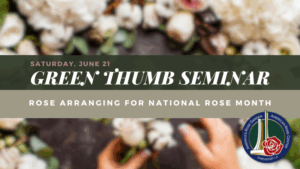
3. Green Thumb Seminar, Saturday June 21, 2025, 10:00 a.m. to 2:00 p.m., $40: Elevate your skills as a flower arranger. Experienced rosarians will provide hands-on instructions on how to arrange roses using American Rose Society standards for a beautiful bouquet. All materials will be provided. Price includes lunch. Attendees must register to attend:
The Rose is the National Floral Emblem and there are so many ways to enjoy roses:
1. Plant a rose bush! Need help? Go to www.rose.org to learn more.
2. Share your roses at nursing homes, hospitals, banks and your local library. You’ll brighten someone’s day! Encourage your local library to have a rose book display.
3. Give roses to show your love or friendship. Roses are a favorite gift to receive.
4. Give the gift of an American Rose Society membership. Go to www.rose.org to learn more.
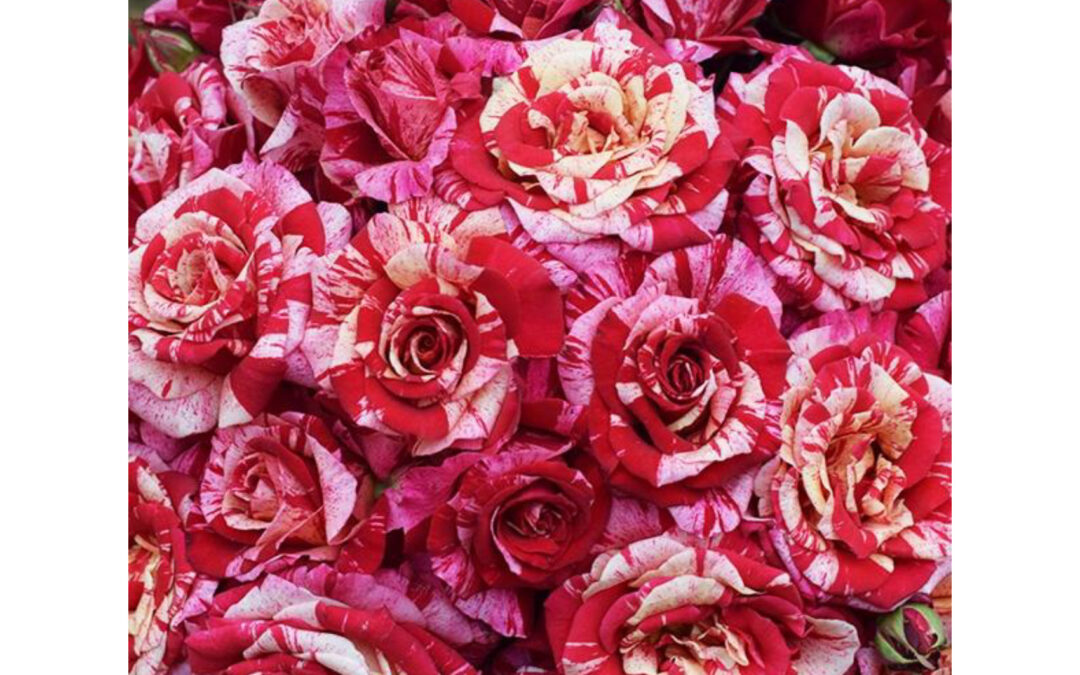
5. Give a gift of a rosebush for a longer-lasting gift. There are so many different kinds of roses to choose from with an endless variety of colors, including stripes.
6. Visit a botanical garden or a rose garden. You might find inspiration to start your own rose garden.
7. Take photos of your roses and share with friends in cards, notes and letters. Share with the ARS on our many social media platforms and be sure to tag us, #roses, #nationalfloralemblem:
facebook.com/RoseSociety | @AmericanRoseSociety
Media Contact: Emily Hamann, Communication Specialist, emily@rose.org, (318) 938-5402 ext. 109
About the American Rose Society: The American Rose Society is a non-profit, educational organization founded in 1892 to promote the culture, preservation and appreciation of the rose and to improve its standard of excellence for all people through education and research. Its headquarters is located in Shreveport, Louisiana, at the American Rose Center, home of “America’s Rose Garden.”
About the American Rose Center: The American Rose Center was established in 1974 and serves as the national headquarters site for the American Rose Society. “America’s Rose Garden” is the largest public garden in the United States dedicated to roses.
2024 New Rose Introductions

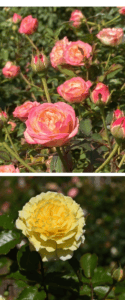
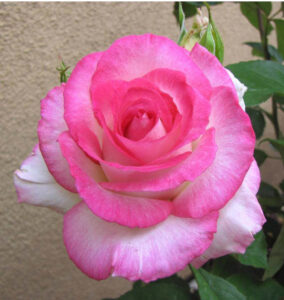
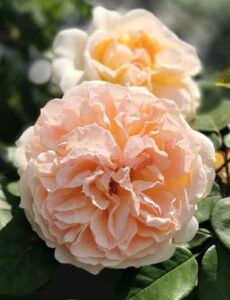
Color: White edged with pink picotee
Class: Hybrid Tea
Plant Habit: Medium-tall
Growth Habit: Upright moderately spreading
Stem Length: Medium-long
Foliage Color: Dark glossy green
Disease Resistance: Good
Bud Form: Shapely pointed
Flower Form: Classically formed, spiraled & double
Flower Size: Medium-large, around 3½-4½ inch diameter, mostly single some in small clusters
Petal Count: 25 to 35
Fragrance: Moderate fruity & citrus
Parentage: Secret x Lynn Anderson
Hybridizer: Christian Bédard
Introducer: Weeks Roses

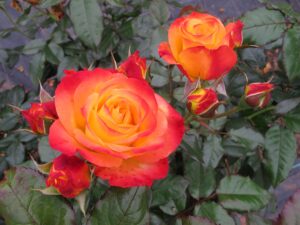
Classification: Floribunda
Color Description: Bright Orange-Red
Descriptive Characteristics: Compact size, bright blooms, and superb disease resistance – everything you expect from a Brick House® rose! The punchy orange flowers do not fade and look great in the landscape or in a patio container.
Bloom Size: 1.5 inches
Petal Count: 18-20
Fragrance: None
Height/Habit: 2.5′ Tall by 2.5′ Wide
Parentage: ‘KORSCHWILL’ x (‘NOACAS’ x UNNAMED SEEDLING)
Hybridizer: The House of Meilland®
Introducer: Star® Roses and Plants

Classification: Shrub
Color Description: Maroon
Descriptive Characteristics: Celestial Blue Sky lights up landscapes as a compact, low-growing, profusely blooming rose with deeply colorful semidouble flowers. Thanks to its dense foliage and mass of 2.5” blooms, Celestial Blue Sky can display serious, beautiful star power in the garden as a full, spicy fragrant, floriferous low hedge. Grows to 3 feet high and wide and shows excellent disease resistance.
Bloom Size: 2.5 inches
Petal Count: 15
Fragrance: spicy
Height/Habit: 3×3 feet
Parentage: Lavender seedling x Super Hero
Hybridizer: Ping Lim
Introducer: Altman Plants

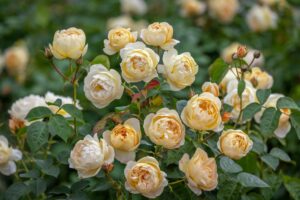
Classification: English Shrub Rose bred by David Austin”
Color Description: Apricot”
Descriptive Characteristics: Compact and shapely growth creates an upright and bushy shrub that flowers with great verve. This rose is full of character, who is happy to thrive in containers, against walls or fences and in shadier areas making it the perfect rose for city dwellers and modern living.
Bloom Size: Medium
Fragrance: Medium, Fruity
Height/Habit: 3 1/2 feet
Parentage: Unnamed seedling x Unnamed seedling
Hybridizer: David Austin
Introducer: David Austin

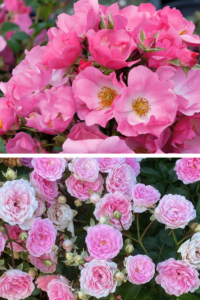
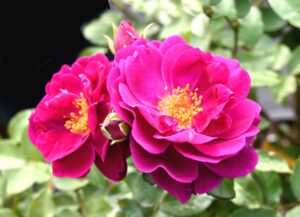
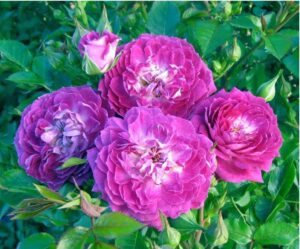
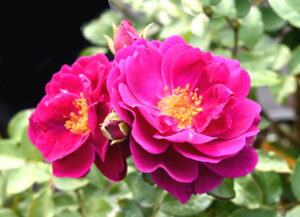
Color: Fragrant Fuchsia Lavender Old-Fashioned Miniature
Class: Miniature
Plant Habit: Tall for the class
Growth Habit: Very even bushy upright and rounded
Stem Length: Medium-short
Foliage Color: Dark glossy green
Disease Resistance: Excellent
Bud Form: Ovoid & globular
Flower Form: Cuppy old-fashioned, full & very double
Flower Size: Medium-large for the class, around 1½-2½ inch diameter, mostly in small clusters
Petal Count: 55 to 85
Fragrance: Strong citrus & fruity
Parentage: Life of the Party x Diamond Eyes
Hybridizer: Christian Bédard
Introducer: Weeks Roses

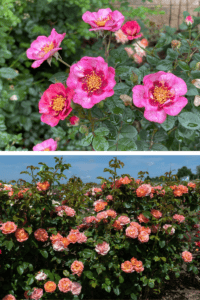
6. OSO EASY EN FUEGO® ‘Chewizard’ PPAF; CBRAF
Classification: Shrub
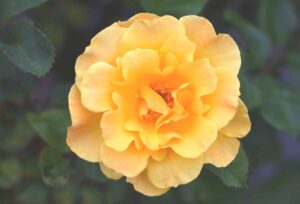
Color Description: Yellow/red/orange
Descriptive Characteristics: Oso Easy En Fuego® rose graces the
garden with intensely colorful flowers that start off yellow and red and fully open to an electric orange. The large flower size and glossy green foliage make the effect especially memorable. Exhibits outstanding disease resistance and is very adaptable to both cold and hot climates. USDA Zone 4 – 9 (-30°F/-34°C)
Bloom Size: 3.25
Petal Count: 17-25
Fragrance: Light
Height/Habit: 3-4′
Parentage: Unknown
Hybridizer: Chris Warner
Introducer: Spring Meadow Nursery/Proven Winners® ColorChoice®

Classification: Floribunda
Color Description: Orange
Descriptive Characteristics: Firefly is a prolific floribunda whose abundant orange double blooms positively glow from spring to fall against a backdrop of healthy glossy green foliage. The fragrant 2.5” flowers feature 25 petals, blooming continuously and aging nicely all season. Grows to 4 feet high and wide and demonstrates outstanding disease resistance. A 2025 American Garden Rose Selections® winner: the Regional Choice Award in four regions and Fragrance Award.
Bloom Size: 2.5 inches
Petal Count: 25
Fragrance: Sweet fragrance
Height/Habit: 3×3 feet
Parentage: Seedling x Seedling
Hybridizer: Ping Lim
Introducer: Altman Plants

Class: Shrub
Color Description: Light pink
Characteristics: Flavorette Pear’d rose creates delicate pink flowers that have a distinctive light pear flavor, and a lush, soft texture that’s lovely to eat. The semi-double flowers are borne on a sturdy, healthy plant that’s easy to grow. USDA Zone 4-8 (-30°F/-34°C)
Bloom Size: 3.25”
Petal count: 26-40
Fragrance: Mild, fruity, spice, sweet fragrance
Height/Habit: 3-4′, bushy, compact, upright
Parentage: Unknown
Hybridizer: Pheno Geno
Introducer: Spring Meadow Nursery Proven Winners® ColorChoice®

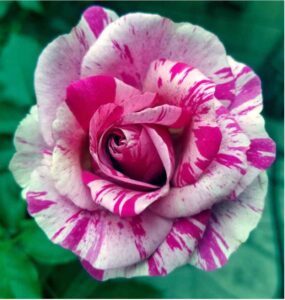
Color: Magenta, Pink & White striped
Class: Climber
Plant Habit: Large for a Climber, long canes of 10-12 feet
Growth Habit: Climbing & spreading
Stem Length: Medium-long
Foliage Color: Dark glossy green
Disease Resistance: Very Good
Bud Form: Pointed & ovoid
Flower Form: Spiraled, cuppy & double
Flower Size: Medium-large, around 3½-4 inch diameter, in medium-sized clusters
Petal Count: 20 to 35
Fragrance: Moderate fruity
Parentage: {seedling x (Blueberry Hill x Stephen’s Big Purple)} x (Candy Land x Rainbow Knock Out)
Hybridizer: Christian Bédard
Introducer: Weeks Roses

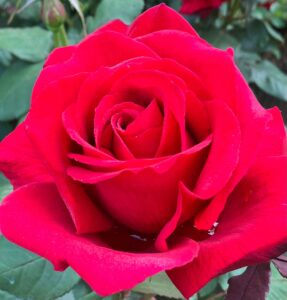
Class: Hybrid Tea
Color Description: Bright Red
Characteristics: Large red HT, upright habit, of growth with long stems supporting 4-5 inch blooms. Classic exhibition form, repeat bloomer and strong fragrance. Semi-glossy foliage and hardy up to zone 5. A seedling cross from ‘Mrs Lincoln’ and ‘Luce de Todi’.
Bloom Size: 4-5”
Petal count: 21
Fragrance: Strong
Height/Habit: 3 to 4′
Parentage: Mrs Lincoln x Luce de Todi
Hybridizer: J. Benjamin Williams
Introducer: J. B. Williams and Associates

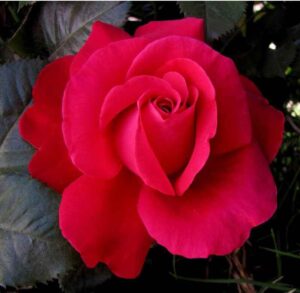
Color: Medium even Red
Class: Hybrid Tea
Plant Habit: Medium-tall
Growth Habit: Upright slightly spreading
Stem Length: Medium-long
Foliage Color: Dark very glossy green
Disease Resistance: Good
Bud Form: Shapely pointed
Flower Form: Spiraled, cuppy & double
Flower Size: Medium-large, around 4-5 inch diameter, usually single
Petal Count: 30 to 45
Fragrance: Moderate fruity
Parentage: All My Loving x Drop Dead Red
Hybridizer: Christian Bédard
Introducer: Weeks Roses

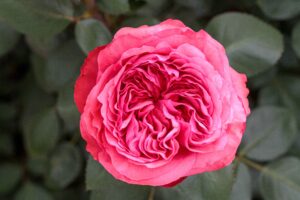
Classification: Hybrid Tea
Color Description: Deep Pink
Descriptive Characteristics: This gorgeous, deep pink Hybrid Tea has a strong, sweet fragrance reminiscent of lilac, gardenia and pineapple. Each enormous, 5-inch bloom is bursting with over 200 petals. You’ll have a hard time finding a rose with a fuller bloom!
Bloom Size: 5-5.5 inches
Petal Count: 150-250
Fragrance: Strong; Pineapple, Gardenia and Lilac
Height/Habit: 5′ Tall by 2-3′ Wide
Parentage: (‘GOLDEN UNICORN’ x ‘DELGE’) x (‘MEIMALYNA’ x ‘HARLEX’)
Hybridizer: The House of Meilland®
Introducer: Star® Roses and Plants

Class: Hybrid tea climber
Color Description: Dark red with pink striping
Characteristics: Rose is named for Phoebe Adelle Gates by Arthur Donald. She is an entrepreneur, activist and philanthropist. Flowers bloom single and in group of three buds. Dark green foliage and prolific repeat bloomer. Long bloom season and disease resistant
Bloom Size: 4-4 1/2”
Petal count: 20-25
Fragrance: slight
Height/Habit: 8′-10′
Parentage: Fourth of July x Angel Face
Hybridizer: Burling Leon
Introducer: Burlington Rose Nursery

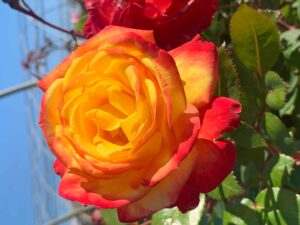
Classification: Floribunda
Color Description: Deep Yellow, Largely Suffused with Orange and Finishing a Deep Velvet Red.
Descriptive Characteristics: As the name suggests, this rose adds a striking multicolor effect to the garden. Abundant non-fading blooms emerge deep yellow before transitioning though flaming shades of orange and deep velvet red.
Bloom Size: 3 inches
Petal Count: 20
Fragrance: None
Height/Habit: 4.5′ Tall by 2-3′ Wide
Hybridizer: KORDES
Introducer: Star® Roses and Plants

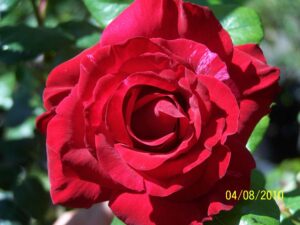
Classification: Grandiflora
Color Description: Deep Red
Descriptive Characteristics: This Grandiflora Rose has double, non-fading red blooms that do not burn, even in high temperatures. It has high disease resistance, wonderful repeat blooming, and a lovely mild fragrance.
Bloom Size: 3 inches
Petal Count: 95
Fragrance: Slight
Height/Habit: 5′ Tall by 2-3′ Wide
Hybridizer: KORDES
Introducer: Star® Roses and Plants

Color: Coral Pink
Class: Floribunda
Plant Habit: Medium-tall
Growth Habit: Upright moderately spreading
Stem Length: Medium
Foliage Color: Dark glossy green
Disease Resistance: Very Good
Bud Form: Pointed & ovoid
Flower Form: Elegant, spiraled form & very double
Flower Size: Medium-large, around 3½-4½ inch diameter, some single, mostly in small clusters
Petal Count: 45 to 65
Fragrance: Slight fruity
Parentage: All a’Twitter x Be My Baby
Hybridizer: Christian Bédard
Introducer: Weeks Roses

Classification: Climber
Color Description: Apricot
Descriptive Characteristics: True Adoration is a vigorous landscape climber packed with sweetly scented double flowers. Soft apricot in color and 3.5 inches across, they embody classic English rose elegance, succeeded by more 35+ petal flowers all season long. The healthy glossy green foliage shows outstanding disease resistance. Grows to 6 to 7 feet high and 3 feet wide.
Bloom Size: 3.5 inches
Petal Count: 35+
Fragrance: sweet fragrance
Height/Habit: 6-7 feet taller shrub to climber
Parentage: Seedling x Westerland
Hybridizer: Ping Lim
Introducer: Altman Plants

Classification: Floribunda
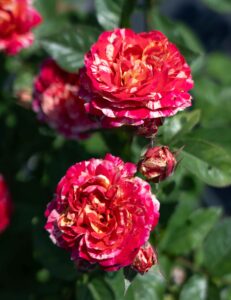
Color Description: Cherry Red to Fuchsia with Yellow Stripe
Descriptive Characteristics: Earning your stripes is easy with this rose: just plant and enjoy! Each bloom offers a spectacular palette of cherry red and fuchsia petals striped with yellow. A compact and vigorous Floribunda.
Bloom Size: 2.5 inches
Petal Count: 12 to 15
Fragrance: Very slight
Height/Habit: 2′ Tall by 2′ Wide
Parentage: MEIGELSI X (KORFALT X UNNAMED SEEDLING)
Hybridizer: The House of Meilland®
Introducer: Star® Roses and Plants
The American Rose Society offers numerous educational opportunities including monthly webinars on a variety of topics. Pat Shanley, Chair of the Webinar Committee, has put together an exciting line up with speakers from around the world. These webinars are provided free of charge for all American Rose Society members. There is a $5 fee for all others interested in attending a webinar. Questions about registering for webinars should be directed to Tanya Cole at Tanya@rose.org or 318-938-5402, ext.108.
SAVE THE DATE FOR THESE FUTURE PROGRAMS:
About the American Rose Society: The American Rose Society is a non-profit, educational organization founded in 1892 to promote the culture, preservation and ap- preciation of the rose and to improve its standard of excellence for all people through education and research. Its headquarters is located in Shreveport, Louisiana, at the American Rose Center, home of “America’s Rose Garden.”
About the American Rose Center: The American Rose Center was established in 1974 and serves as the national headquarters site for the American Rose Society. “America’s Rose Garden” is the largest public garden in the United States dedicated to roses.
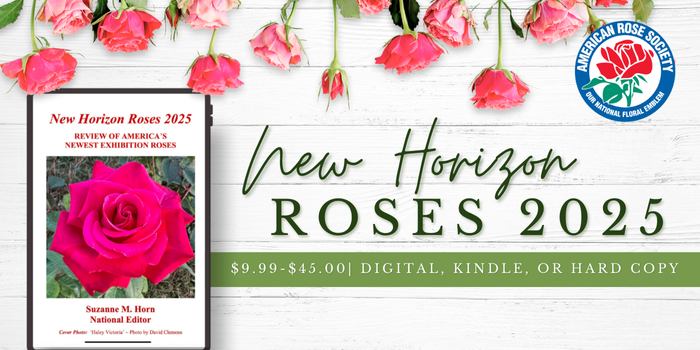
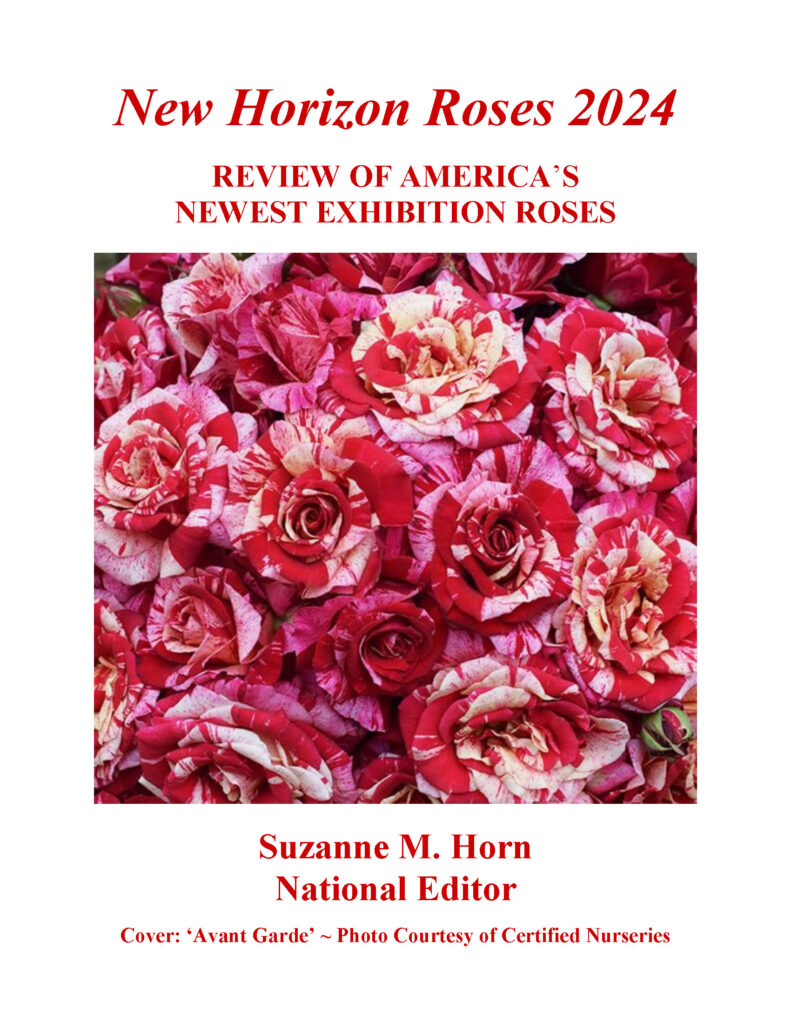
New Horizon Roses 2024 is now available for purchase in a few different formats from ARS and Amazon.
All proceeds from New Horizon Roses 2024 are generously donated to the American Rose Society by the
editor, Suzanne Horn.

Now in its 42nd year, the 2024 edition contains 1,601 reports by 110 reporters from 28 different states.
The reports comment on the exhibition potential of 379 roses introduced in the last five years including
hybrid teas, grandifloras, floribundas, polyanthas, minifloras, miniatures, shrubs, and climbers.
Supplementing the comments are color photographs of 320 roses. The reports are presented alphabetically
and include information on known sources for the reviewed varieties. This edition also contains a new
section on “Sneak Peeks” of new roses from some of our top hybridizers.
• A downloadable PDF is available on the ARS website at the following link: https://bit.ly/3ZKca5C
• A large glossy paperback book edition is available on Amazon for $31.37 (22% off) by typing “New
Horizon Roses 2024” into the search bar or clicking on this link: https://bit.ly/3BApJue
• A Kindle edition is also available on Amazon for $9.99 by typing “New Horizon Roses 2024” into the
search bar and then clicking on the Kindle option.
You won’t want to buy any roses this fall without consulting the findings of our trusty New Horizon
Roses national reporters.

Over fifty years ago, in 1948, Ralph Moore began a program to breed and develop everblooming miniature moss roses. He had no idea about what he was actually letting himself in for. Fifteen years passed before he saw much in the way of real results and another 10 years after that before he would have any new miniature moss roses to sell to the public. Today, there are a number of miniature moss roses on the market, most are from Ralph Moore but some from other breeders as well. As they gain in popularity, we thought you might like to find out a little bit more about them.
Older Moss Roses
The original Moss Rose, a sport from Rosa centifolia, created quite a stir when it was first introduced in the early 1700′s. It was similar in appearance to R. centifolia except for numerous small glands on its flower buds and upper stems which create a mossy effect. The glands are scented and add to the fragrance of the flowers. If you touch the moss it feels sticky and leaves its scent on your fingers. This “moss” varies with each variety and may have its own distinctive fragrance.
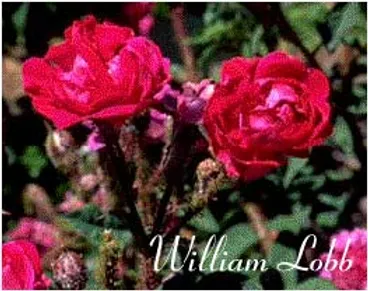
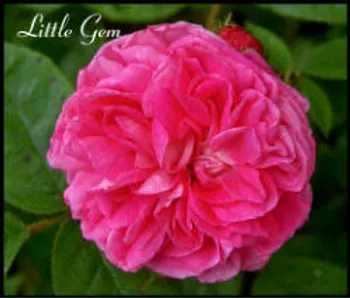
Great things were predicted for Moss Roses. It is estimated that several hundred varieties were introduced, but today only a few are still grown. In size they range from dwarf varieties like Little Gem and Mousseline to tall pillar roses like Jeanne de Montfort and William Lobb, both of which are capable of reaching 8 feet.
When Little Gem was introduced in 1880, its raiser, William Paul, actually described it as a miniature Moss Rose. This, in spite of the fact that it can grow to 3 to 4 feet and has blossoms that are about 3 inches across. The bush is densely covered with small, double crimson flowers with an old-fashioned look. It was very popular with the Victorians.

Mousseline (also known as ‘Alfred de Dalmas’) is a continuous-blooming Moss Rose that was also very popular. The fragrant creamy-pink blossoms are semi-double with a center of deep golden stamens.
Graham Stuart Thomas tells us that Jeanne de Montfort, one of the most vigorous Moss Roses, apart from William Lobb, boasts burgundy-colored moss and frilly clear pink flowers.
William Lobb (‘Duchesse d’Istrie’, ‘Old Velvet Moss’) was introduced in 1855 and is still one of the most popular Moss Roses both because of its large size and the color of its flowers. Peter Beales describes the flowers as “a mixture of purple, grey, magenta, and pink…”
During the better part of the 18th century and up until the close of the 19th century moss roses were very popular because they were unusual, hardy, and fragrant. However, they are difficult to breed — they set few or no hips and produce little, if any, pollen.
In spite of this, several modern varieties have been bred. Nearly all are tall growing, spring flowering and not too different from the old Moss Roses. From Mr. Moore’s point of view, of these Golden Moss and Gabriel Noyelle were the most significant.
Golden Moss (Moss, Dot, 1932) resulted from a cross of Frau Karl Druschki x (Souv. de Claudius Pernet x Blanche Moreau). Ralph Moore has used this rose extensively in his breeding program. In growth habit, it is similar to its seed parent, Frau Karl Druschki, a large, white Hybrid Perpetual. Its other parent is the product of a cross between Souv. de Claudius Pernet, a yellow Hybrid Tea, and Blanche Moreau, a white Moss. Golden Moss has well-mossed buds and its flowers are a soft peach-yellow. It is once-blooming.
The parents of Gabrielle Noyelle (Moss, Buatois, 1933) are Salet, a pink Moss, and Souv. de Mme. Krueger, a salmon-orange Hybrid Tea. Gabrielle Noyelle has well mossed buds, soft salmon-pink flowers, and it is repeat-blooming.
Ralph Moore’s Early Successes
Ralph Moore’s first successful Moss rose was O.M. (“Orange Moss”). To obtain it, he crossed Mark Sullivan (Hybrid Tea, Mallerin, 1942, and which Stirling Macoboy in The Ultimate Rose Book, describes as “a lovely blend of gold all veined and shaded with scarlet”) with Golden Moss. All of the resulting seedlings were tall-growing (8 ft. to 10 ft.) once-bloomers and only one of them was really mossed. That was O.M. It has flowers that change from a bright orange to orange-pink as they mature. Although it sets few hips, it produces pollen abundantly.
In order to recover the repeat blooming characteristic, Mr. Moore had to make many more crosses with O.M. as the pollen parent and hybrid tea and floribunda varieties as the seed parent. But in doing so much of the Moss was lost.
Goldmoss (Floribunda/Moss, Moore, 1972) is Ralph Moore’s first clear yellow bush type everblooming moss rose. [Ed. Note: Modern Roses 10 lists it as a Floribunda.] Mr. Moore crossed a yellow Hybrid Tea seedling with O.M. which resulted in a number of yellow and orange-colored moss roses. Nearly all were tall growing once-bloomers. He took one of the best of these, a clear yellow, and crossed it with the floribunda Rumba (Poulsen, 1958). Goldmoss was the result.

Rougemoss (Floribunda/Moss, Moore, 1972) resulted from a cross of Rumba with an unnamed seedling itself descended from Pinocchio (Floribunda, Kordes, 1940), William Lobb, Red Ripples (Floribunda, Krause, 1942), and O.M. This cross produced a number of bush moss roses in colors ranging from medium pink to red and orange red.

In his 1978 monograph entitled The Breeding and Development of Modern Moss Roses, Ralph Moore said that he believed that Rougemoss and Goldmoss had within their gene pools the makings of the new moss roses of the future. Since that time, Goldmoss has figured in the parentage of a number of roses, like Apricot Twist, Playgold, and Yellow Mini-Wonder, to name a few. But most of these offspring have not displayed any mossing. One exception is Paintbrush (Miniature, Moore, 1975), the product of a cross with Fairy Moss. This rose has mossy apricot-yellow buds which open into 10-petaled daisywhite flow.
Miniature Moss Roses Today
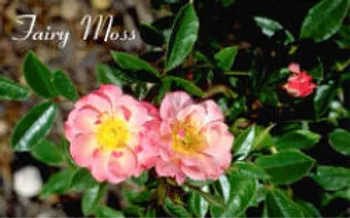
Fairy Moss is the first of Ralph Moore’s repeat-blooming miniature moss roses. It was introduced in 1969. It had taken over two decades of work to reach this point! The buds, which are lightly mossed, and flowers of this rose are a bright medium pink and it sets seed readily. Fairy Moss has proven to be a fertile parent. In fact, it has figured in the parentage of just about every miniature moss rose on the market today.
To give you an idea of the range of the miniature moss roses, here is a sampling. All of these roses are repeat-blooming and to lesser or greater degrees show mossing.
Kara (Moore1972, aka ‘Dear One’) is the result of a cross of Fairy Moss x Fairy Moss. Mossy buds open into single (5 petals), 1-1/4″ rose-pink flowers. It makes a low, very compact plant that covers itself with tiny very mossy buds borne singly and in clusters.
Dresden Doll (Moore 1975) is one of the better known miniature moss roses — it’s offered by nurseries in Canada and Europe, as well as the United States. It has heavily mossed buds which open into double soft pink fragrant flowers that Stirling Macoboy in The Ultimate Rose Book describes as “perfect replicas of an old-fashioned, full-sized Moss Rose.”

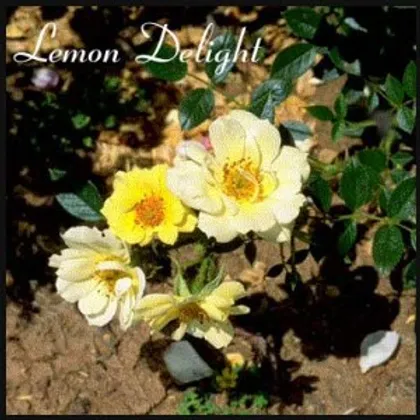
Lemon Delight (Moore, 1978), like Paintbrush, is the result of a cross of Fairy Moss and Goldmoss. As you may have surmised from the name, the flowers are lemon-yellow in color, but the moss on the buds smells like lemon, too!
Strawberry Swirl (Moore 1978) has 48 red-and-white-striped petals. The blossom is similar in its striping to ‘Rosa Mundi’, but formed like a Hybrid Tea.
Double Treat (Moore 1986) has mossy buds that open into rosy-red and orange-yellow striped, almost hand-painted, blossoms — each one unique.
Scarlet Mosstm (Moore 1988) has been described as outstanding and the reddest of any moss rose. It descends from the red climber, Dortmund (Kordesii, Kordes, 1955), crossed with a miniature moss seedling and a striped miniature moss seeding.

Secret Recipe (Moore 1994), the offspring of the yellow floribunda, Little Darling, and an unnamed seedling, has 2-inch red-and-white striped blossoms.
The Miniature Moss Rose Story continues in Part II with an in-depth look at Crested Sweetheart, a climber that Mr. Moore introduced in 1988. The flower is old-fashioned in appearance with wonderful mossing ala Chapeau de Napoleon on its buds.
Master Rosarian, NCNH
ARS Past President
This article is a 2009 Award of Merit winner.
Roses & You, June 2020
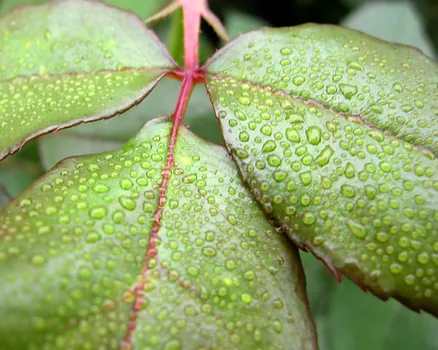
Your roses are actively growing now and pushing out leaves – burgundy, dark green, light green, shiny – clean new leaves. The leaves are more than just lovely foliage that covers the plant and keeps the sun from burning the tender bark of the stems.
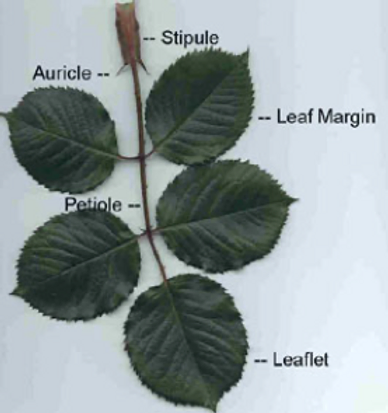
Leaves provide the surface area needed for the rose to collect sunlight and conduct photosynthesis, which produces food for the plant. Rose leaves are described as “pinnate” – that means there is a central rib and then leaflets off to each side, with one terminal leaflet. Rose leaves can have 2, 3, 5, 7, 9, 11, 13 leaflets. Most modern roses have a 5-leaflet leave with perhaps a few 3-leaflet leaves close to the bloom.

The leaves grow on alternate sides of the stem. There is a short, broad blade called the stipule at the base of the long “rib” which is the petiole. The stipule often has two long projections called auricles. Some auricles are curly, some are straight. The leaflets themselves are attached to the petiole (the “rib”) by short petiolels.
Have you noticed that roses have different shaped leaflets? Some are very oval, others are long and slender, and you can find leaflets on some roses that are just about round. The shape of the leaflets are a good identifier for some roses.
Then there are the edges of the leaflets. The edge is called the leaf margin. The margin can be smooth, slightly saw-toothed, or even very deeply saw-toothed. This is another identifier.
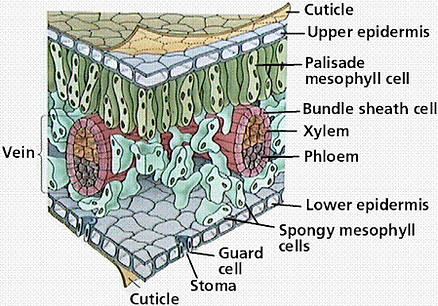
Leaflets have a thin, protective layer of cells on the upper and lower surface, called the epidermis. Some leaflets also have a glossy coating on top called a cuticle. This helps prevent fungus disease organisms from puncturing the skin of the leaf and getting inside. Just beneath the epidermis are thickly packed palisade cells which contain chlorophyll. On the bottom of the leaflet, the palisade cells have big gaps between them so water vapor, carbon dioxide and oxygen can move around. There are guard cells on the epidermis that can close the opening (the stomate) to these open area so nothing gets in or out.

The inside of the leaflet is a spongy mass of cells used for storage and transporting food. Running through the middle of this area are the “veins” which are vascular bundles – the same xylem and phloem that we find in the stems. These transport water and food.
Leaves are a ‘service organization’ for photosynthesis, respiration and transpiration – a veritable HMO for your rose.

PHOTOSYNTHESIS
Photosynthesis happens when the green leaves produce nutrients (carbohydrates). When there is sunlight and chlorophyll present, the leaves convert carbon dioxide (CO2) and water (H2O) into carbohydrates (C6H12O6). No Atkins diet for these guys!! These carbohydrates are simple sugars – that’s why sap tastes slightly sweet! Oxygen (O2) is left over and released into the atmosphere. Without green plants getting rid of excess oxygen – we wouldn’t have breathable air on this planet.

RESPIRATION
Once the carbohydrates are created in the leaves, they are moved around in the plant and broken up into other compounds by enzymes within the cells. This releases chemical energy which is used in many other cell processes. Water and carbon dioxide are also released. The rate of respiration depends on temperature and the availability of oxygen and the simple carbohydrates. Respiration speeds up when it is warm and slows way down when it gets cold. But – – it never stops! The plant is continually feeding off of the chemical energy created during respiration. Parts of the plant that are cut off or harvested – like a long-stemmed rose – still respire!
So – photosynthesis makes the food (the simple carbohydrates), and respiration consumes the food. This goes on in a cycle. The photosynthesis part happens in the day when there is light and it peaks during midday and ceases at night. Meanwhile, respiration occurs 24/7, at variable rates depending on temperature. In order for the bush to grow and develop normally, photosynthesis must occur at a rate that greatly exceeds the rate of respiration.
TRANSPIRATION
Water moves through the plant, going from an area of high water concentration (like the roots) to areas of low water concentration (like the leaves and stem tips). Water evaporates from the leaves through the stomata on the underside of the leaves. A continuous flowing column of water is maintained in the xylem from root to stomata, as long as there is water in the soil and the stomata are open. Transpiration helps to cool the rose bush on hot days, and transports minerals and organic compound from the roots to the leaves. It stops at night when the stomata close up.

Your rose is a living, breathing (in the sense that oxygen and carbon dioxide are exchanged during the life processes) food producing machine that relies on YOU to supply water and adequate minerals and organic compounds to the roots so its leaves can do their job of producing energy for the life processes of the plant. You are responsible – after all, your rose can’t borrow the keys and drive to the nursery to shop for nutrients!
Found in nearly every state across the U.S., rose downy mildew has been a serious problem over the past two decades. Here are some tips on cultural practices and fungicides used to control the pathogen.
During the past 20 years, rose downy mildew has become a serious problem, causing significant losses to growers almost every year. The disease has been found in nearly every state across the United States (and Canadian provinces). It does not occur each year since conditions that promote it are not always present.
Various downy mildew diseases can occur on many plants (including roses) in the nursery or landscape, but not all of these are caused by the same pathogen. The downy mildews on most vegetables and flowers are distinct — they do not cross from one plant to another as a general rule, unless the disease hosts are from the same plant family. The cause of rose downy mildew is Peronospora sparsa, which also attacks certain cane berries (blackberry and raspberry) and all types of roses, both wild and cultivated.
Although it may seem that your bare-root roses come with downy mildew, they may be infected from other sources. Roses in landscapes or natural areas around your production site, as well as crop material left over from previous seasons, are likely sources of a downy mildew outbreak. The spores can live in these roses in a dormant state only to become active when the cool, wet weather of late winter and early spring occurs. Be sure to check last year’s roses carefully for signs of downy mildew just as often as you check those in this year’s production. If you are not checking frequently, your first indication of trouble may be extensive leaf drop!
Symptoms
Rose downy mildew is remarkably variable. In the past 20 years the most common symptom has been angular, tan spots with a very small amount of white crystalline sporulation on leaf undersides. The name of the pathogen —Peronospora sparsa — reflects the sparse production of white spores. Sometimes collapsing buds or cankers form on newly emerging rose canes. Different species and cultivars of roses respond differently to downy mildew, making a diagnosis very difficult. Severe leaf drop is common on some cultivars.
Tiny speckles may form that are tan or even bright pink. Such symptoms are difficult to distinguish from early infections with Botrytis, powdery mildew or even rust. Under moist conditions, leaves turn brownish or yellow and drop. A white, downy fungus growth may occur on leaf undersides, but this is usually too hard to see without a microscope. Under drier conditions, leaf spots appear as brown burned areas, mimicking spray injury. Reddish streaks or sunken cankers can also occur on rose canes. Since similar cankers can be caused by other pathogens like Botrytis and Coniothyrium, it is a good idea to have canker symptoms diagnosed by a university or private lab. Sometimes downy mildew sporulation can be observed directly on discolored spots on canes if they are first incubated at a high humidity for a few days.
Cultural Control
Symptoms can appear almost overnight and a severe outbreak can take off if you do not act preventively. Fans and wind easily move spores from plant to plant but are your best allies in preventing downy mildew outbreaks, since they improve air circulation around plants, dry leaves rapidly and reduce relative humidity. Downy mildew weather is cool to warm, humid and rainy. Wet leaves and high humidity will trigger sporulation overnight. When the sun comes up, leaves start to dry and spores are released. Most spores spread by fans or wind and infect new leaves before noon. Six hours of constant leaf wetness are enough for spores of many downy mildew fungi to germinate and infect leaves. Even though fans might move spores, you should use them along with venting to reduce humidity and leaf wetness. Try to water early in the day or whenever leaves will dry quickly, to ensure dry foliage at night. Check all new plants for symptoms upon receipt. Early detection is the only way to control downy mildew. Scout all plants at least once a week, preferably every two to three days. Remember: hungry plants are more susceptible to downy mildew. Maintain a balanced fertility program to protect your crops.
The cultural steps that should be taken when growing garden roses are:
Destroy rose debris from previous crops — spores can overwinter in leaves and canes, then the downy mildew can attack new plants.
To protect them from infection, isolate new shipments away from last year’s plants.
Space plants to allow rapid drying of leaves. If the leaves are touching, they are too close. As the canopy closes in, the humidity increases.
Water at a time of day that will promote the fastest possible drying.
Apply fungicides preventively.
Fungicides for Control
Choosing the most effective fungicides to prevent or eradicate rose downy mildew can be tough. Although plant pathologists usually like to lump a lot of trials on a single type of pathogen together, we sometimes find that specific results occur on specific crops. This has been the case with rose in our experience. Start early with a rotation of chemicals for prevention.
Chase Horticultural Research, Inc. performed a trial on greenhouse potted roses in 2004. The roses were infected prior to spraying twice on a 10-day interval. Results showed that in an eradication scenario, the strobilurins were not effective on rose downy mildew. Heritage and Insignia were not effective used at very low rates. Cygnus (no longer available) and Compass O were more effective (also used at very low rates) but were still not significantly better than the water-sprayed controls. This is not an unusual result for rose downy mildew based on reviewing all of the trials that have been published or otherwise made available. Using even the highest labeled rates of the strobilurins is rarely as effective on roses as it is on nearly all other plants affected by downy mildew fungi.
In the same trial, excellent control was seen with Segway (all rates tested), Stature DM,
Aliette and Subdue MAXX (used as a foliar spray in this case). Be sure to tank-mix Subdue MAXX with another product for downy mildew control if you are going to spray the product (as per label directions). Remember that the 0 REI is for drenching Subdue MAXX and use as a foliar spray for downy mildew requires a 48 hour REI.
Do not use more than 2 oz/100 gal of Aliette, as higher rates have been shown to reduce downy mildew control on some plants.
Over the past 15 years about 15 trials have been performed from Florida to Alabama to California in the greenhouse and in the field.
The most consistently effective products for downy mildew on roses have been Subdue MAXX (1 to 2 oz/100 gal) used as a foliar spray, Micora (8 oz/100 gal), Stature SC (12.25 oz/100 gal), Aliette (2.5 oz/100 gal) and Segway (3.5oz/100 gal). Remember to follow labels carefully. Subdue MAXX and Adorn must be tank-mixed with another product from a different MOA group that is effective on downy mildew (they can be mixed with each other, for example). You cannot rotate products with the same MOA group number. That means products in MOA group 40(Stature, Micora and Orvego), although really effective, cannot be rotated with one another. Similarly, if you decide to use a strobilurin (or Fen-Stop), these materials all belong to MOA 11 and rotation dictates using something from another MOA group.
Another fact that appeared in reviewing the available trials was that a shorter interval is usually more effective. Thus, using a fungicide once a week is better than using one once a month. Using one every 10 days is better than every 14 days. However, for a spray program to be effective you must remember to apply it. If a 10-day interval is hard to implement, you should switch to every seven days (curative) or 14 days (preventative). Weekly spraying to prevent downy mildew on sensitive crops is common at times of year when environmental conditions favor disease. Spraying more often may be counterproductive.
A final word — make sure you are treating the right disease. It is surprising how many times roses are being sprayed for black spot when they really have downy mildew. Get a diagnosis!
A.R. Chase is plant pathologist at Chase Agricultural Consulting LLC and can be reached at archase@chaseresearch.net. Margery L. Daughtrey is senior extension associate at Cornell University’s Long Island Horticultural Research & Extension Center and can be reached at mld9@cornell.edu.
“This article originally appeared in the May 2013 issue of GPN magazine. Copyright Scranton Gillette Communications.” Re-printed with special permission from GPN Greenhouse Product News Magazine, Scranton Gillette Communications, May 2013.