Fungicides Made Simple

Disease is a major source of plant damage in roses, with the most common rose diseases being caused by fungus. While some rarely-contracted rose diseases are caused by viruses or bacteria, more often than not, it is fungi that wreak havoc in our rose gardens. Nationwide, blackspot fungus (Diplocarpon rosae Wolf) is the most common rose disease. Powdery mildew (Alphitomorpha pannosa) runs a close second in its commonality, but unlike blackspot outbreaks tend to be seasonal. Occasionally, outbreaks of downy mildew (Peronospora sparsa Berkeley) and botrytis blight (Botritis cinerea) may be found, but these diseases appear much less frequently than either blackspot or powdery mildew.

Damage due to fungal attack can range from one extreme to another on the seriousness scale – from repeated loss of leaves (weakening the plant) to less damaging symptoms of minimal lesions (spots) on foliage and canes. Roses with high levels of infection produce less new growth and fewer blooms because their leaves (which are needed for photosynthesis) are affected by disease and fall off. Because of the important role that foliage plays in the overall health of the rosebush, repeated defoliation ultimately impacts the health and longevity of the plant.

Roses differ in their susceptibility to fungal attack, with modern hybrid teas being the most susceptible. If left untreated, infected susceptible roses can lose a large percentage of their leaves. Fifty years ago, Dr. Griffith Buck identified the correlation of leaves to plant hardiness, finding that roses with the ability to hold onto their leaves even when infected by fungus were hardier, more disease resistant landscape plants. This correlation has been reinforced through the Earth-Kind Rose Research Program being conducted through a partnership between the Texas AgriLife Extension Service and the Houston Rose Society.

Managing Fungal Diseases

Fungal diseases are best managed through a multidisciplinary approach that includesplant selection, planting times, level of fertility, sanitation and applications of fungicides. Some roses exhibit more tolerance than others to attack by common diseases. The susceptibility of a rose variety to disease will dictate the management practices that must be employed to maintain the health of the garden site.

There are many roses on the market that have exhibited tolerance to disease; however, there is an even larger population of roses that are highly susceptible to fungal diseases. The gardener’s job is to balance plant selections so that management of fungal diseases in their roses can be attained within the maintenance parameters the gardener has available. Planting young new roses at times when environmental conditions are ripe for disease development, without protecting those plants against attack, tends to invite the disease process. Some hypothesize that excessive fertilization in early spring and late fall (when weather conditions support disease formation) can initiate the process. There is some logic to this theory as blackspot and powdery mildew tend to attack new plant growth first. Heavy fertilization encourages the development of new growth that, if left unprotected, is fair game for fungal pathogens seeking a host. However, cultural practices alone will not eliminate diseases from the garden.

“Fungicides” are a specific type of pesticide that control disease by inhibiting or killing the disease-causing fungus. They work by attacking and damaging cell membranes, interfering with energy production or interfering with the life cycle of the fungus.

Some of the newer disease treatments on the market do not directly affect the fungus itself, but instead boost the plant’s natural defense system causing the plant to produce thicker cell walls and anti-fungal proteins so that the plant is better able to defend itself when disease pressures are high. Examples of this would be products like Messenger and similar “biorational” treatments.

While most fungicides are only capable of protecting uninfected growth from disease, only a handful are effective against pathogens once infection occurs. For this reason, to be effective most fungicides should be applied when environmental conditions are right for disease development, before disease occurs or at the first appearance of symptoms.

Types of Fungicides

Fungicides fall into two categories — “curatives” (products that attack fungi that have already infected the plant) or “preventatives” (products that inoculate plant tissue so that the plant is better able to fight off disease). Fungicides with curative properties would include products sold under the trade names, Mancozeb, Manzate and Fore and products containing maneb. Preventative fungicides would include products such as Rose Pride (formerly known as Funginex), Rose Defense, Daconi and products containing Neem oil

Some homeowners start applying fungicides to their roses only when the plants lose all their leaves and then stop spraying once new growth emerges. Other gardeners use fungicides for the wrong purpose — for example using a preventative on a bush exhibiting symptoms of heavy blackspot infection. These treatment approaches are wholly ineffective in controlling fungal diseases.

Once defoliation occurs, preventative fungicides become ineffective. In this instance, applications of a curative fungicide, such as Mancozeb, applied every five days for three weeks (or as directed on the manufacturer’s label) is critical to establish disease control. I have found that it takes three weeks of regular applications of a curative fungicide in addition to good garden housekeeping to reestablish disease control. The need to spray should be dictated by the four factors: the health of the rose, the environmental conditions, including the level of disease pressure that may be present, the disease susceptibility of the rose and the desired level of plant perfection.

Disease Control With Fungicides

Fungicides come in powder, granular and liquid form. Most are mixed with water and applied by spraying the mixture onto the plant. A few fungicides are applied to the soil where they break down into compounds taken up by the plant making the plant toxic to the disease. For spray applications, coverage of all parts of the plant (upper and lower leaf surfaces and from the top to the bottom of the plant) is critical because very few fungicides have the ability to be absorbed into plant tissue and move through the plant. One exception would be Aliette, which is applied as a spray treatment and then translocates through the plant’s system from the leaves to the roots and back to the foliage on a “seek and destroy” mission.

On susceptible roses, effective control of fungal diseases may necessitate multiple applications of fungicides — sometimes as frequently as once weekly from the first flush of new growth in the spring until the first hard frost in the fall. These repeated applications are necessary to protect emerging new growth and to replace fungicide product lost by decomposition, degradation by sunlight and/or removal by wind and water. Unfortunately, repetitive applications of the same fungicide can lead to the fungus developing resistance to the treatment — making treatment applications ineffective.

Keeping susceptible roses healthy requires some application of fungicides, especially when conditions support disease development. Blackspot spores germinate and infiltrate cell tissue when temperatures are between 65 – 85° F and when moisture is present on the foliage for seven hours or more. Powdery mildew tends to appear when humidity is high but conditions are dry and cool (warm days/cool nights).

Fungicide labels contain the words “contact” and “systemic”, which is a general description of the method by which the product kills fungal pathogens. Contact fungicides are applied to and remain on the plant surface and do not penetrate into plant tissues. Contact fungicides must come in contact with the disease-causing pathogen to be effective. Examples of contact fungicides are Mancozeb, Fore, Manzate and Daconil.

Often these types of fungicides leave a spray residue on leaves and stems, and only the parts of the plant with spray residue are protected from infection. Contact fungicides are very sensitive to the environment and are usuallyf effective for seven to 14 days, however product life depends on the amount of rain/irrigation the bush receives and the amount of UV rays the chemical is exposed to. One to two inches of rain will reduce the residue of contact fungicides by half, but rainfall of two inches or more will eliminate the product from the plant. The product label will provide direction on application frequency.

Systemic fungicides, sometimes called “penetrants”, are absorbed into the plant and have the ability to move from the application site (similar to how blood moves through our bodies). The distance that systemics are able to move within the plant is dependent on the nature and type of fungicide used. Some systemic fungicides stay in the leaf tissue. Others have the ability to travel from the leaves to the root system, but not back up through the plant structure. Only a few systemic fungicides, like Aliette, can travel up and down freely within the plant. Some of the common systemic fungicides used in rose gardening are Aliette, Fertilome Liquid Systemic Fungicide, Monterey Fungi-Fighter, Rose Pride (Funginex) and Bonide Systemic Fungicide.

Mode of Action – How They Work

How a fungicide works is called its “mode of action.” Fungicides are manufactured in such a way that their modes of action attack either “single” or “multiple” sites within a fungus. Single-site fungicides target one critical component (usually an enzyme or protein) needed by the fungus for survival. The slightest mutation of the fungus impedes the effectiveness of the fungicide treatment by camouflaging the product’s target. Fungicides with single-site modes of action are Rose Pride (Funginex) and Green Light Systemic Fungicide.

Genetic mutation of fungi is more common than we may think. There are 54 known variations of blackspot fungus in North America, and these variations or “races” of the disease are frequently geographically specific. Roses resistant to one race of blackspot fungus may prove susceptible to other races of the disease.

Fungicides designed to attack multiple sites are usually effective against different types of disease components within a fungus. These types of fungicides treat a variety of disease components so that in the event that there is a mutation of one particular enzyme/protein in the pathogen’s make-up, there are usually other non-mutated disease components for the fungicide to attack. Contact fungicides typically affect multiple sites in fungi. Examples of multi-site fungicides are Mancozeb, Manzate, Aliette, FertilomeLiquid Systemic Fungicide, Ortho Garden Disease Control and Daconil.

To Spray or Not to Spray

In North Texas it is not uncommon for hybrid tea roses to require 15 to 20 applications of fungicides per year to maintain plant health. Along the Gulf Coast, environmental conditions can dictate even more applications and for a longer period of time. Sometimes even hardy roses may require a few spray applications when environmental conditions support disease development and disease pressures around the garden are high. A good disease management approach includes cultural and environmental controls, in conjunction with the right type of fungicide, including:

  • Plants must get six to eight hours of full direct sunlight;

  • Having adequate spacing between plants (a minimum of 2 feet between mature plants);

  • Avoiding wetting the leaves during irrigation and not watering plants at night;

  • Removing leaf litter in and around the bushes;

  • Moderate fertilization; and

  • Rotation of fungicide products that have different “modes of action” to delay the development of the resistance to chemical treatments.

A gardener need not hold a Ph.D. in chemistry, toxicology or plant pathology to effectively treat fungal diseases. With all of the rose care products on the market today it may seem a daunting process to select the right product for the disease process in your own garden. This is where a local consulting rosarian can help.

Gaye Hammond (gayeh@lpm-triallaw.com, ‘Fungicides Made Simple’, Summer 2013. Basal Breaks, Jeff and Cindy Garrett (rirjeff@aol.com), eds., Tri-State Rose Society of Chattanooga.

Meet the Beetles

Meet the Beetles

by Teresa Byington, Consulting Rosarian, Indianapolis Rose Society

A post from Teresa Byington’s “The Garden Diary”


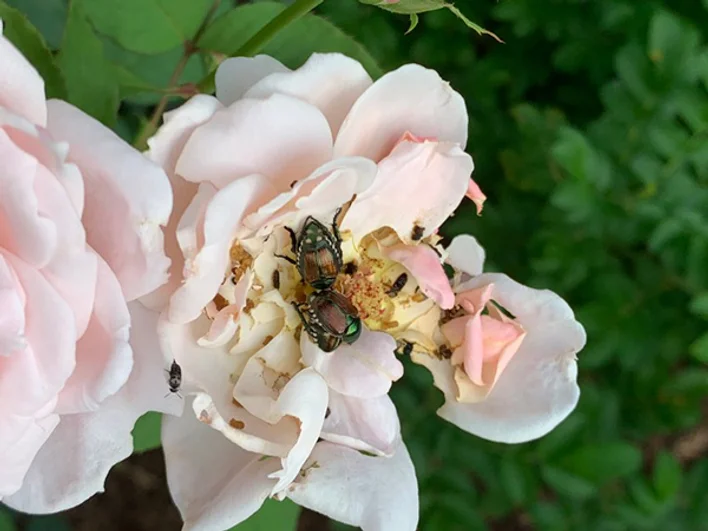
Those destructive, nasty, no good, horrible Japanese beetles are here, so we might as well talk about them.


THEIR HISTORY

The Japanese beetle is native to Japan. These little nuisances were first discovered in the United States around 1916 near Riverton, NJ in a nursery. It is thought that beetle larvae got into the US in a shipment of iris bulbs before inspections of imported goods entering the country began in 1912.


It is not just roses they love … they feed on around 200 species of plants that you stay on the proper intervals for subsequent applications.


My beautiful Quietness rose is one of their favorites. This happens so quickly!


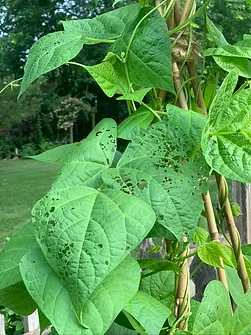
I used to read that JBs were all east of the Mississippi, however, they are now being spotted in many other places around the country. I suspect they are still hitchhiking in plant containers! So no one will be safe before long. Now if only we could get them to “shelter in place” so we could eradicate them. LEFT: Just look at my beautiful pole beans.


MY WORLD

Japanese Beetles are a real problem in my area, especially last year. I first saw them on June 21 and I was still seeing them in late August. Mark Nolen, past president of the Indianapolis Rose Society, who has been growing for 50 years and grows over 300 roses, counted them last year and his total count was over 5,000. Let’s hope that record is not broken this year!


Are you grossed out yet?

One of the very few upsides to drought is that it can interrupt their life cycle. After a particularly serious drought a few years ago, we had several years with few to no Japanese Beetles. I visualized the larvae being killed in the parched earth. Do you think differently of me now?

 
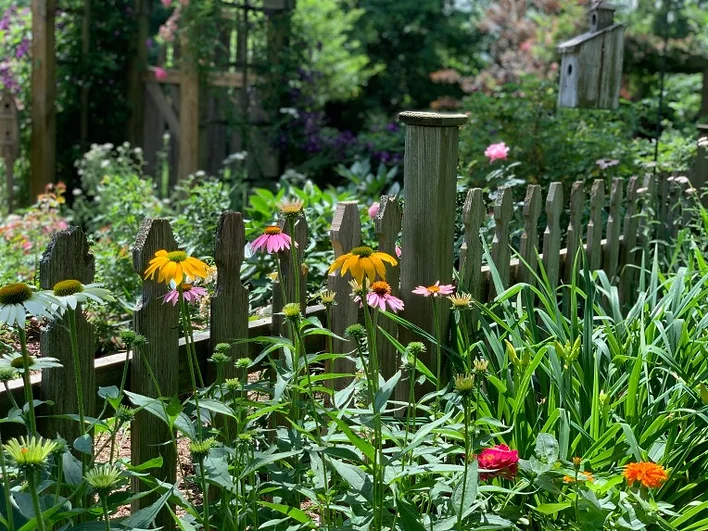
 ABOVE: I love coneflower season! So many varieties available today!

WHAT TO DO???


SPRAYS

I have chosen not to spray them as the spray kills more than the targeted pest and we want to protect the good guys. I did try sprays many years ago but saw little help. Your call on that one. As always read labels carefully and protect yourself!


HANDPICKING

The best method of control I’ve found is “handpicking.” When I say handpicking I mean tapping the area where the beetles are on the shrub and watch them fall into a bucket of soapy water. When startled, it is their natural response to drop and get to the ground as fast as they can (procreation and all that) – so in the water they go. The recommendation is to start this daily regimen as soon as they arrive and get them off the plants as soon as possible. The damage and droppings they leave behind contain their pheromone – a call to all their friends to come! So, the more you have the more you get!! It is best to even cut away and destroy the damaged area on the shrub. If you’re in a stressful season- squishing them works too. However… I have heard that the squishing process releases the pheromone that calls in the JB troops. Your call. No judgment here! ABOVE: Zaide and her neighbors have been attached but not all blooms have been destroyed!


I know. This is gross and you’d probably rather not see this. Last year I featured a better looking picture taken when I first started the bucket, not after all day. That article also included some great pictures of lilies which we probably won’t have this year due to the late freeze. Sad. So, maybe you should head over to last year’s article for a quick peek HERE…. BLOOMS, BUGS and HEAT.


Beetle Traps

There is great debate about using beetle traps. They do work and beetles by the thousands have found their way to the beetle traps my husband “loves” to use. He places them at the edge of property and is gleefully happy when the trap is full. Some say it helps control and some say it brings more in. Your call. We buy them at Lowes… good luck. Note: Since our beetle population is down a bit this year, we have not put out the traps. Mr. G agreed to wait and see how the season goes.


GRUB CONTROL

Many are trying biological means to control them in the larvae stage. I have a very large garden with a good size lawn and none of the biologicals out today (primarily nematodes and milky spore fungus) seem worth the effort. However, though it takes time, do some research – it might be worth your effort.


MOLES

Another unwanted pest in our garden is moles but they do eat grubs … so nature does have it’s ways. However, moles digging up your garden is a whole other horrible problem.


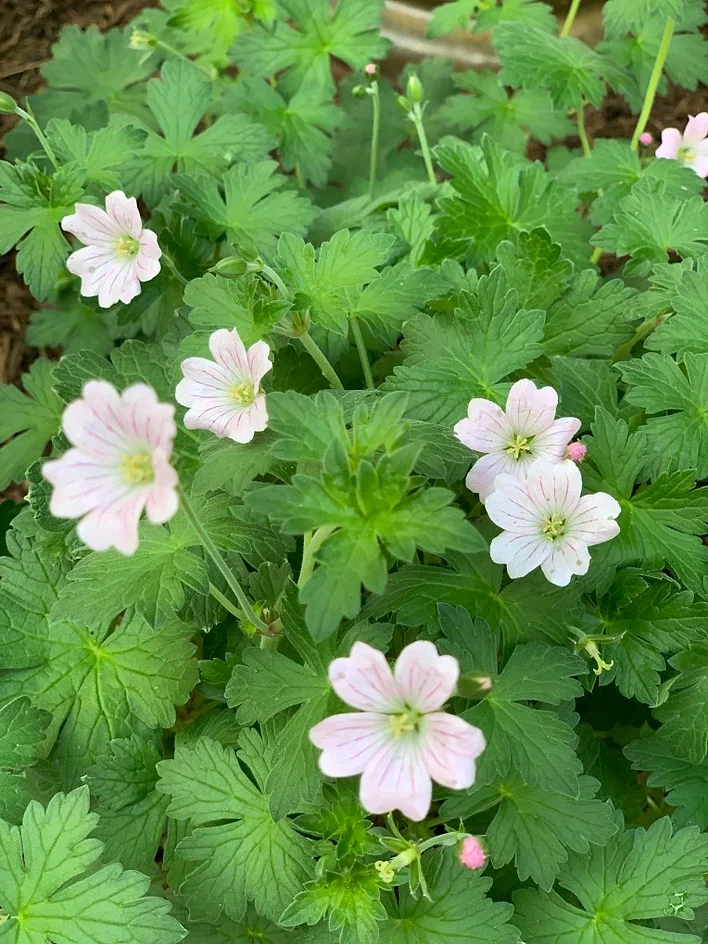
ABOVE: My new dreamy Dreamland geranium

Geraniums

Research is being done with Geranium petals as they cause temporary paralysis in Japanese Beetles – making them more vulnerable to their enemies. It’s a start and I bought 3 more hardy geraniums – just in case. The variety is ‘Dreamland’ and it’s very pretty. I’ve always loved geraniums – this just takes that love to the next level.


YOU

If you have any tips and tricks that are working for you, please leave a comment so we can all benefit!


BLOOM THYME…

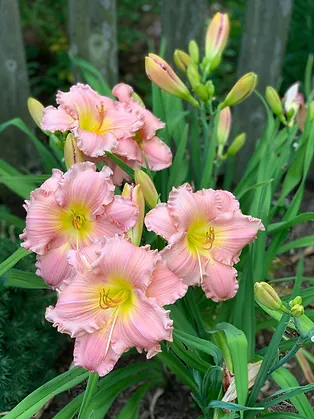
Finally, it’s time for something pretty! With all the talk about the JBs you are probably wondering if any blooms have escaped. Oddly enough they don’t love every flower… but we do! RIGHT: I’m just crazy about daylilies.


ABOVE: Photos by Teresa Byington

Hybrid Musks

Developed from relatives of the original old musk rose, ‘Rosa moschata’, Hybrid Musks (HMsk) are an increasingly favored class. Reverend Joseph Pemberton of England, and his successors Anne and Jack Bentall, using ‘Trier’ and Teas in the breeding, largely developed the HMsk class. ‘Trier’ (1904) is a descendant from ‘Aglaia’ (multiflora x ‘Rêve d’Or’ – noisette tea and musk).

Hybrid Musk roses combine exquisite fragrance, outstanding vigor, and beautiful, soft colored flowers with reliable repeat blooming, even in partial shade. They do well as gracefully spreading shrubs or low climbers, and are some of the best roses for north facing walls and fences. As a class, HMsks have almost everything to commend them.

  • The Flower: HMsk repeat well, many are remarkably floriferous. They bloom in large clusters. Individual blooms are rather small.

  • Colors: Normally, HMsk are pink, white, yellow, peach, or apricot. On a rare occasion, a medium red color can be found in HMsk.

  • Growth Habit : HMsk roses display a nice shrubby habit. Long graceful canes. Some varieties are nearly thornless. Foliage is leathery, dark green. They are tough roses that can withstand a wide range of soil conditions, temperatures and sun.

  • Size: 4 feet tall by 6 feet wide. Can be trained as climbers, or pillars or cascading shrubs.

  • Disease Resistance: Excellent. The plants are tough, disease resistant, and tolerate some shade.

  • Cold Tolerance: Most are hardy to Zones 5 through 10.

  • Scent: Normally, HMsk are quite fragrant. Scent is sweet and lingering, strongest in the evening.


Penelope . HMsk. Hybridized in 1924. ‘Ophelia’ (HT) x ‘Trier’. ARS merit rating 8.1. Flower buds are pale peachy-pink, fading to cream or white as the flower opens. Semi-double blooms. Beautiful upright yellow stamens. Large clusters of flowers. Continuous bloom. Plant has long canes that can be supported to climb, or allowed to sprawl as a low growing, spreading shrub. Will tolerate some shade. Hardy between zones 5-10. In colder areas, may have die back to the ground; own root roses improve chances of winter survival. Very fragrant. Exhibited as a classic shrub. Penelope. Reprinted with permission David Austin Roses: www.davidaustinroses.com


Will Scarlet . HMsk. Introduced in 1948. Sport of ‘Skyrocket’ (HMsk). ARS Merit Rating 8.2. Semi-double blooms. Classed as medium red. Buds are deep pink, opening to bright red blooms with striking golden stamens. It can be grown on a pillar, trellis or arbor. In the Midwest, it should reach 9 feet in height, larger in warmer climates. Hardy between zones 5-10. Repeat bloom occurs best in cooler climates. Little to no fragrance.Will Scarlet. Photo reprinted with permission Bob Bauer: http://www.rose-roses.com


Lavender Lassie . HMsk. Introduced in 1960 by Kordes. ‘ Hamburg’ (HMsk) x ‘Mme. Norbert Levavasseur’ (Polyantha). Mauve double (lilac pink). ARS Merit Rating 8.2. Repeats well in large clusters. Outstanding fragrance of an older Hybrid Musk. Can be trained as a climber. Disease free and easy to grow.

Lavender Lassie. Photo reprinted with permission Ashdown Roses: www.ashdownroses.com


Robin Hood . HMsk. 1927. ARS merit rating 8.6. Size 4′ X 3′. Slight to no fragrance. Repeat blooms wonderfully. Disease free and hardy. Tolerates a little shade and poor soil. The multitude of prickles helps to protect it from rabbit and deer damage. Makes a wonderful hedge. Robin Hood. Photo reprinted with permission: Linda Oakley Parks (Garden of Dorothy Kimmel).

Hybrid Kordesii

By Linda Kimmel

Hybrid Kordesii Roses (HKor), a series of shrub roses developed by Kordes in the 1940s to early 1950s. The House of W. Kordes Shone, a German nursery, is a family-owned company, spanning four generations, and 100 years of rose breeding. Wilhelm Kordes founded the nursery in 1887. Later he was joined by his two sons, Wilhelm and Hermann. In 1941, the second generation Wilhelm planted seeds from a Max Graf (HRg). Was it sheer luck, mutation or expert hybridization skills? One of the seedlings turned out to be a tetraploid, 28 chromosomes instead of the usual 14, rendering it capable of crossing with modern roses.

The rose was a new strain, designated Rosa kordesii. Crossing R. kordesii with other modern roses gave rise to the series of shrubs called Hybrid Kordesii (HKor). Later in the 1970-80s, Dr. Felicitas Svejda, Canadian horticulturist, frequently utilized R.kordesii as a parent plant, developing the Canadian Explorer Series of roses.

HKor are well known for their shiny foliage, disease resistance and winter hardiness. In ARS rose shows, shrub roses are most often broken down into two classes: 1) classic shrubs, and 2) modern shrubs. According to ARS rules, HKor must be shown in the Classic Shrub division, and is eligible for the Best Classic Shrub certificate.

  • The Flower: Repeat blooming. Usually kordesii roses produce large quantities of clusters.

  • Colors: Many HKor are shades of pink, or red; but all colors are available, except blue.

  • Growth Habit: These are good landscape shrubs for a casual border in that they don’t like orderliness. Low maintenance. Due to long lanky canes, many HKor can be trained as climbers.

  • Size: They can grow 5 to 15 feet or more in every direction given the correct climate and growing conditions.

  • Disease Resistance: HKor are some of the toughest, most durable, robust, and disease resistant roses in the world.

  • Cold Tolerance: HKor are hardy without protection to Zone 3. As a tribute to their winter hardiness, they are grown very successfully in Alaska and Canada.

  • Scent: Varies. Most are slightly scented.

Here are some of the most popular Kordes Roses:

Dortmund. 

ARS Merit rating 9.2. Probably one of the best-known HKor on the market. It is a medium red color with a white eye. Brilliant yellow stamens. Single (4-8 petals). Blooms in large clusters. Can be grown as a shrub or climber. Glossy green foliage. As with all of the HKor, it is very winter hardy and disease resistance. Hardy without protection from zone 4 to 9. Hybridized in 1955, [unknown seedling x R. kordesii]. Dortmund needs heavy deadheading and all day sun to keep it blooming. Scent is slight to none. Sets large orange hips.

John Cabot. (Canadian Explorer Series) ARS merit rating 8.9. It has large, semi-double blossoms that are deep pink to medium red color. Blooms in clusters of 3-10 roses. This rose is covered in blooms in late spring, and then has repeat blossoms throughout the rest of the summer. It can be trained to climb, reaching about 9 feet or so in Zone 4a. Canes can be left on a trellis without winter protection or cane dieback to zone 4a. John Cabot can be left untrained to form a large, arching shrub that will spread about 8-feet wide and get about 6-feet tall. It has healthy glossy foliage and is very winter hardy. Hybridized in 1978 by Dr. Felicitas Svejda. [R. kordesii x unknown seedling].

William Baffin (Canadian Explorer Series) ARS Merit Rating System 8.9. 

Deep pink in color with bright yellow stamens. Blooms are about 3 inches across with 20 petals. Often grown as a climber, but will make an excellent freestanding shrub or hedge as well. William Baffin is an outstanding variety with complete disease resistance and winter hardiness to Zone 3. Hybridized in 1983 by Dr. Felicitas Svejda. [R. kordesii x unknown seedling].

Dortmund. Photo reprinted with permission Ashdown Roses: www.ashdownroses.com John Cabot. Photo reprinted with permission Bob Bauer: http://www.rose-roses.com William Baffin. Photo by Linda Kimmel

‘Overnight Scentsation’ – The Rose that Went to Space!

‘Overnight Scentsation’ – The Rose that Went to Space!

Suzanne Horn

Master Rosarian, Pacific Rose Society

This article is a 2016 Award of Merit winner

Roses & You, June 2020

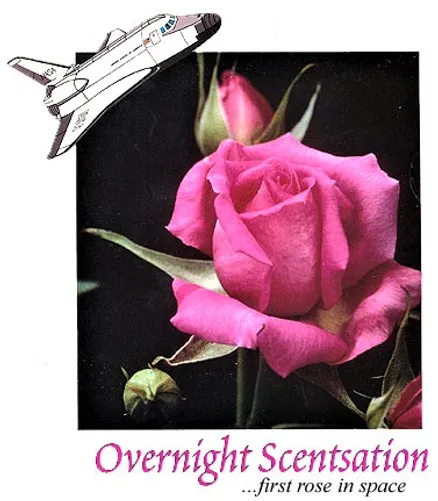
‘Overnight Scentsation’ is a rose that bears a distinction held by no other. It was the first rose to go into outer space. One of a small number of miniflora roses that actually boasts fragrance, ‘Overnight Scentsation’ (SAVanight) was created by legendary hybridizer F. Harm Saville in 1990 and is classified by the American Rose Society as a medium pink (mp). A cross of the floribunda Taxi and a Frank Benardella miniature rose called Lavender Jade, it was introduced into commerce by Nor’East Miniature Roses in 1999, originally as a miniature rose, since the miniflora class had not yet been established. It was later reclassified as a miniflora. Its real claim to fame is its delicious perfume; and under most atmospheric conditions, it is powerfully fragrant.

‘Overnight Scentsation’ is one in a small group of miniature and miniflora roses called the “Scentsation series”, which includes memorable roses like ‘Scentsational’ and ‘Seattle Scentsation’. If you like miniflora roses but are disappointed in their general lack of fragrance, this rose will be a pleasant surprise. In fact, Nor’East was quoted as saying that “Overnight Scentsation is the most fragrant mini rose ever with large flowers of bright medium pink, laden with a strong rose scent.” It was because of its extraordinarily strong fragrance that this rose was chosen to go into space in search of a new and exotic scent, engaging in perhaps the most romantic space experiment ever conducted.


In 1913, Gertrude Stein wrote, “A rose is a rose is a rose,” but that may not be the case in space. William Shakespeare wrote, “That which we call a rose, by any other name would smell as sweet.” Although Shakespeare knew a few things about romance and roses, he never considered whether they would smell as sweet in outer space. A rose in space is evidently not the same as a rose on Earth. New fragrances are much sought after in the competitive perfume industry. This is a story of how one company, International Flavors & Fragrances, in search of ways to delight consumers’ senses and in collaboration with NASA, launched itself ahead of the competition to create a fragrance that is literally “out of this world”. IFF researchers quickly learned that what we call a rose does indeed smell sweet in space … but it does not smell the same.

Fragrance in flowers is a variable and elusive commodity, which evolved in order to help plants reproduce by attracting the insects and animals they need to spread their pollen around. The scents themselves come from volatile oils, also known as essential oils, because they carry the essential fragrance of the plant. These volatile oils are concentrated plant extracts that bind to receptors in the olfactory neurons. The fragrance of a rose is made up of nearly 200 different compounds, and the production of these essential oils is strongly affected by the plant’s environment. Some plants produce more oils at night when their pollinator is active, and some produce more in the daytime. Temperature, humidity, and the age of the flower are influential, too.

In order to further this research, a rose-related experiment was conducted on the space shuttle Discovery. It was based on a collaboration between NASA and Dr. Braja Mookherjee (pictured here), who until his recent death was a researcher and Director of Global Natural Products at International Flavors and Fragrances. This collaboration involved both science and business. The objective of the experiment was to aid in studies regarding the effects of low gravity on the scent of a rose, in order to help learn how to improve the fragrances of many consumer products. IFF wanted to see how microgravity altered the sweet and familiar scent of a rose, and whether a new perfume component could be extracted from the experiment. The ability to do research in space, concluded Dr. Mookherjee, gives a whole new dimension to the field of fragrance studies. “It’s a fantastic opportunity,” he said, one that the Bard himself might have appreciated.

On October 29, 1998, just prior to its being made available to the public, this rose was sent into orbit on the Discovery mission STS-95, launching from Kennedy Space Center. Also, along on the nine-day mission was Project Mercury astronaut John Glenn, who was 77 at the time, making him the oldest person to ever go into space. The mission crew took a 7-inch plant of ‘Overnight Scentsation’ on the flight for bioscience research. The mission’s objectives involved investigating life science experiments focusing on microgravity research and advanced technology during flight. The experiments were sponsored by NASA, the Japanese Space Agency (NASDA) and the European Space Agency (ESA).

As such, ‘Overnight Scentsation’ was grown under ultraviolet lights in a special Astroculture chamber (pictured here), which was developed at the Wisconsin Center for Space Automation and Robotics, a NASA Commercial Space Center. This chamber provides plants with the appropriate temperature, humidity, light, and nutrients during spaceflight. On the mission, two of the rose’s buds bloomed. Utilizing a gas chromatograph, astronaut John Glenn captured the unique aroma of this rose while living in zero gravity. In order to check their findings scientifically, the Discovery astronauts took four samples of the bloom’s volatile oils by touching a silicone fiber wand to the blooms, which was coated with a liquid to which the molecules adhered. Each of the four times, says Dr. Mookherjee, they got a different result. The scent that they finally arrived at was the average of those samplings.

Back on Earth, the IFF scientists analyzed the molecule samples and discovered that the rose produced fewer volatile oils in space than its counterparts did on Earth. Dr. Mookherjee subsequently synthesized that fragrance in the lab to compare it to the one on Earth. He noted, “It’s no wonder that low gravity should affect a flower’s smell just as other environmental factors do.” They found that the rose was affected by the zero-gravity environment, and the overall fragrance it generated was completely different, producing an entirely new scent that was definitely not of this Earth. Instead of a “green, fresh rosy note”, the scent changed to a “floral rose aroma”.

IFF ultimately used their findings to create a scent they called ‘space rose’. The unique space rose note was extracted from the fragrant oils of ‘Overnight Scentsation’, and it is now a perfume ingredient. IFF commercialized the space rose scent, and the new fragrance has since been incorporated into a perfume introduced by Shiseido Cosmetics called “Zen”, which combines three notes for a fragrance that the company describes as floral, woody and spiritual. Although this is the first commercial use of the space rose scent in a fine fragrance, further uses are expected, since the space rose oil can enhance food product tastes, offering new opportunities to the flavors industry.

Of note, NASA flew another rose on a space shuttle in 2008. However, that flower was destined for the annual New Year’s Rose Parade in Pasadena, California, and was not part of a fragrance experiment or used for a perfume.

Turning our attention to rose lovers everywhere who might want to grow this lovely rose, ‘Overnight Scentsation’ presents full, hybrid tea shaped blooms that have 41 or more petals and are about two to three inches wide. Those blossoms are occasionally presented in small clusters but most often appear singly as one bloom to a stem. The full-figured blooms are borne on long stems and clothed in soft, matte green foliage. This makes Overnight Scentsation a wonderful cut flower for the home.

In the garden, ‘Overnight Scentsation’ is a strong, vigorous, upright growing plant, reaching a height of between two to three feet and a width of up to two feet. A hardy plant, it is said to be very disease and drought resistant, although I have heard some comments disputing its disease resistance. As such, I would recommend a regular spray program to keep this plant looking its cleanest. It is best grown in organically rich, medium moisture, well-drained loamy soil. It is said to tolerate partial shade, but best flowering and disease resistance generally occur in full sun.

In summary, ‘Overnight Scentsation’ would be a beautiful and fragrant addition to any garden, for arrangements and as a cut flower for the home. It is commercially available at many retail outlets supplied by Greenheart Farms (aka Nor’East Miniature Roses). It can also be found online through vendors and occasionally at rose society auctions. This charming little miniflora rose will perfume your garden and steal your heart. It will also bring a piece of rose history to your collection. I heartily recommend you give it try.

Are You a Sustainable Rose Gardener?

I embrace all things rose. Since becoming a rosarian, these glorious plants have brought countless hours of pleasure to my life. However, as with most things, changes in age, economy and life style bring changes in one’s interests and availability of time.

When I began growing roses, my goals and expectations were to have a perfect garden.

In those days almost every convention, rose society meeting, and countless articles included information on to how to spray, what to spray, when to spray, and how to dress to keep the spray from harming you. The focus was on achieving perfection in our roses.

Time that might have been spent enjoying the fruits of your efforts was instead spent dealing with constant pest issues and fretting about what in the garden wasn’t perfect. Fast forward several years. I and others have moved away from the use of chemicals to treat insects, pest and mites, and only used them as necessary for disease.

My first introduction to the term sustainable (as it relates to rose gardening) came from a publication by the same name. It was prepared by Pat Shanley, Peter Kukielski and Gene Waering, as part of the Great Rosarians of the World East program in 2008. Their paperback publication eventually evolved into a book. The components that make up a sustainable rose garden are similar in many ways to the principals of integrated pest management. Both require that gardeners examine their level of acceptance for imperfections and act accordingly. Both recommend that gardeners have appropriate expectations for the plants they choose based on the time and funds they are prepared to expend. Both encourage a reduction of chemical in the garden allowing naturally occurring agents to survive and perform.

Adding sustainable practices to your gardening can be done at any time and at any stage of a garden’s life. It is really an all-encompassing change of attitude and actions. You strive to avoid damaging the environment. You seek to limit waste in your garden such as leaky irrigation or faucets. You make sure your roses are well mulched with the knowledge that this will prevent weeds and maintain moisture, thus, reducing water requirements.

Here are a few items to consider if you would like to work toward a sustainable rose garden; one that requires less overall work and chemical use.

  • Choose roses that are known to be tolerant of disease in our Central Florida area. This may be the single most important aspect of sustainable rose gardening. A rose that exhibits no blackspot in Arizona may still exhibit a good bit of our heat and humidity.

  • Decide how much time you are willing to devote to your roses and plant only what you can handle comfortably. It is a rule we all make … and break. However, facts are facts. Fewer roses can be maintained far more easily than a large number.

  • Plant your roses well, since this will be their home for many years. Part of planning correctly is choosing a location with adequate light, drainage, and space. Good soil is one of the most important criteria of successful and sustainable rose growing. A lovely rose will soon lose its luster in lousy soil!

  • Decide how you want to handle pest issues and learn to correctly identify them. It is important to know the difference between damage from spider mites and damage from chili thrips. They are not dealt with in the same way. A mistaken diagnosis can be costly and allow unnecessary damage. Pests include insects, weeds, mites, diseases, and anything that you don’t want in your garden. Even Fido is a pest… if he’s digging up your roses.

  • The key to handling damage by pests and maintaining the sustainability of your rose is to observe them regularly. Damage of the any kind, found early, can be limited, thus reducing time and effort in eliminating the problem. On outbreak of certain insects can explode overnight in suitable conditions.

Do not be shy about asking questions or seeking help from successful rosarians.

All were once beginners and have ‘been there and done that.’ Sustainable rose gardening includes a pleasure component, because it encourages us to spend more time enjoying our gardens and less time dealing with problems. The key is to prevent the problem from even developing where possible. Each of us will evolve as rosarians. Whether you strive for perfection in your garden or take your satisfaction from the views and fragrances that roses provide, try to create a gardening experience that can sustain both you and your roses for many years.

Life provides us with enough stress. Rose growing can, and should, provide relief from that stress.

Carol Green (Carol@bgacranes.com), ‘Are You a Sustainable Rose Gardner?’ March 2014. Rose Rambler, Carol Green, ed., Marion County Rose Society.

“Soaps” and Detergents: Should They Be Used on Roses?

By Raymond A. Cloyd

Insecticidal soaps may provide control of a variety of insect and mite pests of roses including aphids, thrips, scales and the twospotted spider mite (Tetranychus urticae). A soap is a substance derived from the synthesis of an alkali such as sodium (hard soap) or potassium (soft soap) hydroxide on a fat. Fats are generally a blend of particular fatty acid chain lengths. Soap is a general term for the salts of fatty acids. Fatty acids are the primary components of the fats and oils present in plants and animals.

Soaps may be combined with fish, whale, vegetable, coconut, corn, linseed or soybean oil. For example, “Green Soap” is a potassium/coconut oil soap that was used widely as a liquid hand soap in public restrooms. It is currently available as a hand soap, shampoo and/or treatment for skin disorders. However, it has also been shown to be effective, as an unlabeled insecticide, in controlling soft-bodied insects including aphids.

Soft-bodied pests such as aphids, scale crawlers, thrips, whiteflies and mites including the twospotted spider mite are, in general, susceptible to soap applications. Soaps typically have minimal activity on beetles and other hard-bodied insects due to the insect’s thickened cuticle, which is more resistant to penetration. However, this is not always the case since soaps have been shown to kill hard-bodied insects such as cockroaches. Soaps are effective only when insect or mite pests come into direct contact with the wet spray. Dried residues on plant surfaces have minimal activity on insect or mite pests because soap residues degrade rapidly — especially under sunlight. Insecticidal soaps may also be harmful to natural enemies including parasitoids and predators. For example, ladybird beetles and green lacewing larvae, are killed by wet sprays when present on treated plants.

The mode of action of soaps is still not well-understood although there are four ways by which soaps may kill insect and mite pests. First, soaps may penetrate through the fatty acids present in the insect’s outer covering (cuticle) thus dissolving or disrupting cell membranes. This impairs cell integrity causing cells to leak and collapse, destroying respiratory functions, and resulting in dehydration and death of the insect or mite pests. Second, soaps may act as insect growth regulators interfering with cellular metabolism and the production of growth hormones during metamorphosis (equals change in form). Third, soaps may block the spiracles (breathing pores), interfering with respiration. Fourth, soaps may uncouple oxidative phosphorylation or inhibit the production of adenosine tri-phosphate (ATP), which reduces energy production.

There are a variety of fatty acids; however, only certain fatty acids have insecticidal properties. This is solely based on the length of the carbon-based fatty acid chains. Most soaps with insect and mite pest activity are composed of long chain fatty acids (10 or 18-carbon chains) whereas shorter chain fatty acids (9-carbon chains or less) have herbicidal properties, so using materials that have short chain fatty acids can kill rose plants. For example, oleic acid, an 18-chain carbon fatty acid, which is present in olive oil and other vegetable oils, is very effective as an insecticidal soap. In fact, most commercially available insecticidal soaps contain potassium oleate (potassium salt of oleic acid).

There is a misconception that any soap or detergent can be used as a pesticide (insecticide or miticide). Although, as already discussed, only a few select soaps have insecticidal or miticidal properties; many common household soaps and detergents including Palmolive, Dawn, Ivory, Joy, Tide and Dove, which are unlabeled pesticides, may have activity on some soft-bodied insect and mite pests when applied to plants as a one percent or two percent aqueous solution including the sweet potato whitefly (Bemisia tabaci), green peach aphid (Myzus persicae), cabbage aphid (Brevicoryne brassicae), mites, psyllids and thrips. However, reliability is less predictable than soaps formulated as pesticides.

Despite this, dishwashing liquids and laundry detergents are primarily designed to dissolve grease from dishes and clean clothes; not kill insect and mite pests. These materials may cause plant injury (phytotoxicity) by dissolving the waxy cuticle on leaf surfaces. Although the leaves of roses tend to have a thickened cuticle and the flowers are waxy there is still a risk of phytotoxicity. Registered, commercially available insecticidal soaps are less likely to dissolve plant waxes compared to household cleaning products. Dishwashing liquids and laundry detergents, like insecticidal soaps, lack any residual activity and thus more frequent applications are needed. However, too many applications may damage the leaves or flowers of roses. In addition, detergents are chemically different from soaps. In fact, many hand soaps are not necessarily pure fatty acids. Most importantly, these solutions are not registered insecticides or miticides. Soap companies don’t intend for their products to be used against insect or mite pests because they have not gone through the Environmental Protection Agency (EPA) registration process.

The type of fatty acid, length of the carbon-based fatty acid chain, and concentration in many laundry and dish soaps is not known. In addition, the insecticidal effectiveness of these products may be compromised by the presence of coloring agents or perfumes. This often times leads to inconsistent results. Certain laundry and dish soaps will precipitate in hard water thus reducing their effectiveness.

Despite the activity of some dishwashing liquids and laundry soaps on insect and mite pests, their use should be avoided on roses primarily because they are not registered pesticides; they don’t have an EPA Registration Number. Even more important is that a pesticide company will generally stand behind a product when there is a problem. If a dish or laundry soap is used and roses are injured — there is no recourse.

If anyone has questions or comments regarding this article they may contact the author via email (rcloyd[at]ksu[dot]edu) or phone (785-532-4750).

Author:

Raymond A. Cloyd

Professor and Extension Specialist in Horticultural Entomology/Integrated Pest

Management

Department of Entomology

Kansas State University

123 Waters Hall

Manhattan, KS 66506-4004

Advanced in Understanding Rose Replant Disease

The mysterious ‘rose replant disease’ or ‘rose sickness’ has puzzled rose growers for years. Nothing specific has been identified as the cause of this phenomenon. When new roses are planted where old roses used to be, they may not grow as well as they would if they were planted in soil never planted with roses. Many suspect that key nutrients may be depleted in soils where roses have been grown for a long time, and as a result, the new roses do not get all the nutrition they need. Additionally, where roses have been grown for years without attention to good soil health, the soil’s structure and general physical properties may have declined — due to compaction and reduced organic matter. The soil may not effectively deliver oxygen, nutrition and water to the roots to support the vigorous growth of new roses.

We are fortunate that Traud Winkelmann and her colleagues (Bunlong Yim and Kornelia Smalla) are working to better understand rose replant disease. Winkelmann spoke on their research at the International Symposium on Rose Research and Cultivation this past August (RHA members Jim Sproul, David Byrne and I attended). Her talk was titled “Rose Replant Problems — Detection by bio-tests and investigation of bulk soil and rhizosphere microbial communities using DGGE fingerprints.”

Winkelmann described the challenge commercial nurseries face when growing roses year after year on the same land, and notes that reduced growth in rose crops on that land is typical over time. Many commercial German nurseries proactively address this problem by rotating rose crops with other crops on their land. For instance, when we toured W. Kordes’ Söhne we learned they rent neighboring agricultural land to have enough space to grow their roses with multiple years between rose crops on any given piece of land. The reason for the decline in growth of new roses on land where other roses once grew is still unclear. Winkelmann suggested the decline has been thought to result from nematodes, nutritional deficiencies, toxins and/or microbes.

To better document the cause or causes of rose replant disease, Winkelmann and her colleagues worked with three different German nurseries to acquire soil samples. Soil of different types (sandy loam and others) was collected at a depth of 5- to 20-cm, and the samples were also chosen based on how recently roses had been grown in the soil, and if there had been any other crop grown in the soil since roses were grown there. The soil samples were then each divided into three treatment groups: untreated, heat-treated (one hour at 50°C) and gamma-irradiated. In 3-liter pots containing all these soil variations, seedlings of Rosa corymbifera ‘Laxa’ and apple rootstocks (apples are also in the rose family) were planted and their growth documented. It was hoped that different growth of seedlings across the three soil treatment groups (untreated, heat-treated and irradiated), would shed some light on the cause(s) of reduced growth associated with rose replant disease. Heat can neutralize or weaken some toxins, and both heat and radiation can negatively impact soil organisms.

Across most soil samples, seedlings grew better in the heat-treated or irradiated soil than in the untreated soil. This result supports the hypothesis that an inhibitory factor is present in the soil and may be destroyed or neutralized by these two treatments. Winkelmann and her colleagues conducted denaturing gradient gel electrophoresis (DGGE) on a specific gene (16S rRNA) to begin to understand microbial diversity and how it differed between soils. Winkelmann was excited that, by analyzing all their soil samples and data, it appeared that the crop grown before roses were replanted had a stronger positive impact on rose replant issues than was gained through the heat and irradiation treatments on soils where roses had been grown most recently.

It sounds very promising that crop rotation and careful selection of the right non-rose species as an intercrop can dramatically reduce rose replant issues for commercial nurseries and avoid costly and toxic soil sterilization treatments. Winkelmann and her colleagues plan to continue their work by characterizing microbial species present in the soil and trying to understand how they vary in abundance across rose nursery soils managed in different ways. Learning which microbes are contributing the most to rose replant issues may suggest some ways to decrease rose replant issues.

Crop rotation (using other species between crops of roses) is practiced in Germany by some rose nurseries, and is also used in some of the German rose trials. We toured the German Variety Protection Office in Hannover. There, new roses are compared with established cultivars as part of the documentation necessary for securing European plant breeders rights. That location also hosts one of the Allgemeine Deutsche Rosen — neuheitenprüfung (ADR) trial sites. In the space allocated for the ADR trials, a portion of the field was planted in tall growing marigolds (Tagetes erecta; commonly called Mexican or African marigold) to prepare the soil for future rose plantings.

Hearing Winkelmann’s presentation and observing how rose growers handled rose replant issues at different tour stops helped me to realize how important this issue is. I wonder now to what extent rose replant issues may be affecting the rose seedling evaluations we rose breeders make.

I have very limited space and quickly reclaim land where I had rose seedlings to make room for the new ones. Perhaps some very nice roses are being overlooked due to mediocre performance just because of being planted in a pocket of soil with extra-strong residual effects from roses previously grown in that location.

After returning from the rose research symposium, I looked closely at areas of my garden in light of rose replant challenges and noticed something very interesting. In 2012, I expanded part of my rose garden, taking several feet of sod out to have enough room for the crop of new rose seedlings. This past summer the nicest looking seedlings typically have been in the part of the bed that was most recently in sod. As I look how I planted my family rows, part of each family is in the new bed and part of each family row extends into the older bed that has had roses growing continually since 2008.

Perhaps having the nicest looking rose selections in the newest section of the rosebed is a fluke, but it might also result from rose replant challenges making some of the roses less competitive. Hopefully someday I can solve this challenge by just having more land to rotate rose seedlings and having enough space to grow all I ever hope to, but I’m not sure if and when that dream can come true. In the meantime, I may just be a little more willing to select and grow on those seedlings which are better than average and are in pockets of the garden where plants seem to be struggling a bit more.

Field of marigolds adjacent to the current ADR rose trials in Hannover that will be planted in roses again in the future.

David Zlesak (zlesak[at]rocketmail[dot]com), ‘Advances in Understanding Rose Replant Disease’, Winter 2014. Buckeye Rose Bulletin, Mark Miller (tmille3[at]columbus[dor]rr[dot]com), ed. Buckeye District Rose Society. Reprinted from the Fall 2013 Rose Hybridizer Association Newsletter.

2023 New Rose Introductions

THIS FEATURE IS PAID ADVERTISING & IS NOT TO BE CONSIDERED AS AN OFFICIAL REGISTRATION LISTING

Rose Name: Buttercream Drift® ‘Meidevi’ PPAF (ABOVE)

Classification: Groundcover

Color Description: Light Yellow

Descriptive Characteristics: Drift® Roses are gxroundcover roses made easy®. Buttercream Drift® has light yellow flowers with cuplike petals that make a cheerful addition to gardens of all shapes and styles.

Bloom Size: 1.25 “

Petal Count: 20-25

Fragrance: very slight

Height/Habit: compact, very busy, 1 1/2′ h x 2′ w

Parentage: undisclosed

Hybridizer: House of Meilland®


Rose Name: Heavenly Scented™ (cv. WEKvodomer, R578-2) PPAF (ABOVE)

Classification: Hybrid Tea

Color Description: salmon

Descriptive Characteristics: This fragrant, salmon colored hybrid tea has old-fashioned, cuppy and very double, large blooms that are pointed and ovoid. Blloms are on long stems with medium, glossy green foliage. Very good disease resistance.

Bloom Size: 4-5 inch diameter

Petal Count: 60 to 130

Fragrance: Strong fruity & spices

Height/Habit: Upright, tall

Parentage: Voodoo x Meredith

Hybridizer: Tom Carruth

Introducer: Weeks Roses


Rose Name: Morning Glow™ (cv. WEKpiflaspas, BB223-1) PPAF (ABOVE)

Classification: Floribunda

Color Description: Soft gold

Descriptive Characteristics: This large-flowered, old-fashioned floribunda has elegant and very full, blooms on rich, dark glossy green foliage. Blooms are medium to large sized and classically pointed, some single, mostly in small clusters on medium length stems. Medium, even, rounded, bushy growth with very good disease resistance.

Bloom Size: Medium-large, 3½-4½ inch diameter

Petal Count: 70 to 110

Fragrance: Moderate tea

Height/Habit: Medium, even, rounded and bushy

Parentage: Pink Flamingo x Sparkle & Shine

Hybridizer: Christian Bédard

Introducer: Weeks Roses


Rose Name: Picture Perfect™ (cv. WEKmamoprela, R368-3) PPAF (ABOVE)

Classification: Hybrid Tea

Color Description: Hot Pink with White Reverse

Descriptive Characteristics: This fuchsia pink with white reverse hybrid tea has large blooms on medium-long stems that are spiraled, elegant and double. Bush is medium tall with deep, glossy green foliage with good disease resistance.

Bloom Size: Large, around 4-5 inch diameter, single

Petal Count: 30 to 40

Fragrance: Moderate tea

Height/Habit: Medium-tall, upright moderately spreading

Parentage: Marilyn Monroe x Pretty Lady

Hybridizer: Christian Bédard

Introducer: Weeks Roses


Rose Name: Raspberry Cupcake™ ‘KORcarmsis’ PP 33,406 (ABOVE)

Classification: Hybrid Tea

Color Description: Medium to Light Pink

Descriptive Characteristics: This special rose has a strong raspberry and lemon fragrance. Its blooms are medium to light pink with large, cuplike petals. It has excellent disease-resistance and will re-bloom throughout the season.

Bloom Size: 3″

Petal Count: 65+

Fragrance: Raspberry, Rose Water, lemon, very strong

Height/Habit: Busy, 4′ h x 2-3’w

Parentage: undisclosed

Hybridizer: Kordes®


Rose Name: REMINISCENT® Crema Rosa hybrida (ABOVE)

Classification: Landscape rose

Color Description: Cream with yellow tones

Descriptive Characteristics: Reminiscent® Crema rose blooms in the hue of fresh buttermilk. Each big, full bloom boasts a very high petal count and a delightful fragrance on a disease resistant habit. Clean, vigorous growth and foliage, with no deadheading required for continuous bloom.

Bloom Size: Approximately 10-15 cm.

Petal Count: 40-50

Fragrance: Mild

Height/Habit: 1.5-3’ tall, 2’ wide semi-upright shrub

Parentage: Kosmos, Irish Hope

Hybridizer: Pheno Geno

Introducer: Spring Meadow Nursery


Rose Name: REMINISCENT® Coral Rosa hybrida (ABOVE)

Classification: Landscape rose

Color Description: Orange-pink

Descriptive Characteristics: Reminiscent™ Coral rose boasts bowl-shaped flowers with deep pink-coral tones and an appealing copper center. Dark green foliage accents the flowers and stays clean and healthy through the season. Deadheading is not required for continuous blooms.

Bloom Size: Approximately 11 cm.

Petal Count: 50+

Fragrance: Medium

Height/Habit: 2-3.5’ tall, 2’ wide semi-upright shrub

Parentage: Clair Renaissance, Dominica

Hybridizer: Pheno Geno

Introducer: Spring Meadow Nursery


Rose Name: REMINISCENT® Pink Rosa hybrida (ABOVE)

Classification: Landscape rose

Color Description: Medium pink

Descriptive Characteristics: Reminiscent™ Pink rose calls to mind the glory days of roses, with big, lush blooms, bursting with petals, pure color, and powerful fragrance. Yet it comes with none of the issues that plague old roses, and it blooms all summer without deadheading.

Bloom Size: Approximately 6 cm

Petal Count: Approximately 70

Fragrance: Yes

Height/Habit: 3-4’ tall, 2’ wide semi-upright shrub

Parentage: Unnamed PGR seedling 1

Hybridizer: Pheno Geno

Introducer: Spring Meadow Nursery


Rose Name: RINGO® Double Pink Rosa hybrida (ABOVE)

Classification: Shrub rose

Color Description: Pink with red ‘perscia’ eye

Descriptive Characteristics: Ringo Double Pink rose brings a cheerful presence to the garden, with loads of semi-double pink flowers flowers accented with bright yellow stamen surrounded by a distinctive wine-stained eye. It is also very hardy, with glossy foliage that exhibits excellent black spot resistance.

Bloom Size: Approximately 8 cm

Petal Count: Approximately 20

Fragrance: Light fragrance

Height/Habit: 2-3’ tall, 2-3’ wide shrub

Parentage: Unidentified

Hybridizer: Christopher Hugh Warner

Introducer: Spring Meadow Nursery


Rose Name: RISE UP AMBERNESS™ Rosa x (ABOVE)

Classification: Climbing shrub rose

Color Description: Amber yellow

Descriptive Characteristics: The flowers of Rise Up Amberness™ rose look exquisitely sculpted, with wavy amber-colored petals surrounding a classic orange rose bud shape. They open to a full bloom with appealing golden stamens in the center. The exceptionally fragrant flowers appear all summer without deadheading. Sturdy stems allow this beautiful, versatile rose to be grown as a climber or shrub.

Bloom Size: Approximately 9 cm

Petal Count: Approximately 20

Fragrance: Yes

Height/Habit: 3-5’ tall, 2-3’ wide climber/shrub

Parentage: Rosa ‘Gardner’s Glory’, Rosa ‘Tan04603’

Hybridizer: Christopher Hugh Warner

Introducer: Spring Meadow Nursery


Rose Name: RISE UP LILAC DAYS™ Rosa x (ABOVE)

Classification: Climbing shrub rose

Color Description: Purple/pink

Descriptive Characteristics: Rise Up Lilac Days™ rose is one of the most unique roses to hit the North American market in years. Features unique lilac-blue flowers with a powerful, heady fragrance, on a versatile habit that allows it to be grown as a climber or a shrub, making it the ideal addition to landscapes and gardens.

Bloom Size: Approximately 7 cm

Petal Count: Approximately 20

Fragrance: Yes, very sweet

Height/Habit: 5-8’ tall, 2-4’ wide climber/shrub

Parentage: Not identified

Hybridizer: Christopher Hugh Warner

Introducer: Spring Meadow Nursery


Rose Name: RISE UP™ RINGO® Rosa hybrida (ABOVE)

Classification: Climbing shrub rose

Color Description: Yellow with red ‘perscia’ eye

Descriptive Characteristics: Rise Up™ Ringo® rose is a beautiful mini-climber with double golden-yellow flowers featuring a bright red eye. Very healthy foliage and a very vigorous growth habit.

Bloom Size: Approximately 8 cm

Petal Count: Approximately 20

Fragrance: Light fragrance

Height/Habit: 3-5’ tall, 2-3’ wide climber/shrub

Parentage: Unidentified

Hybridizer: Christopher Hugh Warner

Introducer: Spring Meadow Nursery


Rose Name: Sultry Night™ (cv. WEKswipufste, AA30-B1) PPAF (ABOVE)

Classification: Shrub

Color Description: Magenta fading magenta-purple with lighter reverse

Descriptive Characteristics: This shrub features old-fashioned magenta blooms borne on medium length stems with dark, glossy green foliage with very good disease resistance. Buds are shapely, pointed and flowers are old-fashioned, cuppy and very double.

Bloom Size: Medium, around 3 inch diameter, in medium sized clusters

Petal Count: 60 to 100

Fragrance: Moderate sweet grapefruit

Height/Habit: Medium-small, bushy rounded

Parentage: Sweet Chariot x {Wild Blue Yonder x [(Purple Heart x seedling) x Stephen’s Big Purple]}

Hybridizer: Tom Carruth

Introducer: Weeks Roses


Rose Name: Sunblaze® Lemon ‘Meilpiquet’ PPTBS (ABOVE)

Classification: Miniature

Color Description: Cream Yellow

Descriptive Characteristics: Sunblaze® Roses are easy to grow and bloom throughout the season. Sunblaze® Lemon produces creamy-yellow blooms from spring to fall. It is easy to grow and thrives in containers, making it ideal for small spaces.

Bloom Size: 1.5″

Petal Count: 25-28

Fragrance: very slight

Height/Habit: compact, rounded, busy, 18″ h x 18″ w

Parentage: undisclosed

Hybridizer: House of Meilland®


Rose Name: Sunblaze® Peach ‘Meizonbla’ PPTBS (ABOVE)

Classification: Miniature

Color Description: Orange, Pink, Yellow

Descriptive Characteristics: Sunblaze® Roses are easy to grow and bloom throughout the season. Sunblaze® Peach produces uniquely colored orange, pink, and yellow blooms from spring to fall. It is easy to grow and thrives in containers, making it ideal for small spaces.

Bloom Size: 1″ – 1.25″

Petal Count: 15-18

Fragrance: very slight

Height/Habit: compact, rounded, bushy, 18″ h x 18″ w

Parentage: undisclosed

Hybridizer: House of Meilland®


Rose Name: Top Cream™ (ABOVE) ‘Meiroguste’ PP 33,493

Classification: Hybrid Tea

Color Description: White sometimes suffused with light pink

Descriptive Characteristics: The large, old-fashioned blooms of this special rose are extremely fragrant with notes of earthy pear. Its abundant petals are creamy-white with an occasional light pink blush. It exhibits excellent disease resistance and is a wonderful rose for cut floral arrangements.

Bloom Size: 3.5″

Petal Count: Up to 100

Fragrance: Very Strong – Pear, Fruity

Height/Habit: Upright, Bushy, Up to 6′ h x 2–3′ w

Parentage: undisclosed

Hybridizer: House of Meilland®


Rose Name: True Courage (ABOVE)

Classification: Floribunda

Color Description: Orange Red

Descriptive Characteristics: Early spring bloomer with eye-catching bright color on dark glossy foliage that shows diseases resistance. Carefree low grower that performs well on its own roots. A good choice for containers, patios, edgings, borders, and landscapes.

Bloom Size: 3.0 inches

Petal Count: 25+

Fragrance: light fragrance

Height/Habit: 2.5 ft. x 2.5 ft, upright

Parentage: unnamed orange seedling x unnamed red seedling

Hybridizer: Ping Lim

Introducer: Altman Plants USA


Rose Name: True Devotion (AKA Professor Lee) (ABOVE)

Classification: Climber

Color Description: Soft pink

Descriptive Characteristics: Vigorous, upright, bushy, soft pink fragrant climber; in 2-3 years it will bloom prolifically all season long. This glorious beauty is so healthy and easy to grow, perfect for a wall, arbor, trellis, or pillar. Thrives on its own roots too!

Bloom Size: 3.5 inches

Petal Count: 50+

Fragrance: strong, spicy fragrance

Height/Habit: Vigorous, upright, 6 ft.+

Parentage: ‘Heritage’ x ‘High Voltage’

Hybridizer: Ping Lim

Introducer: Altman Plants USA


Rose Name: True Endearment (ABOVE)

Classification: Floribunda

Color Description: Red

Descriptive Characteristics: Healthy, glossy foliage, multiple layers of red petals, low growth, thrives on its own roots. Heat tolerant and low maintenance, it’s an impressive red rose for garden, especially for patio and container.

Bloom Size: 3.5 inches

Petal Count: 70+

Fragrance: Peppery fragrance

Height/Habit: 3 ft x 3 ft upright

Parentage: ‘Koko Loko’ x unnamed red seedling

Hybridizer: Ping Lim

Introducer: Altman Plants


Rose Name: True Perfume (ABOVE)

Classification: Shrub

Color Description: Pink blend

Descriptive Characteristics: Fragrant, ruffled petals and a prolific bloomer on a low-growing, healthy bush, grows vigorously on its own roots. Low maintenance with perfume that so rewarding, it makes a good choice for fragrant gardens! ARC Best Shrub Award for 2022.

Bloom Size: 4 inches

Petal Count: 50+

Fragrance: Sweet fragrance

Height/Habit: 3ft x 3ft

Parentage: ‘Julia Child’ x unnamed fragrant seedling

Hybridizer: Ping Lim

Introducer: Altman Plants USA


Rose Name: True Serenity (ABOVE)

Classification: Hybrid Tea

Color Description: Hot pink

Descriptive Characteristics: Hot pink flowers with a spicy scent and sturdy stems. Thrives on its own roots. Blooms continuously all season long with flowers suitable for show and display. Impressive, healthy, glossy foliage branches well in upright form. A rose to highlight your garden with fragrance too!

Bloom Size: 4 inches

Petal Count: 40+

Fragrance: Spicy fragrance

Height/Habit: 4ft x 3ft

Parentage: ‘Francis Dubreuil’ x ‘Knock Out’

Hybridizer: Ping Lim

Introducer: Altman Plants USA


Rose Name: True Spirit (ABOVE)

Classification: Shrub

Color Description: Dark Red

Descriptive Characteristics: This shrubby HT features stunning, shiny, healthy foliage and interesting dark red flowers for ganden,cut and show. Grows vigorously on its own roots. Low maintenance, a good choice for beginners as well as avid gardeners.

Bloom Size: 4.5 inches

Petal Count: 50+

Fragrance: Mild fragrance

Height/Habit: 5ft x 3ft

Parentage: ‘My Girl’ x ‘Crimson Glory’

Hybridizer: Ping Lim

Introducer: Altman Plants USA


Rose Name: Uptown Girl™ (cv. WEKabacima, S80-1) PPAF (ABOVE)

Classification: Grandiflora

Color Description: Warm coral pink with a deeper orange-toned interior

Descriptive Characteristics: Coral and orange, pointed and ovoid buds open to old-fashioned, spiraled and fully double blooms on medium-long stems. Foliage is glossy, medium green with good disease resistance.

Bloom Size:Medium-large, around 3½-4½ inch diameter, mostly single

Petal Count: 70 to 90

Fragrance: Moderate fruity & spices

Height/Habit: Medium, Rounded & bushy

Parentage: About Face x Cinco de Mayo
Hybridizer: Tom Carruth

Introducer: Weeks Roses

10 Tips for Long-Lasting Floral Arrangements

10 Tips for Long-Lasting Floral Arrangements

1. Floral preservative prolong vase life by 50%. Have it ready before harvesting blooms so that stems can be placed as they are cut. James Johnson, (Benz School of Floral Design) recommends mixing 2 cups of warm water, 2 cups of Sprite/7-Up and 1 teaspoon of yellow Listerine mouthwash.


2. Always recut stems underwater on a slant after harvesting. Slanted stems take up more water.

3. Roses with thick petals make the best cut flowers. Harvest blooms at the right stage of development. Cut blooms with:

  • 60 – 90 petals – when three to four of the outer petals have separated from the bud
  • 30 – 40 petals – when one or two of the outer petals have separated

  • 20 petals or less – when the petal color is just beginning to show. These have the shortest vase life.

4. Bacteria in vase solution shortens the life of flowers so remove any foliage that may be underwater. Containers should be squeaky clean and sanitized with a 50/50 mix of bleach and water and allowed to air dry. Change out the vase solution every 3rd day.

5. The finished height of the arrangement should be one and one-half times the height of the container.

6. Some plant material can last up to 10 days in a vase if prepared properly (heavily petaled roses, Oriental lilies, carnations, alstroemaria).


7. Use wettable floral foam. Properly wet the foam by floating the foam block in a bucket of water. When the block sinks it is totally saturated. Floral foam can hold up to 2 quarts of water.

8. Consider combining fruits and vegetables in the arrangement. Use wooden barbecue skewers to secure them in place.

9. Fully hydrate (minimum 4 hours) freshly cut flowers before using. Purchased flowers should have the bottom inch of stem removed and allowed to hydrate for 1 – 2 hours).

10. Anything that will hold water can be a container. I keep a supply of painted green bean cans on hand for quick give-away arrangements.


Gaye Hammond is a member of the Houston Rose Society, a lifetime member of the American Rose Society and a Master Consulting Rosarian. She recently received the Whitaker Award for her contributions to the ARS.