Rose Exhibiting for Beginners

So – the rose bug has bit you! You have learned about planting, pruning and spraying! Now you are ready to exhibit!

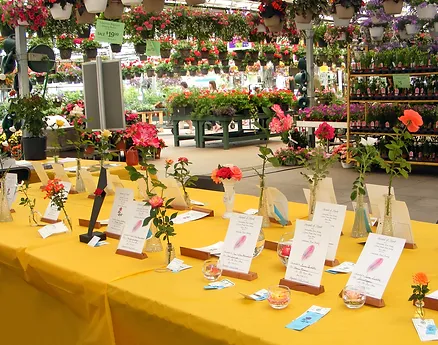
If possible, attend a rose show and visit the preparation room where you can watch the exhibitors at work before you exhibit yourself. Most exhibitors are usually pretty busy during this time, so be sensitive about asking questions. Take mental notes and ask them about their exhibiting techniques after their entries are placed into the show. Volunteer to clerk (no previous experience required) in order to learn how rose shows are set up and how the judges work. Obtain a copy of the ARS Guidelines for Judging Roses and read it.

For your first show, choose one fairly close to home and one that offers some Novice Classes. You are not limited to novice status, but you might feel more comfortable starting there. Obtain a copy of the show schedule and read it. Decide which classes you might like to enter. Limit your number of entries to allow yourself enough time to give each rose your attention. You can take more than one rose to the show per class, and at the last minute, decide which one to enter.


ONE MONTH BEFORE THE SHOW

Start watching your roses for potential exhibition specimens. If you plan to exhibit a single bloom on a stem, you will need a strong, straight stem that has been disbudded as it developed. Disbudding is the process of removing all side buds that form between the stem and the axil of the leaf. This allows all the energy to go to the terminal bud. Eventually you might want to stake the cane with a bamboo stick and some twist ties. Be sure to keep the tip of the stake just under the bloom. Staking protects the cane from snapping off in the wind and prevents leaf tearing on thorns from nearby canes.

If you plan to show a floribunda spray, you will want to remove the center (largest) bud at the point of emergence from the stem. This allows the side buds to develop and fill in the hole where that first bloom would have been if allowed to develop. That center bloom would have developed first and been finished by the time the rest of the spray was in exhibition form. Removing it at that time would have left the hole.

Water your bushes regularly and keep up your spraying schedule! Prepare a grooming kit which you will use the day of the show. Get a small plastic or metal case and gather together the following items:

  • Soft clean cloths (hotel shoe shine cloths are great)

  • A package of Q-tips

  • Tweezers

  • Small sharp scissors

  • Small camel-hair brush

  • Several sheets of aluminum foil and/or plastic wrap

  • Return address labels

  • An ARS Handbook for Selecting Roses and ARS Exhibition Names

  • If possible, some exhibiting tags with rubber bands that you picked up at a previous show or local society meeting

ONE WEEK BEFORE THE SHOW

Watch the blooms that are starting to open and have show potential. Protect them from night dew by covering with a plastic baggy and twist tie gently below the bloom. This should be done in the evening and removed before the sun shines on the bloom and heats the air inside the bag.

2-3 DAYS BEFORE THE SHOW

When do you cut the rose? The timing varies depending on the variety of the rose, the number of petals, the temperature and general weather conditions and your ability to store the cut roses.

Roses should be cut 1/4 – 1/3 open which allows them time to open more on the morning of the show. Cut them early in the morning if possible or late in the evening. Cut the stem a little longer than the 7:1 ratio (the stem should be 7 times longer than the height of the bloom) to allow for recutting later.

Cut the stem at an angle with sharp, clean pruners and immediately take it to your preparation area. A laundry tub works great! Have some tall, white plastic buckets available which you can usually obtain from a bakery or a sandwich shop. In one bucket put a flower preservative mixture, such as Floralife®, and cold water up to 3-4 inches. Fill another bucket to the top with tepid water. Bring the roses in from the garden, one or two at a time to prevent them from snagging one another. Submerge the rose stem in the full bucket, recut the stem and then lower it into the water so the water comes up just below the bloom. Allow the roses to rest in the tepid water and drink their fill, but watch the blossoms carefully. If you see a bloom start to open, place it in the cold water that contains the preservative immediately. After an hour or two, move any remaining roses to the cool water bucket and put in a cool dark place. If you place your rose bucket in a refrigerator, be sure to put a baggy on the blooms so they do not lose moisture from the petals. If you cut the night before the show, you probably will not need to refrigerate.

THE MORNING OF THE SHOW

Rise early. Remove the roses from the refrigerator and take one last walk through the garden for another possible entry. Pack up your roses and your grooming box and head for the show. Plan to arrive early so you can get table space and your favorite doughnut! Register, if required, and gather enough vases for your roses. If you plan to enter a rose in a bowl (you do not need a good stem for this), check ahead of time to see if you need to bring your own bowl or use one supplied by the show committee.

Place each rose in a bud vase and evaluate the bloom stage. If the bloom is too tight, carefully insert Q-tips between the petals to encourage opening. Take note of the temperature in the room and check if any sunlight is shining in on your roses. Warmth will hasten the opening. Sometimes, the air conditioning is so low, you have to remove the rose to another location to warm it up. I once put a rose in my car which was parked in the sun. Guess who showed an open bloom? You have to use your own judgment. A lot of knowing what to do comes with trial and error and experience.

Support each leaf from behind with your fingers, and polish the surface with a soft cloth. During this time, watch your blooms for any adjustments they might need. Carefully remove any guard petals (those small petals on the very outside that protected the bud) that have color faults or are smaller than the outer ring of petals. If an outer petal is hanging low, you can raise it by carefully by lifting it so it rests on the petals next to it. Use your brush to remove any fine debris from the petals and use the scissors to trim any brown or torn edges from the petals or leaves. Check the proportion of the bloom to the stem. You can adjust this somewhat by pushing the stem deeper into the vase or wedging it with rolled up plastic wrap or foil. Be sure the stem is in the water and the wedging material is not showing above the top of the vase.

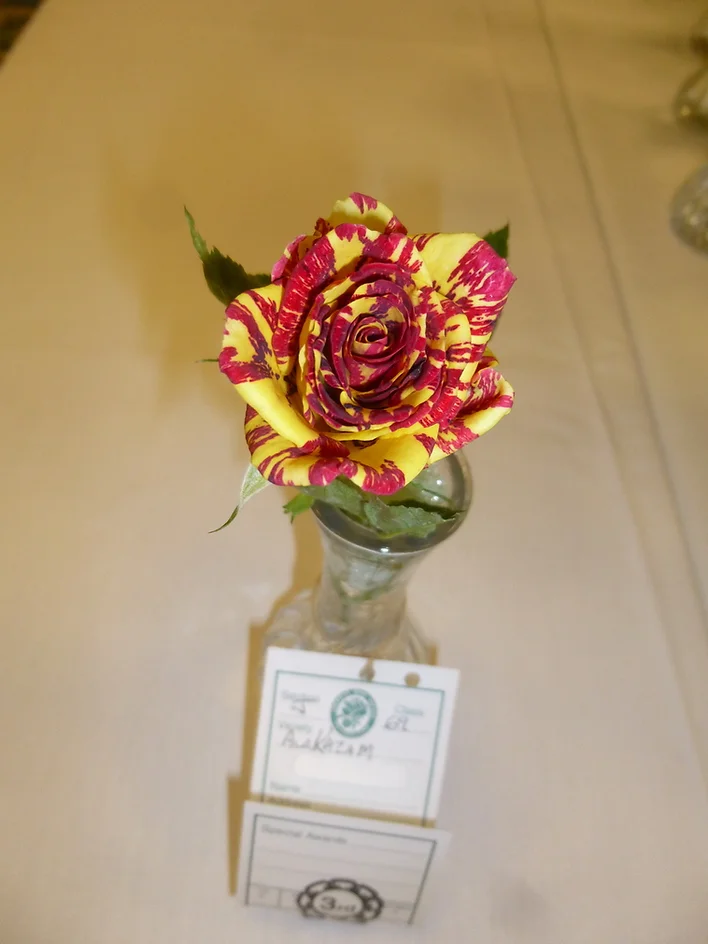
Fill out the exhibitors’ entry tags, if you haven’t already done so. Use your ARS Handbook to check rose names and the proper spellings. Use your address labels to save writing all that information on each tag. Attach your entry tags to the vase and make one final check of the overall appearance. Set the vase on the floor and look down on the entire entry. If you need to adjust or trim, this is your last chance. Place your entries on the exhibition table, one at a time if possible. Immediately clean up your work space. Return any unused vases and wipe up any water. Secure your personal belongings and go find some fellow rosarians to enjoy a hearty breakfast and rose talk!

Good luck!

How Roses are Judged

Rose shows operating under standards established by the American Rose Society are judged by ARS Accredited Judges often with the assistance of ARS Apprentice Judges. Judging is normally done by judging teams consisting of three Accredited Judges or two Accredited Judges and one Apprentice Judge. Judges are usually selected from throughout the local area and typically receive no compensation for their services other than a free luncheon. They are thus motivated only by the love of roses and the fellowship of rosarians.

The process of judging anything necessitates the existence of standards. Novices seeking to lose their status as such should therefore learn those standards in order to present candidates (exhibition specimens) that the judges will admire and to which they will award a trophy.

The currently agreed set of rose judging standards is set forth in the ARS publication Guidelines for Judging Roses. For serious exhibitors this book is essential; for novices it is desirable. In fact even a rose show visitor will find the book useful, just as a descriptive catalogue or brochure is helpful in understanding a museum or art gallery. The book is a good buy at $7.60 (including postage); order it from The American Rose Society book catalog. Read it carefully because the judges have done so and herein you will find much of use in preparing your roses for the show.

For the novice exhibitor a thorough knowledge of the Guidelines is not critical. Typically there is but one novice class, few of the competitors in that class are familiar with the Guidelines, and the judges are more forgiving in their assessments. But therein lies the opportunity to exit the novice ranks early. An entry in the novice class fitting the Guidelines will have a much higher likelihood of receiving the trophy. Accordingly let us here examine the Guidelines as they apply to the novice classes.


Avoid Disqualification

The first subject to address is that of disqualification. When a rose is “disqualified” it is removed from consideration altogether. By contrast a rose that is “penalized” for various faults simply loses points and can still be a winner. It is therefore fundamental that you must avoid disqualification.

Lest you head immediately for the exit be assured that disqualification rarely occurs (particularly in a novice class) and can be avoided with simply a little care. On the other hand it remains a real possibility should you get sloppy, much as an error in baseball. I have had entries disqualified on several occasions, almost always through carelessness or oversight. I have also seen entries from the very best exhibitors disqualified. It is embarrassing, but less so for the novice, and it can be avoided. Here then is a summary of reasons for disqualification most often encountered by the novice.

Misnamed. You have to write the correct name of the variety on the entry card and use the ARS show name. Judges can even get picky about the spelling. Take along your ARS Guidelines for Selecting Roses and check the name and its spelling even if you think you are sure.

Misclassed. You have to write the correct class in which you are entering on the tag. This is not a big deal. Look at the show schedule. If in doubt ask the person doing placement.

Unlabeled/Mislabeled. You must have an entry tag and must write your name on it. Many shows do not require you to fill out the whole thing — check the show schedule to see or ask someone. Use waterproof pen with blue or black ink so that it doesn’t become unreadable when a little water slops on it.

Stem-on-stem. With the exception of shrubs and old garden roses generally, entries are required to be exhibited on one stem. If the stem is exhibited with a portion of another stem attached to it the rose is disqualified. To avoid this cut off any piece of the prior stem when you are cleaning the rose so you don’t forget to do this later.

Foreign Substance. You may not apply a “foreign substance” to the foliage, stem or bloom to improve its appearance. This doesn’t mean that you can’t wash the leaves with a little water; in fact you should do so as I will explain in a later column. The idea is to leave no residue. So forget about oil, green ink, floral clay, pins and wires.

Not Disbudded. Single stem blooms must be exhibited without sidebuds. Failure to remove sidebuds is grounds for disqualification. Sloppy removal requires penalization. Remove any sidebuds or sidebud residue when cleaning the rose.

Judging Factors

A single stem hybrid tea/grandiflora or miniature rose is judged by reference to six factors. These factors are discussed separately below; their relative values are discussed in the next section.

Form. “Form” is, and has been historically, the most important factor in the judging of roses. The determination of the existence of form is initially made by looking straight down into the bloom. The petals of a rose with exhibition form will be seen to unfurl in a perfect spiral from a point in the center. Roses showing more than one point in the center are said to have split centers. Roses with no clearly defined center point are often referred to as having muddled centers. References will also be heard to roses with a “hole” in the center, a “snubbed” center (one where a portion of a petal hides the center, or “blown” roses (the center has opened up to show the stamens). Note all these references are to the “center” of the rose and this is the key to understanding form.

The Guidelines will tell you that form is also evaluated from the side. An exhibition form rose is supposed to be one-half to three-fourths open and form a triangle with a high center. For novices however this is not as important as long as the rose is no longer a bud and is open enough to display a well formed center.

Color. “Color” is said to be made up of three elements: hue, chroma and brightness. This factor has nothing to do with the actual color class of the rose. This is supposed to be a neutral factor and the judge is supposed to judge mauve roses equally with white roses, even if he or she detests the color mauve. I suspect that many judges cannot tell you the difference between a hue and chroma and neither for that matter can I.

The real question is whether the color looks fresh so this factor depends in large part on the factor called “substance.”

Substance. Substance is the amount of moisture or starch in the petals. Novices generally know this by the term “freshness.” A rose with good substance looks and feels fresh. A judge is not allowed to feel the bloom; in fact the judge is not permitted to touch it at all. If it looks real fresh to you on close examination it will probably look fresh to the judge as well.

Stem and Foliage. The factor that usually separates the trophy from the blue ribbons in the novice section is “stem and foliage.” Roses cut by novices for the home and office usually have short scraggly stems and dirty tattered foliage. A good exhibition rose is shown on a long straight stem with clean intact foliage. Select roses with straight stems and clean the foliage. After all, you would probably shower before going out on a date; the foliage of your roses will need one as well.

Balance and Proportion. The relationship between the bloom on the one hand and the stem and foliage on the other is known as “balance and proportion.” This is one of these “you know it when you see it” kind of tests which requires experience so it is hard to describe to a novice. As a simple rule of thumb a stem on a hybrid tea should be about 18-21″ long plus, depending on the size of the bloom. (Here I am speaking of the stem without regard to the height of the bloom head – since the height of a bloom head of a typical HT is 3-4″ this means that the entry will be about 21-25″ in height). The stem on a miniature should be around 6-7″ long, again depending on the size of the bloom head.

Size. The last factor is the size of the bloom head. Bigger hybrid teas are supposed to be better. A miniature is supposed to be petite unless the variety is not usually petite. (I recognize that this latter statement makes little sense but it is a fair paraphrase of what is said in the Guidelines).Size is the one factor where there seems to be little uniformity of response among judges except in the fact that many judges seem to ignore it. It is not, however, a big deal in relationship to other factors and even less of one in the novice class so it can be easily ignored at this point.

The Point Scoring System

The point scoring system is the method by which the relevant values of the six factors are expressed. It is therefore important to know those relative values but do not imagine for a moment that the judges actually try to point score every rose. In fact they rarely do so at all. (If they did it would take all day and the winner would be the last rose to fade). It is nevertheless a valuable point of reference for communication and decision making and is worth committing to memory.

The point scoring system assigns the following relative values to the six factors.

The most important factor is form, which is notable by its presence. Most judges will not award a blue ribbon to a rose lacking form. “No form = no blue” is a useful slogan to remember. Don’t waste time on roses which lack form, unless you have an abnormal interest in red, yellow and white ribbons.

Color and substance count for a lot of points but are usually noted only in their absence. Faded roses and those on their way stand out even to the non-experienced. So if your rose doesn’t look faded don’t worry too much about these two factors.

Stem and foliage together with balance and proportion outnumber form in the point category. However roses cannot overcome a lack of form by having great stems, foliage, balance and proportion. On the other hand, as I have noted, it is by these latter factors that the trophy winning blue ribbon winner is usually selected from the other blues, particularly in the novice class.

The bottom line for the novice is this: select a fresh rose with good form and you will have a blue ribbon winner. If it has a straight long stem with clean foliage you won’t be a novice long.

Inflorescence

Novice classes normally call for single stem specimens of hybrid teas / grandifloras and/or miniatures. Some shows have a novice class for a floribunda spray and a miniature spray.

In novice terms a “spray” is a bunch of blooms on a single stem. A spray is judged on its “inflorescence.” This is a fancy term which is useful in conversation; it has to do with the shape of the spray head.

For novice purposes the blooms in a spray don’t have to be at the same stage of opening. Instead the importance is the existence of a pleasing visual effect in the inflorescence. A nice inflorescence presents a regular outline of the spray when viewed from above and the side. This could take the shape of a circle, an oval or anything else consistent and symmetrical. It is permissible and indeed desirable to clip off blooms which stick out like sore thumbs and mar the appearance, as long as you do it neatly. Although a spray can technically have as few as three blooms the winner usually looks like a small to medium bouquet of a half-dozen or more blooms.

As Easy as 1-2-3

The foregoing may seem like a lot of stuff to assimilate but it is not that tough. Most of it can be boiled down to three simple rules as easy to remember as 1-2-3:

  • Fill out your entry tag carefully and accurately.

  • Select only roses showing exhibition form.

  • Cut the stem about as long as possible (avoiding stem-on-stem) and prefer straight stems with clean foliage.

As you might guess there are techniques to get your roses to meet this model which will be discussed later in this series. But do not forget that just as you cannot make a silk purse out of a sow’s ear, you cannot make a winning entry out of a losing rose!

Creating Arrangements Using Miniature Roses

The possibilities for using miniature roses in arrangements are endless. You can use miniature roses in many types of arrangements: mass, line, line-mass, or oriental manner. You can find further information about creating these types of arrangements in the other arrangement sections here in this web page.

Arrangements using miniature roses in rose shows are typically 10 inches or less in any direction. Some rose shows may have arrangement classes for designs as little as 3 inches in height, depth, and width!

Miniature roses lend themselves to many different sizes of arrangements, depending on the size and number of roses you use. Small arrangements can be used in many different places. Try including them on your dining table near each place setting rather than using a traditional centerpiece. Or place one in a child’s bedroom. Or one on the bathroom vanity. Or even one near the computer (be careful about any water that could conceivably spill!). Small arrangements are extremely versatile since you can them in places where you don’t have a lot of room.

There are a few things you should remember when you create arrangements using miniature roses:

Be careful of scale.

This is the biggest pitfall of doing arrangements using minis. Make sure that your container doesn’t overwhelm your design. You might also want to avoid using bases, since they can make the arrangement seem bottom-heavy (which is bad in any kind of arrangement, but seems particularly problematic in smaller arrangements). Also, try to ensure that your container is only about 1/3 the size of the entire arrangement. (There are exceptions to this rule, but this is a general guideline.)

Certain varieties of miniature roses are inappropriate for small arrangements.

Varieties having large blooms, such as Innocent Blush, are much too large to keep a 10 inch design in scale. (Innocent Blush, for example, is practically floribunda-sized. Roses that are larger than typical minis should be used in arrangements larger than 10 inches.) For very tiny arrangements, consider using microminis such as Si or Baby Betsy McCall.

Containers are not hard to find.

You don’t need to spend a lot of money on exotic containers for miniature arrangements; consider common household items, such as thimbles, medicine bottles, film canisters, sake cups, and the like. You can use floral foam or tiny pin frogs to hold everything together.

Don’t forget the secondary plant material.

Be sure that the roses will be dominant in your designs. Therefore, your other plant material should be small too. Ming Fern, thin branches, camellia leaves and so forth can be very effective.

Arrangements using miniature roses may be small, but they still pack a visual punch. They are dainty, elegant, and are wonderful for anyone to try!

The Fragrance of Roses, Past and Present

The Fragrance of Roses, Past and Present

..by Carolyn Elgar, Master Rosarian, Orange County Rose Society

This article received an AOM in 2012

ABOVE: Molineux

If you love roses, there’s a very good chance that their fragrance is one of your favorite things about them. That’s why it’s hard to believe that, in the past, fragrance was not a key priority in commercial hybridizing. The history of rose popularity and commercialization sheds some light on how this came about. 


The fragrance of roses has a long history. According to legend, Cleopatra filled a room with a footdeep bed of rose petals to weaken Mark Anthony’s resistance to her charms. Rose fragrance and rose oil were used throughout Medieval times for medicine and to mask bad odors. In the 12th and 13th century, Crusaders bought back Damask roses from the Middle East because of their fragrance; perfume was made from the petals. Empress Josephine, in 1799, established the beginnings of what would become largest rose garden in Europe; her desire to collect every known rose in the world led to Napoleon to include plant collecting in his warship commanders’ duties. Because of her support, rose popularity increased. As a result, botanists and nurserymen of that time hybridized many roses, but fragrance was not a quality as important to them as color and bloom repeat.


The amount of fragrance varied depending on rose classification. Albas and Gallicas, two of the oldest classifications, were fragrant; it was probably petals from Alba and Damask roses that Cleopatra used in her seduction of Anthony. In the late 16th century the Dutch developed the Centifolia rose, often known as the “Cabbage Rose,” because of the large amount of fragrant petals each bloom produced. The French enjoyed the scent of Bourbon roses discovered in 1817 on the Ile de Bourbon. Breeding efforts in France and the United States produced the fragrant Hybrid Perpetual and the Noisette classifications. Still, the priority was to create a rose that had consistent repeat bloom. ABOVE: Autumn Damask


Hybridization increases In the late 1700’s, travelers brought home roses from China that had repeat bloom and the lighter yellow shades desired by breeders, but little fragrance. Because of the desire to create roses that would bloom more than once a year, there was small concern about the demise in fragrance in new varieties. Some of these new roses, the Tea roses, had a fresh, tea-like scent, but it was far inferior to the deep, complex fragrances of the old European classifications. ABOVE: Eglantyne


As rose hybridizing continued to increase and the popularity of roses spread, nurserymen became interested in showing the results of their efforts. The first rose show, the Grand National Rose Show, took place in England in 1858. Roses were judged on their visual qualities and presentation. The first rose show in the United States was held by the American Rose Society in 1900. Again, visual qualities and presentation determined the success of a rose in the show; fragrance was not an important element in judging. Around the same time, the first Hybrid Tea was produced – a variety named La France that had a compact growth and the much desired reliable repeat bloom. The era of the Modern Rose had begun.

Rose shows were heavily attended – 2000 people were present at the Grand National show. Exhibiting increased, local rose societies were founded, and rose shows became more and more important. Yet fragrance was still not part of a rose’s evaluation. Even when judging standards were published in 1959, fragrance was not important for success in exhibiting.

In 1956, Dr. James A. Gamble became concerned about this. In a large study, he determined that 25% of rose varieties had no scent, 20% were strongly scented, and the rest varied in the strength of fragrance. To encourage the breeding of more strongly fragrant roses he endowed an ARS medal, the James Alexander Gamble Fragrance Medal. Winners of this medal are judged for fragrance over a five year period and must have an ARS rating of 8.0 or above. ABOVE: Fragrant Cloud


ABOVE: Jude the Obscure

The botany of fragrance. Most fragrant roses release their scent from tiny glands in the petals. The fragrance itself is the result of the mixing of many chemicals and pheromones; however, in the making of rose oil only four compounds are important. It takes over 60,000 flowers to create one ounce of rose oil. The number and quality of petals on a bloom affect the amount of fragrance – usually many petalled blooms are more fragrant than single petalled ones. The fragrance varies over time as different chemicals change and disappear. All sorts of factors contribute to the fragrance of roses: soil pH, water and humidity, time of day, season of the year, and even their geographical home. ABOVE: Mister Lincoln

To add to the inconsistency of fragrance identification, every person has differing amounts of healthy cilia in their nostrils, which is where the scent molecules land, so different people smell differing amounts of fragrance. Then there is the confusion in deciding how to describe fragrance. Like wine connoisseurs describing taste, rose experts search for ways to describe the subtleties of aroma. One of the most commonly accepted list of fragrance types is rose (damask), nasturtium, orris, violet, apple, lemon, and clover. However, musk, cloves, pepper, bay, honeysuckle, fruit, hyacinth, raspberry, and other scents have been identified by experts. ABOVE: Sutter’s Gold


David Austin roses. One of those experts is Michael Marriott, a hybridizer who works with David Austin and who has been referred to as the “Rose Nose.” Austin is the creator of English roses and seeks to hybridize varieties that have the color, form, and fragrance of the older rose classifications as well as the consistent repeat bloom of modern roses. Marriott has the unenviable job of detecting the fragrance of Austin roses and describing that fragrance on the website and in the catalogue. He and Austin have come up with five fragrances that they claim exist either singly or in combinations in Austin roses.


Old rose: True to its name, this is the fragrance of the older classifications such as Gallicas, Damasks, Albas, Portland roses, and Hybrid Perpetuals. It occurs almost exclusively in pink and red roses such as Gertrude Jekyll, Eglantyne, and Munstead Wood.

Tea rose: A fragrance that was the result of hybridizing China roses with a tall climbing species rose, Rosa gigantea, some compare this to the fresh, sharp smell of new tea. Molineux, Graham Thomas, Pat Austin, and Golden Celebration have this scent.

Musk: This fragrance is released almost totally from a bloom’s stamens and is named for the secretion emitted from Himalayan musk deer that has been used in perfumes. Comte de Champagne, Blythe Spirit, and The Generous Gardener give off a musk fragrance.

Fruit: It is not surprising that roses can have a fruit like aroma as many fruits, such as apple, pear, raspberry, apricot, peach, and strawberry are in the same Rosaceae family as our favorite flower. This fragrance can be quite complicated and changeable over time. Jude the Obscure, Lady Emma Hamilton, and Sharifa Asma have fruity overtones in their scents.

Myrrh: Some love this fragrance and others don’t; it is distinctive and strong and is almost exclusively found in Austin roses. The anise like smell comes from the Austin’s use of a descendant of an Ayrshire rose in his hybridizing, a variety that is hundreds of years old and is believed to have originated in Scotland. It often occurs with other scents, such as fruit or tea rose and can be found in Claire Austin, Spirit of Freedom, Strawberry Hill, and Tea Clipper.


Marriott’s favorite fragrant Austins are Gertrude Jekyll, Munstead Wood, Lady Emma Hamilton, Scepter’d Isle, and Harlow Carr. For fragrance, David Austin also likes Gertrude Jekyll as well as Jude the Obscure, Lady Emma Hamilton, Wild Edric, and Jubilee Celebration.

Lists of fragrant roses. Because fragrance is such a subjective category, everyone has a list of their favorite fragrant roses. The All American Rose Selections top ten roses for fragrance are the following: Double Delight: fruit, spice; hybrid tea with creamy blooms edged in deep pink Elle: citrus, spice; hybrid tea with light pink blooms that have a pink-orange reverse Fourth of July: apple, rose; climbing rose with single petal blooms striped red and white Honey Perfume: fruit, spice; floribunda with warm apricot blooms Memorial Day: damask; hybrid tea with pale pink blooms Midas Touch: musk; hybrid tea with deep yellow blooms Mister Lincoln: rose, spice; hybrid tea with deep red blooms Scentimental: damask, spice; floribunda with striped burgundy and white blooms Sheer Bliss: spice; hybrid tea with white blooms that have a pink center Sun Sprinkles: spice; miniature with deep yellow blooms

The previously mentioned James A. Gamble Medal for fragrance has been awarded to 16 varieties since its late 1950’s inception.

1961: Crimson Glory: damask; hybrid tea with red blooms 1962: Tiffany: fruit; hybrid tea with salmon pink blooms 1965: Chrysler Imperial: old rose, fruit; hybrid tea with deep red blooms 1966: Sutter’s Gold: fruit, spice; hybrid tea with gold yellow blooms that have edges of red 1968: Granada: old rose, spice; hybrid tea with yellow red blend blooms 1970: Fragrant Cloud: citrus, damask, spice; hybrid tea with orange red blooms 1974: Papa Meilland: old rose; hybrid tea with red blooms 1979: Sunsprite: fruit; floribunda with deep yellow blooms 1986: Double Delight: see above 1997: Fragrant Hour: old rose, fruit; hybrid tea with orange pink blooms 2001: Angel Face: citrus; floribunda with mauve, purple blend blooms 2002: Secret: spice; hybrid tea with yellow pink blend blooms 2003: Mister Lincoln: see above 2005: Sheila’s Perfume: fruit, spice; floribunda with yellow blooms that have deep pink edges 2007: Fragrant Plum: fruit; grandiflora with mauve blooms 2011: Elle: see above


If you love strong fragrance, one of the prices to pay is disease resistance. Fragrance is a recessive gene, so a rose must have two fragrant parents in its background. The dominance of recessive genes in a plant is bound to result in a weaker plant than one in which the recessive genes have been bred out. Fortunately, although it is very difficult to specifically breed for, the desire for fragrance has become so important to rose lovers that commercial growers have acknowledged its importance in creating new roses. As a result, we have the good fortune to look forward to plenty of fragrance in our roses and our gardens for years to come.


All photos Carolyn Elgar

How Little We Know About Fragrance

How Little We Know About Fragrance

by Dick Streeper, Master Rosarian, San Diego Rose Society

‘Dainty Bess’, a hybrid tea, is often overlooked as a fragrant rose. It was a seedling of the intensely fragrant and popular greenhouse variety named ‘Ophelia’ and was introduced in 1925. The powerful fragrance element clove is expressed when the bloom matures. ABOVE: Mlle Cécille Brünner photo by Rich Baer


The words rose and fragrance go together like hand and glove. When we are presented with a pretty rose bloom, our first reaction is to smell it.


Yet, we live in the dark ages when it comes to understanding fragrance in roses.


One article on this subject published in the 1962 American Rose Annual ought to be at the fingertips of every rose catalog writer and author who writes on fragrance. In “A Preliminary Study in Rose Fragrance,” author Neville F. Miller identifies the chemicals that produce fragrances and the physical qualities that define and affect them. Miller’s work was hailed by a small group interested in scholarly aspects of rose culture but was generally ignored by the rose industry and the public.


Fragrance continues to be described in terms such as slight, light, spicy, fruity and strong. One description never used in rose catalogs is “none.” It’s rather like describing colors as dull, little, bright and lots, and not recognizing the color black.


Miller lists seven primary elemental odors needed to describe, at least in part, the fragrance of most roses. They are rose, nasturtium, orris, violets, apple, clove and lemon. In addition, he names 26 less common odors, including combinations, all with rose varieties that exhibit the fragrance or odor combination. He also names the organic chemicals that produce these odors.


Most people rate fragrance on its intensity, and on that basis, roses with a rose-clove combination usually win the prize for most fragrant. However, many of the most interesting fragrances can be intense but very fleeting. Here are some facts that make the study of rose fragrance fascinating.


Roses exhibit much more fragrance in the first bloom cycle in the spring, so that is the time learn and develop a sense of smell for fragrance.


Most roses have several compounds that contribute to fragrance and are released at various times and over varying periods of time.


Many varieties have remarkably different fragrance profiles as cut flowers brought indoors compared to that found in the same flowers outside.


The power to recognize and distinguish this magnificent palette of beauty lies within us if we learn how to use it. Here is how to begin.

Learn the seven elemental odors identified by Miller and named above that are needed to describe the majority of hybrid tea roses. I think that Miller’s choice of the word “rose” as one of these elements of fragrance is confusing and should be replaced by the word “damask.” Damask is the fragrance found in the variety ‘Kazanlik’ (Rosa damascena var. trigintipetala) and one of the elements found in most intensely fragrant roses. ABOVE: Kazanlik


The word orris also causes confusion. The compound named orris is derived from iris rhizomes. It is widely used in the perfume and home-and food-products industries as a fixative, a compound used to preserve odors or tastes of other products. It has an odor not like an iris bloom but rather like the faint smell of violets. I would combine the elements of orris and violets into one and name it violets.


The element called lemon refers to the fruit and not its citrus blossom. The remaining four elements on Miller’s list – nasturtium, clove and apple – are easy to identify from common experience. BELOW: Lemon Spice

Next step in appreciating fragrance is to grow a few roses that are intensely fragrant. Here are some to include in a fragrance-study collection: ‘Oklahoma’ (rose); ‘Golden Showers’ or ‘Golden Masterpiece’ (orris-violets); ‘Garden Party’, ‘Buccaneer’ or ‘Peace’ as a cut bloom indoors (nasturtium); ‘New Dawn’ or ‘Dr. W. Van Fleet’ (apple); ‘Lemon Spice’ (lemon); ‘Dainty Bess’ (clove). You might also add ‘New Zealand’ and put it an elemental class not on Miller’s list named honeysuckle. BELOW FIRST: New Dawn, BELOW SECOND: New Zealand

With your new fragrance-study garden in place, you can start your lab work in spring. The first exercise will be on the subject of vapor pressure, a fancy term that for laymen is the rough equivalent of evaporation rate. We all know that if we applied separate dabs of rubbing alcohol, beer and baby oil to our skin at the same time, these fluids would vanish over varying periods of time and emit odors as they do so. As they evaporate in consort, they give off a changing profile of odors.

This is exactly what happens as the bloom of a rose containing more than one rose oilor alcoholcompound opens. But the physical phenomena are more astonishing.


By way of extreme example, the vapor pressure of nonyl aldehyde, the organic chemical that produces the odor of citrus blossoms, at 77 degrees is measured at .470 millimeters of mercury. The vapor pressure of eugenol, the organic chemical that produces the odor of cloves under similar circumstances is .013. That indicates, in simple terms, the clove will evaporate 36 times more slowly than citrus. Thus, the fragrance profile is constantly changing. ABOVE: Dainty Bess by Rita Perwich.


The concept of fragrance is a bit more complicated still because we don’t know exactly when each compound of fragrance is released as the bloom opens. Plus, some roses emit fragrance from the sepals and foliage. What is very apparent is that the fragrance of a rose changes, commonly in dramatic ways, in the course of its opening.


I am reasonably certain that fragrance is also dependent upon the pH of the plant tissue and the water content within the bloom. I base this on the observation that fragrance assessment is very easy in the first bloom cycle of the year and much more uncertain during the remaining months. I also believe that the first bloom cycle of most roses produces fragrance qualities not found in the balance of the year.


Many roses that are not thought to be fragrant in the garden are intensely fragrant when cut and brought into the house. These include ‘Peace’ and ‘Honor’. Most people identify Cécille Brünner’ as a fragrant rose on the plant. When I was a practicing lawyer, I placed a bud of this rose in my lapel most every day because it held up well and released a powerful fragrance two or three hours after being in my lapel. That fragrance was quite different from that of the bloom on the plant or when cut and placed in water. These changes are related to the conversion of alcohols to aldehydes and the oxidation of oils as described by Miller.

Hundreds, or perhaps thousands, of rose varieties have lovely and interesting fragrance profiles waiting to be discovered and waiting for an Einstein to unify an approach to fragrance description in roses that is at least as understandable as the description of rose colors.


Reprinted from the San Diego Union Tribune, February 20, 2005. Dick Streeper was a past president of the San Diego Rose Society and the East County Rose Society, founder of the Inez Grant Parker Memorial Rose Garden in Balboa Park, and a past director of the American Rose Society.


Photos by by Rich Baer unless otherwise noted.

How to Choose a Rose

How to Choose a Rose

by Carol Macon, Master Rosarian, Denver Rose Society, Award of Merit 2017, photos by Rita Perwich

Websites showcasing one gorgeous rose after another, with ordering starting in fall. January catalogs filling your mailbox, just in case you missed the on-line extravaganzas. How do you choose just one rose? It is definitely not easy. First of all, despite the recent demise of some rose firms and consolidation of others, there are a still lot of sources. Hybridizers still hybridize, and dozens of new varieties come to market each year. Secondly, while roses are getting better and better as garden plants, especially in terms of hardiness and disease-resistance, this does not mean that rose varieties with lesser attributes are no longer coming to market. Indeed, they are, and I shovel prune plants each fall that I previously planted with high hopes. Usually the reasons for this are the failure of the plant to thrive or a propensity to disease or both, and so I can’t pass the rose along to another gardener. Those that I, for one reason or another (mostly size, or the encroachment of shade), do give away, must at least be good garden plants, although they may be wrong for the spot in which I planted them. In these cases, I have lost my rose investment in years of growth because I chose a plant that, when mature, did not work in its designated place in my garden. So obviously, you need to know the mature height and width of any rose you plan to buy, and you must be able to give your rose at least 6 hours of sun a day in the spot you choose to accommodate its dimensions. (ABOVE: ‘Graham Thomas’)

This may be a simplistic statement, but before you purchase a rose, you must know why you want it. Do you want long-stemmed beauties to arrange in a vase? Do you want a traffic-stopping vivid splash of color in the front yard? Do you want to hide a dead tree, add reliable color to a perennial bed, edge a walkway with plants that bloom all summer, plant a drought-resistant flower bed? Do you want to grow the next Queen of Show? Once you decide on the rose’s purpose, you have automatically limited the field from which to choose. This is the antithesis to my usual method of choosing a rose because I like its on-line glamour shot or have fallen in love with a bloom in a greenhouse. (ABOVE: ‘Lady of Shallot’)

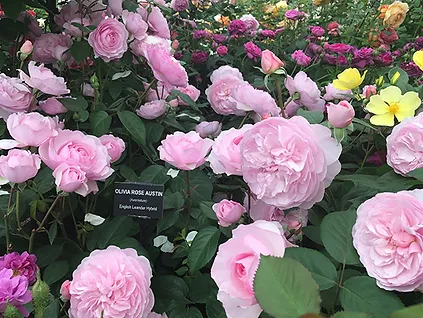
Then, and this is the toughie, you should know where you are going to plant the rose. Like many another gardener of mature years and mature garden, I have limited space for anything new. In fact, every year, I plant roses in pots that sit on our driveway, because there is no room for them in the ground. Forty- two of them used to spend every winter in our garage. These facts do not stop me from ordering new varieties every year. Now, I ask you, how smart is that? The only saving grace of my method is that I can evaluate the new, potted roses during our summer season, and use the best ones to replace older varieties in my garden in the fall. This would work even better if I weren’t so emotionally attached to those older varieties. I once had a hardy and vigorous plant of Sutter’s Gold that gave me five or six bloom cycles every summer, a miracle at our altitude of 6100 feet. I took it out to plant show star Gold Medal, and later regretted losing Sutter’s freely given garden color. See Rule 1: know why you want the rose. (ABOVE: ‘Olivia Rose’)

Now, assuming that you have a need for a new rose in your landscape, a specific need, for which you need a specific type of rose, and further assuming that you know exactly where this rose is to be planted and even further than that, you know what size rose the spot can accommodate, what’s next? Consider your garden’s location. Because we live in Colorado, where winter temperatures can remain below zero for days and then scoot to 70 degrees F, or even worse, do exactly the reverse of that; and because our growing season is short, the two most important criteria for any rose are hardiness and vigor. Without them, we won’t have that rose for long. Our rose choice must have a reputation for living a long and happy life a mile high. It must be energetic in its rate of growth and production of bloom each and every year. Now, granted that these factors are often unknown when a rose first comes to market, we can make educated guesses.

If the rose is an American Rose Society award-winner (All-American Rose Selection, American Garden Rose Selection, Award of Excellence) it has been tested for hardiness and vigor all over the USA. If you can wait to plant a couple of years after your chosen rose comes to market, its flaws, if any, will start to turn up in the American Rose Society’s annual ritual known as Roses in Review, following which a rating will appear for it in the ARS’s annually produced HANDBOOK FOR SELECTING ROSES. As a general rule of thumb, I try to buy only those varieties with a rating of 7.8 or above, which makes them above average roses and more likely to be hardy and vigorous. The handbook is mailed free to every ARS member every year, and many members refer to it when shopping for roses. I firmly believe that any serious rose grower should belong to the American Rose Society. Membership can save you time, trouble and money.


For me, the most reliable guide to hardiness and vigor in a rose is its national origin. Roses from Kordes and Tantau in Germany, Poulsen in Denmark, Harkness, Fryer and Austin in England, Dickson in Ireland and anybody in Canada, usually grow very well in our garden. In contrast, I have never managed to keep a French or South African rose alive much less happy. California roses are always iffy, and I tend to wait a year or two after their debuts to purchase them. How do you know the source of a rose? The first three or four letters of a rose’s registered (not market) name are an abbreviation of the producer’s name: Kor, Aus, Poul, Fry. And you know that by checking the New Rose Registrations section of your American Rose magazine. Be aware of Germany’s ADR designation. ADR testing for hardiness and disease resistance is the most rigorous in the world, and rose varieties with this designation are available for purchase in the USA. The Germans are very serious about their ADR Award; so serious that not only can they award it to a given rose, but they can also take it away.

The other criteria for selecting a rose are, in order of their importance to me (you may and should have your own scale), disease resistance, fragrance, form, bloom cycle frequency, substance, petal count and drought tolerance. These qualities can sometimes be determined more by what is left out of a website or catalog description than by what is actually printed. Assume that if disease resistance is not mentioned, you’ll need to spray for blackspot and mildew. Assume that if fragrance is described as light or not described at all, the rose has no fragrance. Assume that if high centers or show form are not mentioned, your rose won’t win Queen of Show. Is your choice needed for garden color and possibly, arranging? In that case, the plant should be a prolific bloomer, and the description should say so. Bloom cycles are dependent on weather and season length. Knowing what you can expect from a hybrid tea or floribunda is based much more on individual experience than it is for, say, an old garden rose which has only one heavy, early summer bloom, or some shrub roses, which will bloom heavily in spring, followed by fewer blooms thereafter, and maybe, a second flush when the weather cools in fall. Substance generally refers to the thickness, texture, crispness, firmness and toughness of the petals. It is a function of the amount of moisture and starch present in the bloom. This is a factor in the bloom’s ability to stand up to rain and other environmental stress, including hail and insect infestation. It is also an important factor in the vase life of a cut bloom, and thus, its show worthiness. Petal count is usually included in a catalog description. Too few petals may mean a rose may open and blow quickly. Brandy is a rose that has too few petals to hold its form. Conversely, too many petals may mean that the rose will never open in our climate. Uncle Joe (Toro) is an example of a rose with too many petals to open well in Colorado. And it should be mentioned here that a website or catalog listing of the height and width of a rose is based on what the rose is capable of where it was bred. If the rose is a product of Oregon or California, it usually will not attain its stated height and width where the climate is more severe. Conversely, Canadian roses, for the most part, will grow as much as third to a half again higher and wider than they do in Ontario. Austin roses may grow higher and wider here and have fewer disease problems than they do in England because our climate is sunnier and less humid.

Many shrub and old garden roses are renowned for their drought tolerance, but catalogs generally have not caught up with the current importance of this quality in a rose and seldom comment upon it. One noteworthy exception is the catalog of High Country Roses, www.highcountryroses.com, which sells drought tolerant roses. You may check on a variety’s drought tolerance with your local consulting rosarians. You may have read about Earth-Kind roses, which have been tested by the Texas AgriLife Extension Service for superior pest tolerance, outstanding landscaping performance, and heat and drought tolerance. Be aware that while they may be drought tolerant, several of the relatively few cultivars with this designation are not truly hardy and vigorous on the front range of the Rockies.

So now you know how to choose a rose. Just don’t fall in love in a greenhouse.

Fungicides Made Simple

Disease is a major source of plant damage in roses, with the most common rose diseases being caused by fungus. While some rarely-contracted rose diseases are caused by viruses or bacteria, more often than not, it is fungi that wreak havoc in our rose gardens. Nationwide, blackspot fungus (Diplocarpon rosae Wolf) is the most common rose disease. Powdery mildew (Alphitomorpha pannosa) runs a close second in its commonality, but unlike blackspot outbreaks tend to be seasonal. Occasionally, outbreaks of downy mildew (Peronospora sparsa Berkeley) and botrytis blight (Botritis cinerea) may be found, but these diseases appear much less frequently than either blackspot or powdery mildew.

Damage due to fungal attack can range from one extreme to another on the seriousness scale – from repeated loss of leaves (weakening the plant) to less damaging symptoms of minimal lesions (spots) on foliage and canes. Roses with high levels of infection produce less new growth and fewer blooms because their leaves (which are needed for photosynthesis) are affected by disease and fall off. Because of the important role that foliage plays in the overall health of the rosebush, repeated defoliation ultimately impacts the health and longevity of the plant.

Roses differ in their susceptibility to fungal attack, with modern hybrid teas being the most susceptible. If left untreated, infected susceptible roses can lose a large percentage of their leaves. Fifty years ago, Dr. Griffith Buck identified the correlation of leaves to plant hardiness, finding that roses with the ability to hold onto their leaves even when infected by fungus were hardier, more disease resistant landscape plants. This correlation has been reinforced through the Earth-Kind Rose Research Program being conducted through a partnership between the Texas AgriLife Extension Service and the Houston Rose Society.

Managing Fungal Diseases

Fungal diseases are best managed through a multidisciplinary approach that includes plant selection, planting times, level of fertility, sanitation and applications of fungicides. Some roses exhibit more tolerance than others to attack by common diseases. The susceptibility of a rose variety to disease will dictate the management practices that must be employed to maintain the health of the garden site.

There are many roses on the market that have exhibited tolerance to disease; however, there is an even larger population of roses that are highly susceptible to fungal diseases. The gardener’s job is to balance plant selections so that management of fungal diseases in their roses can be attained within the maintenance parameters the gardener has available. Planting young new roses at times when environmental conditions are ripe for disease development, without protecting those plants against attack, tends to invite the disease process. Some hypothesize that excessive fertilization in early spring and late fall (when weather conditions support disease formation) can initiate the process. There is some logic to this theory as blackspot and powdery mildew tend to attack new plant growth first. Heavy fertilization encourages the development of new growth that, if left unprotected, is fair game for fungal pathogens seeking a host. However, cultural practices alone will not eliminate diseases from the garden.

“Fungicides” are a specific type of pesticide that control disease by inhibiting or killing the disease-causing fungus. They work by attacking and damaging cell membranes, interfering with energy production or interfering with the life cycle of the fungus.

Some of the newer disease treatments on the market do not directly affect the fungus itself, but instead boost the plant’s natural defense system causing the plant to produce thicker cell walls and anti-fungal proteins so that the plant is better able to defend itself when disease pressures are high. Examples of this would be products like Messenger and similar “biorational” treatments.

While most fungicides are only capable of protecting uninfected growth from disease, only a handful are effective against pathogens once infection occurs. For this reason, to be effective most fungicides should be applied when environmental conditions are right for disease development, before disease occurs or at the first appearance of symptoms.

Types of Fungicides

Fungicides fall into two categories — “curatives” (products that attack fungi that have already infected the plant) or “preventatives” (products that inoculate plant tissue so that the plant is better able to fight off disease). Fungicides with curative properties would include products sold under the trade names, Mancozeb, Manzate and Fore and products containing maneb. Preventative fungicides would include products such as Rose Pride (formerly known as Funginex), Rose Defense, Daconi and products containing Neem oil.

Some homeowners start applying fungicides to their roses only when the plants lose all their leaves and then stop spraying once new growth emerges. Other gardeners use fungicides for the wrong purpose — for example using a preventative on a bush exhibiting symptoms of heavy blackspot infection. These treatment approaches are wholly ineffective in controlling fungal diseases.

Once defoliation occurs, preventative fungicides become ineffective. In this instance, applications of a curative fungicide, such as Mancozeb, applied every five days for three weeks (or as directed on the manufacturer’s label) is critical to establish disease control. I have found that it takes three weeks of regular applications of a curative fungicide in addition to good garden housekeeping to reestablish disease control. The need to spray should be dictated by the four factors: the health of the rose, the environmental conditions, including the level of disease pressure that may be present, the disease susceptibility of the rose and the desired level of plant perfection.

Disease Control With Fungicides

Fungicides come in powder, granular and liquid form. Most are mixed with water and applied by spraying the mixture onto the plant. A few fungicides are applied to the soil where they break down into compounds taken up by the plant making the plant toxic to the disease. For spray applications, coverage of all parts of the plant (upper and lower leaf surfaces and from the top to the bottom of the plant) is critical because very few fungicides have the ability to be absorbed into plant tissue and move through the plant. One exception would be Aliette, which is applied as a spray treatment and then translocates through the plant’s system from the leaves to the roots and back to the foliage on a “seek and destroy” mission.

On susceptible roses, effective control of fungal diseases may necessitate multiple applications of fungicides — sometimes as frequently as once weekly from the first flush of new growth in the spring until the first hard frost in the fall. These repeated applications are necessary to protect emerging new growth and to replace fungicide product lost by decomposition, degradation by sunlight and/or removal by wind and water. Unfortunately, repetitive applications of the same fungicide can lead to the fungus developing resistance to the treatment — making treatment applications ineffective.

Keeping susceptible roses healthy requires some application of fungicides, especially when conditions support disease development. Blackspot spores germinate and infiltrate cell tissue when temperatures are between 65 – 85° F and when moisture is present on the foliage for seven hours or more. Powdery mildew tends to appear when humidity is high but conditions are dry and cool (warm days/cool nights).

Fungicide labels contain the words “contact” and “systemic”, which is a general description of the method by which the product kills fungal pathogens. Contact fungicides are applied to and remain on the plant surface and do not penetrate into plant tissues. Contact fungicides must come in contact with the disease-causing pathogen to be effective. Examples of contact fungicides are Mancozeb, Fore, Manzate and Daconil.

Often these types of fungicides leave a spray residue on leaves and stems, and only the parts of the plant with spray residue are protected from infection. Contact fungicides are very sensitive to the environment and are usuallyf effective for seven to 14 days, however product life depends on the amount of rain/irrigation the bush receives and the amount of UV rays the chemical is exposed to. One to two inches of rain will reduce the residue of contact fungicides by half, but rainfall of two inches or more will eliminate the product from the plant. The product label will provide direction on application frequency.

Systemic fungicides, sometimes called “penetrants”, are absorbed into the plant and have the ability to move from the application site (similar to how blood moves through our bodies). The distance that systemics are able to move within the plant is dependent on the nature and type of fungicide used. Some systemic fungicides stay in the leaf tissue. Others have the ability to travel from the leaves to the root system, but not back up through the plant structure. Only a few systemic fungicides, like Aliette, can travel up and down freely within the plant. Some of the common systemic fungicides used in rose gardening are Aliette, Fertilome Liquid Systemic Fungicide, Monterey Fungi-Fighter, Rose Pride (Funginex) and Bonide Systemic Fungicide.

Mode of Action – How They Work

How a fungicide works is called its “mode of action.” Fungicides are manufactured in such a way that their modes of action attack either “single” or “multiple” sites within a fungus. Single-site fungicides target one critical component (usually an enzyme or protein) needed by the fungus for survival. The slightest mutation of the fungus impedes the effectiveness of the fungicide treatment by camouflaging the product’s target. Fungicides with single-site modes of action are Rose Pride (Funginex) and Green Light Systemic Fungicide.

Genetic mutation of fungi is more common than we may think. There are 54 known variations of blackspot fungus in North America, and these variations or “races” of the disease are frequently geographically specific. Roses resistant to one race of blackspot fungus may prove susceptible to other races of the disease.

Fungicides designed to attack multiple sites are usually effective against different types of disease components within a fungus. These types of fungicides treat a variety of disease components so that in the event that there is a mutation of one particular enzyme/protein in the pathogen’s make-up, there are usually other non-mutated disease components for the fungicide to attack. Contact fungicides typically affect multiple sites in fungi. Examples of multi-site fungicides are Mancozeb, Manzate, Aliette, FertilomeLiquid Systemic Fungicide, Ortho Garden Disease Control and Daconil.

To Spray or Not to Spray

In North Texas it is not uncommon for hybrid tea roses to require 15 to 20 applications of fungicides per year to maintain plant health. Along the Gulf Coast, environmental conditions can dictate even more applications and for a longer period of time. Sometimes even hardy roses may require a few spray applications when environmental conditions support disease development and disease pressures around the garden are high. A good disease management approach includes cultural and environmental controls, in conjunction with the right type of fungicide, including:

  • Plants must get six to eight hours of full direct sunlight;

  • Having adequate spacing between plants (a minimum of 2 feet between mature plants);

  • Avoiding wetting the leaves during irrigation and not watering plants at night;

  • Removing leaf litter in and around the bushes;

  • Moderate fertilization; and

  • Rotation of fungicide products that have different “modes of action” to delay the development of the resistance to chemical treatments.

A gardener need not hold a Ph.D. in chemistry, toxicology or plant pathology to effectively treat fungal diseases. With all of the rose care products on the market today it may seem a daunting process to select the right product for the disease process in your own garden. This is where a local consulting rosarian can help.

Gaye Hammond (gayeh@lpm-triallaw.com, ‘Fungicides Made Simple’, Summer 2013. Basal Breaks, Jeff and Cindy Garrett (rirjeff@aol.com), eds., Tri-State Rose Society of Chattanooga.

The Perfect Rose Hole

by Satish Prabhu, Master Rosarian, Carolina District Rose Society


There are many formulae for creating a rose bed and rose soil. Some are very simple and some very complex, suggesting using many different kinds of amendments. A large range of width, length, and depth of individual planting holes and beds are recommended. What is a beginner to do? Often we feel that a new rosarian seeking some advice and info is discouraged and driven away by the complexities of what we might recommend with the best of intentions. Is all of it really necessary? We were on a tour in Denmark not too long ago and were touring an old coastal fishing village. The tour guide was explaining how all the roads (three to be exact ) were totally paved with locally sourced paver stones about three hundred years ago and the original pavement was still intact, only getting stronger and compacted, and more durable each year. The pavement extended from front wall to front wall of residences and shops lining up either side of the road. Just then a lady came out of her front door.


In her hand she had a small bag of compost, a small rose bush (what is known here as liners, and they come with their roots bundled in a small cylindrical root ball wrapped in plastic), and a very narrow digging hand trowel. Certainly, it caught my attention as she started to slowly dig up one paver stone, I stayed behind and started watching, while my group proceeded towards the only ice cream shop in the village. She slowly dug a cylindrical hole about five inches in width and ten inches in depth, removed the plastic bag wrapping the root ball, carefully eased the plant in the hole and back-filled remaining space with compost, leveled the ground, and picked up her tool and the single paver stone, and stood up admiring her handy work.


She was very aware of me watching her with interest and she looked at me and smiled. “And that will grow?” I asked. “Of course, it will, just like all these other roses you see here”, she said, pointing at many roses growing on the sides of the road, presumably planted very similarly! I have been thinking for a very long time, “There must be an easier and simpler way to do this” and my experience and seeing this demo convinced me that there must be one! In the last few years, I have started recommending and to some extent doing in my own garden, that we simply dig a hole about 18″ x 18″ x 12 ” deep. Then simply add one cubic ft. of a good grade potting soil such as Miracle-Gro, Vigoro, Fertilome, or any other brand or a quality compost of any kind and mix it with the soil dug from the planting hole. (Only one, any one of all of the above). It will be exactly about a third in volume. Then proceed to plant your rose in it. The resultant soil level will be about three inches higher than the surrounding ground surface and this will help the rose from getting drowned from excess water. Then add a three-inch layer of mulch, available in big box stores, and you are done. And it does work!


This applies to both container-grown roses and bare root roses. In a way, planting roses, simplified. I am in no way discouraging anyone from going the traditional route of extensive soil and rose bed preparations and sending a soil sample and prepping the soil in fall for spring planting and….! Go for it, if you are so inclined!


All photos by Satish Prahbu

Rose Garden Lingo, A Jocular Interpretation

Rose Garden Lingo, A Jocular Interpretation

by Douglas Witt, Master Rosarian emeritus, Carolina Rose Society


The hobby of growing roses encompasses a vast array of ‘people, places, and things’, and can lead to interesting outgrowths such as the words often used by rosarians in their daily discourse. Admittedly these may be used less today than when I began growing roses, and may not apply exclusively to roses, but dabbling into a portion of this patter might be of interest to newer participants in the hobby.


Some words or phrases have become the equivalent of inveterate speech and yet may lack relevance to a newcomer. Many terms are colorful which I feel adds a bit of ‘moxie’ or spirit to the hobby. In giving my take on these idioms I will add a little tongue-in-cheek humor of perhaps one’s first impression formed upon hearing the word initially. After that I will follow with a more comprehensive explanation of its usage or meaning.


I have been accused of being too staid at times, and in our hurried world of today we need a touch of humor to lighten the seriousness so let’s have a little fun!


Listed in no particular sequence I will begin with:
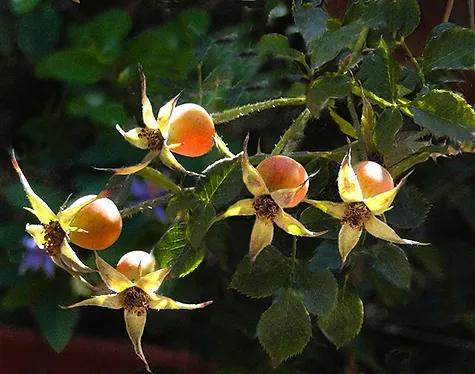
HIP – My grandchildren have a neoteric use of the word….slang for ‘in the know, or ‘with it’! Actually, it is the colorful fruit of the rose. Shakespeare mentioned hips in his writings. It is known that in ancient times hips were used for medicinal purposes, jewelry, perfumes, and even as food. Close examination of a mature hip reveals its resemblance to the early development stage of apples; and for good reason. Roses and apples are members of the same large genus, Rosaceae. ABIOVE: Rose Hips photo by Sally Long


Unfortunately, many of today’s modern hybrid roses produce sterile seeds or none at all which are contained in hips; thus no hips are forthcoming on the plant.


COAT HANGER – A convenient spot to hang one’s coat while working in the garden? Also called a ‘hat tree’, it is a description for an errant pruning cut on a cane made above a bud-eye leaving excessive length (or a stub) which will wither in time. This can provide an avenue for fungi such as canker to enter, and could eventually lead to loss of part, or all of the cane. When pruning, cut ¼ to 3/8 inch above a bud and seal with a material that hardens upon drying.
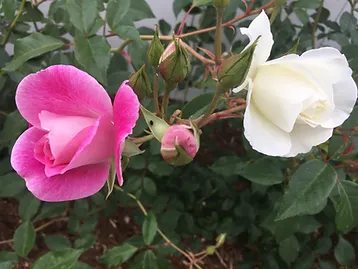
SPORT – The usage of this word is unrelated to the term associated with an amiable individual or a flashy playboy. Instead, it is for a cane possessing different bloom color, form, or other notable growth traits which are unlike that of the plant from which it emanates. It is the result of an alteration of the cell structure, a genetic mutation, that changes the make-up of the host plant at that juncture. It is perhaps a new variety to be propagated and is a rare occurrence in the garden.


DEADHEADING – This provocative word is not a reference to the dastardly use of the guillotine during the French Revolution of 1789. Rather, it is the act of removing spent blooms or dead flower heads. Roses bloom as a means of perpetuating the species by producing seed as do all flowering plants. Modern roses bloom repeatedly during a growing season and as each cycle is completed removal of the spent blooms serves to instigate fresh growth and bloom in a controlled manner. This removal also aids in preventing the presence of fungi such as botrytis on mature petals both on the plant and in the mulch where they well eventually drop to if unattended.


SINGLE-SITE – I’ll wager that one’s first thoughts upon reading those words were of a club or singles bar where unattached throngs congregate. Wrong! It is a term used to describe a systemic fungicide’s mode of control. It enters the stem and foliage to neutralize only one site within the fungi’s composition, interrupting its integrity and preventing viable reproduction. When using the same product continuously its effectiveness may wane as the single-site within the fungi may be replaced by a modified or mutated gene resistant to the product. Thus, the admonition to alternate products with a different mode of action.
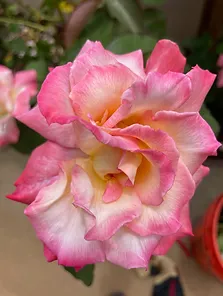
CONFUSED CENTER – Let me guess! A first impression was of a term used by a non-exhibitor to describe an avid exhibitor’s thought processing core. No! It is a term used in judging Hybrid Tea roses at a rose show indicating that a bloom has petal alignment faults at its center. The ideal bloom has a high, spiraled center with petals gradually falling away to form a symmetrical outline that is more-or-less circular when viewed from overhead.
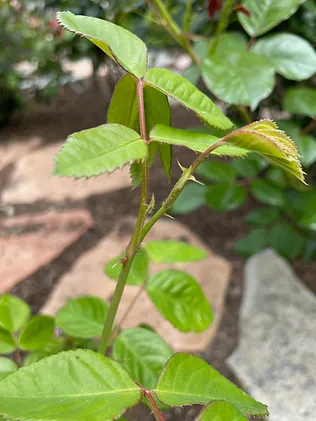
BLIND SHOOT – There is no connection of this term to a blindfolded marksman at a target range. It is the description of a stem with no bloom bud at its tip. A rather indelicate choice of words to indicate a condition found frequently in a rose garden, particularly in cooler weather. There are various causes of this condition including insects, climatic conditions, and hereditary factors.


ROOTSTOCK – The word has no connection to a massive rock-star gathering such as occurred in the mid-twentieth century at Woodstock. It is instead a reference to the rugged stock onto which a desirable scion is affixed to improve its growth habits and productive output. It was discovered that certain families of plants grow larger and produce more bloom and/or fruit when grafted onto a hardy, compatible rootstock. Roses fall within this category.


GRAFTING – This is not a reference to the act of obtaining money or position by underhanded means. It is the process of inserting a bud or scion into a slit in another stock from which it will draw vital fluids and continue to grow. Presently there are several different rose stocks that are compatible to use for grafting onto. Each imparts its own growth or other desirable traits to the affixed bud or scion as it develops.
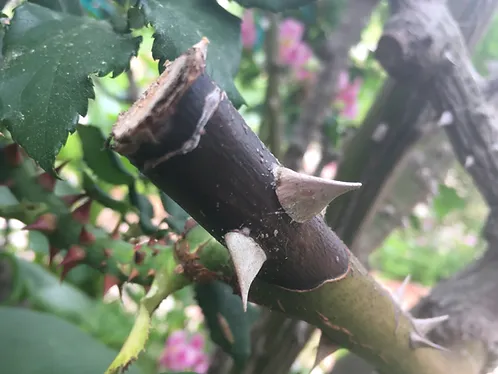
 

DIE-BACK – One might think it refers to the rebound of a pair of dice from a backboard during a craps game at a Vegas casino. It is instead an expression used to identify a condition of partial or entire cane loss. It is the aftermath of numerous incidents including cultivation injuries, cane boring insects, inclement weather, vole activity, and fungus diseases such as canker. I hesitate to say it, but even old age can be a factor. The occurrence should be promptly attended to as it can lead to a further spread of the condition or attract unwanted pests.
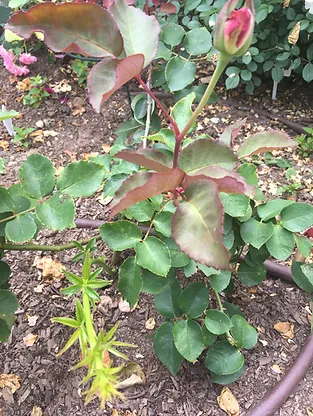
 

SUCKER – Usually the first thing that comes to mind is a gullible being that easily falls for deceitful practices. In this instance it is superfluous growth (a shoot) emanating from the rootstock of a grafted cultivar. It can be readily identified as its appearance will be noticeably different from that originating from the grafted hybrid. It can be a long, lanky cane with an overabundance of thorns, lighter foliage with more or less leaves, and may bear blooms of a different color and form. It should be removed as soon as discovered since it will assimilate nutrients and water intended for the grafted hybrid. To be sure it is a sucker and not a sport, trace its point of origination which should be below the graft site. ‘Own Root’ roses do not produce suckers.


CROWN – In this circumstance it is not a tiara worn by a sovereign monarch. It is however the area on a rootstock where a bud or scion was grafted, and from which the principal growth of it will emanate. It will increase in size over time, obtaining an extensive dimension after several years, and should not be subjected to injury lest the plant falter or die. It represents the future of the plant and will require a form of winter protection in colder climate zones to enhance its survival probability.


GRADE NO. 1 – I like to think of our hobby as a grade #1. But for this essay it refers to the top-quality rosebush available for purchase. The system was established years ago by the American Association of Nurserymen in setting standards for grading field grown, bare root, two-year old (referring to the rootstock), grafted rosebushes. Hybrid Teas must have three or more heavy canes at least ½ inch in diameter within three inches of the graft union (crown). At least two of these should be 18 inches long (before being pruned for convenience in handling). Floribundas must meet the same requirements except the canes can be a couple of inches shorter, and Climbers must have canes a few inches longer.

Of course the American Rose Society (www.rose.org) is grade #1 in the world of roses. It is the foremost authority on all phases of the hobby and welcomes any inquiry concerning the world of roses.


In this brief paper I have covered only a portion of the many words or phrases used by rosarians in their pursuit of the hobby. A search in an encyclopedia or the dictionary will reveal that many words have multiple meanings, but that is another topic.


I have had fun compiling this short list of rose lingo and hope it has been enlightening as well as perhaps produced a chuckle or two along the way. It is interesting as to how the mind can interpret a word or term upon first hearing it. Many times a first impression can be incomplete or even erroneous, but curiosity can serve to stimulate the mind’s imaginative capability be it for frivolity or for seriousness.


All photos by Rita Perwich unless otherwise specified.

A Little Botany

A Little Botany

by Rich Baer, Master Rosarian and Botanist, Portland Rose Society

This article was originally published in The Portland Rose Chatter, February 2021.


As a person who grew up as a plant person and obtaining a plant education including advanced degrees in Botany, I am very attuned to the lingo of the plant world. As with any specialty there are a lot of words that are unique to the field and are often misused. As long as it does not lead to any communication problems, it really does not matter. If roses have thorns or not is not a major problem, because we all understand what roses do have and what exactly we call them, (the correct word for them is prickles), causes no problems.

 

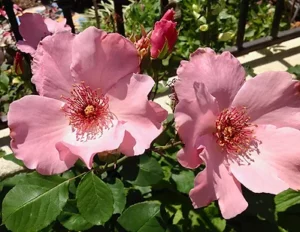
One little phrase for describing the rose classes does however bother me and I have spoken about it a number of times and that is referencing roses that have one row of petals as being single petaled roses. This problem came from exhibiting roses. One rose in a vase for entry purposes is referred to as a single rose. So, then what do we call a rose that has four to eight petals in one row around the bloom? To differentiate it from one rose in a vase it began to be referred to as a single petaled rose. The picture to the right is what a collection of four single petaled roses would look like. In nature there are no single petaled roses. The minimum number of petals in any rose currently known is four which is the number of petals in Rosa Omeiensis Pteracantha, also called the wingthorn rose. This is the rose with the very large red prickles which is the reason those who grow it do so. For the sake of exhibition the American Rose Society has defined a single rose as one which has between 4 and 8 petals. Personally, I find single roses to be very attractive and probably have as many as 20 or more of them in my rose collection.


Every day that we do go out into our rose gardens we observe the roses growing. I believe that this year (2020) they have done exceedingly well with great vigor and many many blooms. However, do we ever look at that rose growth very carefully and up close? As a botanist I am always watching to see exactly what my roses are doing so that I can gain more appreciation for what I am seeing. A number of visitors to my garden this year have commented on how tall my roses are. I usually reply that because I look at them more as a garden, how high the flowers are is not a concern. The picture on the right represents a typical new stem growing from an old stem at the point that the last deadheading was done.


The stem typically grows rather rapidly, producing leaves at intervals from nodes along the stem as it grows. At each of these nodes, at the base of the leaf is a vegetative bud. At this point in its growth you will never see any side shoots developing from this shoot. If you look closely at a stem you can find the tiny buds at the very base of each leaf located along the stem. At the very tip of this stem there are thousands of cells called the apical meristem. These cells divide into non differentiated cells. That is, they are not leaf cells or stem cells. They will eventually become specific cells that will grow into leaves and other tissues along the stem as time passes. But back at the tip of the stem, the meristem cells continue to divide and at the same time they are producing new cells, they are also producing auxin, the most well know plant hormone. This auxin travels down the stem and its presence prevents any of the new buds that have formed at the nodes from growing. This is the reason that you rarely see side shoots on the newly developing canes. At a point in time that is determined by several factors, including environment and hormones the vegetative stem will become reproductive. The meristem cells produce cells that become the forerunners of a flower. Once the flower bud begins to grow it occupies the tip of the stem and there are no longer any meristem cells. All of the new parts have been produced by the meristem cells, the stem and foliage beneath them and the growing flower bud above them. The picture “reproductive stem” shows the existence of the flower bud from the tip of the stem. When you can first see the tiny bud it is the first time you will notice that the stem is about to bloom, but the production of this new bud has been going one for quite a while. With the disappearance of the meristem cells there is also no more production of auxin at the tip of the stem. The reduction in the concentration of auxin in the stem allows the previously inhibited buds near the tip of the stem to begin growing. Depending upon the variety of rose, the number of these stems which will begin growing can vary. You probably know that part of the definition of the hybrid tea rose is one that grows with one flower per stem. Without disbudding, you rarely get just one bud and flower per stem, you usually get more than one bud at the tip of the stem.


The picture left represents what a single bloom looks like. There is the developing flower which is attached to the plant by a stem. However, this attaching piece is not a stem but varies from any other stem on the plant in several ways. This structure also has its own unique name and is called the “peduncle”. The most obvious difference you can see by looking at it is that it has no nodes. No leaves have developed along its length. It does however originate at a leaf node, much as any other stem on the rose plant. If you deadhead by snapping off the dead flowers this peduncle usually cleanly snaps off at its origin when you push it over. If you do remove dead flowers this way, just grasp the peduncle between thumb and forefinger and bend to the left or right. After it breaks off, look at the tip of the stem left on the rose bush and you will see at its very end a leaf. It may be a regular leaf that you will recognize as a leaf, or it may be just a little green fold which does not look like a leaf but it is. If you tried to break a rose stem you will not find that it will cleanly break away from the plant as does the peduncle. Sometimes the peduncle will not snap off cleanly but usually it does. If you have tried deadheading this way you know what I mean.

Almost always after you see a stem become reproductive with a flowering bud at the tip of the stem, you will see additional buds beginning to grow as well. With the absence of auxin to inhibit the growth of the side buds on the rose stem, they often begin to grow. As you can see in the picture on the left we often see side buds beginning to grow from just below the peduncle. In this case, you can see the two nodes, they are at the base of the leaves projecting to the right and left. From the very top node the peduncle of the new bloom is growing, as is one of the side buds. In hybrid tea roses it is often the norm that at least the top two nodes will produce side buds. If you could watch the progress microscopically, what you would see would not be just the emerging of the two side buds. The bud at the base of the leaf would begin to grow just like any bud on the bush. However, it would not grow like a stem for very long. It quickly changes to a reproductive stem and begins to produce a peduncle and bloom. However, the stem often will grow enough before this happens to produce enough normal rose stem to have two or three leaves and thus nodes. So, each of these side buds is produced just like the major bud that is at the tip of the stem. In most cases the buds at the nodes on these side bud stems do not grow, so we have the main bud with an indeterminate number of side buds.

Everything is the same for each of these side buds as it is for the major bud that originally was produced. So we have stems with tiny leaflets at two or three nodes below the peduncle and bloom. The same thing can happen here that happened to the main stem, side buds can begin to grow. They can grow with the same results as we had before.

They will produce very small stems that can have several nodes and tiny leaves and a bud and peduncle on their end. This can lead to a very large spray of roses being produced at the end of the main stem if they are allowed to proceed. This is what happens in the case of many of the floribunda roses and other roses which are grown as landscape roses for color.


The picture above depicts the blooming of one such rose called Greetings, a shrub rose from Jackson and Perkins. The main bud can be seen in the center and is showing color. You can follow the progress of this spray in the stems below. Below the main bud side shoots began to grow and produce stems and buds. Then from those shoots additional side shoots grew and produced buds and there are places in this spray where there is a fourth group of buds being produced. All of the stems and peduncles grow from a node that is marked by the presence of a rudimentary leaf, but a leaf just the same. There are no peduncles which originate from other peduncles and there are no stems that do not originate from other stems.


In this case the original terminal bud will bloom first, and then all of the first wave of side buds will bloom at the same time. Then each additional wave of buds will mature and bloom in sequence. That is why disbudding large sprays can become tedious to the exacting exhibitor. But in the garden, we just let them bloom to produce the great color spots that they can become.


There was a reason for trying to establish how flowers are produced on the ends of rose stems and the importance of the peduncle. The peduncle exists from the bottom of the bloom to the first node from which it came. In this case the node can be easily seen because there is a leaflet growing from where it emanates from the stem. There is no incidence in which one peduncle arises from another peduncle, they always begin at a stem node and end at the base of the growing flower.

Plant Taxonomy is the science that finds, identifies, describes, classifies and names plants. Every part of the plant is examined in determining how to classify it. The reproductive parts are very important in the classification of plants overall. The way the flowers are arranged when they bloom is very important as well. In roses, the presentation of the flowers is very much at random. The vegetative tip produces a bud and then all sorts of different combinations can occur below the first bloom. In many plants the presentation of the blooms is not at random, but occurs in a specific way for any one variety of plant and the presentation is called an inflorescence. The names of most of the different types of inflorescences are probably not known to many, but there are a few that are familiar. Probably the most common would be the head. This is the type of flower presentation in plants such as sunflowers. There is one peduncle formed at the tip of the vegetative stem, just like in the rose, however that peduncle begins to divide and re-devide many times over. The stems that are produced by this division of the peduncle are called pedicels. In the case of the sunflower each of the pedicles produces a flower at its tip and they grow such that the structure that we know as a sunflower head is formed. In the representation to the left are many of the different ways that plants produce their flowers. In any one type of flower, sunflower for example, every time the vegetative stem becomes reproductive and produces a reproductive peduncle a head will be the result. The type of inflorescence formed by any one variety of plant will always be the same because it is in the genetics of the plant to grow that particular way. A rose may randomly produce a spray of blooms that resemble one of these classic inflorescence types, but it will not be a repeatable event. The occurrence will be strictly accidental since the genetics of the rose cause it to produce its flowers in the way previously described with each bloom arising from the stem of the plant on an individual peduncle.


Another common type of inflorescence is the umbel. The peduncle that is produced branches into any number of different pedicles each having a flower at it tip. Probably one example known to gardeners would be either the carrot, or Queen Anne’s Lace. You can turn the flower over, the inflorescence, and see how the peduncle is divided over and over again producing the classic look of the Queen Anne’s Lace flower head. In each of examples in the diagram you will notice that the peduncle is emerging from the last leaf on the stem and then there are no leaves on it as it grows and divides.


As a botanist I observe what is going on in the garden at a little different level than the average gardener, which is not necessarily good or bad. But I think that the more you know about the things you enjoy, the more that you can enjoy them. I have a number of plants growing in pots that I am able to observe closely almost every day of their growing cycle, including one that has fascinated me for the last three years. When I first saw Asclepias physocarpa in a catalog, I knew I wanted to experiment in my garden with it. The taxonomist recently renamed it to Gomphocarpus physocarpus, but it is the same plant. It has many common names, including balloon flower, and family Jewels tree. But it is a member of the plants that Monarch butterflies feed on. I would like to see them in our part of Oregon. I have never seen one here in my over forty years of gardening here, but there is always hope. This plant produces flowers in an inflorescence known as an umbel, you can find it in the diagram of types. The peduncle originates from a node on the stem of the plant and grows and then it begins to divide into pedicels, normally with this plant there will be five to seven, each of which will bear one flower. I have nine of these plants growing around the yard, all of which are over 8 feet tall and there are literally thousands of blooms on them and every one of them is produced by exactly the same type of structure, the umbel. There is no randomness to all of the flowers, every one of the inflorescences looks exactly the same. So, you see that it certainly is not a random occurrence that the flowers are produced in umbels, the genetics of the plant makes every one of them the same. Going back to the rose, you might find five or six blooms that are presenting themselves such they look like they are an umbel, but it will certainly be random and will not repeat with any regularity and besides, each one of the blooms would be on its own peduncle.


The usage of the word inflorescence has become the dominant way that rose sprays are described in the judging guidelines for roses. I believe that the term is being misused and all collections of rose blooms on one stem should be referred to as sprays. In referring to the individual blooms of a spray the term floret is often used to describe them, and I believe that botanically this is incorrect as well. The word floret botanically refers to the tiny flowers of some grasses. It is correctly used for the flowers of cauliflower or broccoli or members of the compositae family like sunflowers.

WHAT COLOR IS THAT ROSE?, OH, NO COLOR!

Back when I worked for Edmund’s Roses when they were in Wilsonville, Oregon I got to talk to many people and try to answer their horticultural questions. One question often repeated was about rose colors. Is there a blue rose, or is there a black rose?

I could understand people wanting a blue rose because it is the only color that roses do not come in. However, black! If you had a black rose in the garden there would appear to be a hole in the bush where the flower was. Black items by nature do not reflect any light so you would not be able to see a truly black rose. Later I was honored to be part of the production of a book called “The Quest for the Black Rose” by Ingrid Verdeem around 2006 by describing many roses which were considered near black. It is still available used on e-bay for around $80. It was a giant of a book at the time measuring 17 inches by 13 inches and it does not fit anywhere on my bookshelves. I however I have a special place for it. A couple of the prominent and known roses to be discussed were Black Baccara by Meidiland, and Ain’t Misbehavin hybridized by Sean McCann.

When Sean’s rose was released around 1990 it was hailed as being very close to a black rose, but in reality it is consistently a very, very dark red. One of its parents was Black Jade, a long time favorite in our garden for being very dark red as a miniature. Last year when a planted rose seeds for the first time, one of the roses I took seeds from was Hoot Owl a Jerry Justice hybrid which is a medium red single miniature with a white eye. It was selected because it had an abundance of nice-looking hips when I pruned it in February. I was able to get a number of plants from the seeds of Hoot Owl which spanned the color spectrum from white to dark red, all of them singles. Because the plants were still small last fall, I moved a number of them into my garden shed where I continued to grow them under lights. What a surprise it was on the morning of January 21st, when I went out to water them to find a bloom on hoot 4 which gave me a thrill of seeing what I considered the first truly black rose I have ever seen. It was beautiful in its own way, but mostly for its uniqueness. This seedling had bloomed earlier during the summer outside and it very much resembled Ain’t Misbehavin when grown outside with a good dose of ultraviolet rays. But grown inside, it was a whole different rose. I do not think will bes, but it sure was fun seeing what I believed was a first black rose. Just as an aside, the picture was not underexposed to make it darker than it actually was, and you can tell that by the naturally colored green in the leaves.


Photos by Rich Baer