Your Roses’ Roots

It all starts at the bottom


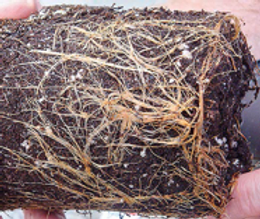
Those of us who love roses are in our own private nirvana every spring when our first blooms burst forth, as fragrant and perfect as they will ever be. It’s enough to make even the most seasoned gardener forget that most of our rose plants’ labors begin under the ground, in an environment we seldom see. To understand how the importance of roots and the soil around them, it helps to know something about their structure. A root is the first thing to emerge from a seed in its quest for life. The first root from a seed is often a taproot that sprouts finer fibers that grow out into the soil. As the plant grows and develops more roots, some of them undergo secondary growth, becoming woody. The main function of these woody roots is to provide a structure to connect the many, finer roots to the plants. These roots branch out and grow away from the plant, producing fine hairs along their length that absorb large amounts of water and nutrients from the soil. Vascular systems that transmit water, nutrients, and manufactured sugars throughout the plant are contained in a root’s plant tissues.

The maturity of the plant and the density of the soil determine the size of the root structure. Still, despite the size of the entire root system, roots are fragile, particularly the fine roots and root hairs that are the major collectors of water and nutrients. New rose plants are especially vulnerable with their limited systems of young, non-woody roots.

Gardeners have to work directly with a plant’s roots when planting or transplanting it. Transplant shock is a result of damage to root hairs that impedes water absorption until the plant can replace them.

Some shock is unavoidable, but it is important to keep the rootball, a clump of soil that contains many of the roots, together when transplanting. It is helpful to cut the plant’s foliage back, giving the roots time to recover and grow before they have to provide water for a plant with lots of leaves.

A rose bush in a pot can develop such a healthy root system that the roots run out of room in the pot and begin to grow around its edges. The plant suffers as the amount of roots takes up space where water and soil should be. Water runs through the pot and the bush seems to wilt quickly. Repot it into a larger pot or take it out of the pot it is in, trim the roots, add fresh soil, and put it back into the same pot.

Conversely, a small, young rose plant will not do well in a pot that is too large. If the proportion of the soil to the new, tender roots is too high, it will hold too much water for the roots to absorb, making them vulnerable to rot. Young roots are easily crushed when potted too early. Give new plants time to develop roots in their small pots before moving them up to the next pot size.

Other things besides planting and transplanting can harm roots. Chemicals in the soil can inhibit root growth. Parasites, such as nematodes that thrive in warm, sandy soils and diseases are a danger, as are the digging and burying habits of animals. Talk to any rosarian with a gopher problem and they will tell you the horror of pushing on a bush and watching it fall over, completely rootless.

What can a gardener do to increase the health of plant roots? Obviously, the soil around the root is of key importance. Friable soil, that is soil that is loose and crumbly, allows space for air and water. These two elements should make up about 50% of a soil’s content so that roots can find space to grow and microbes, worms, and other soil life can flourish. Roots are directed in their growth by the amounts of water, air, and nutrients available for uptake. Roots will stay away from compacted soil and drown in soil that is not well drained. Healthy soil, with a good balance of water, air, minerals, and life forms will result in fast growing, strong roots.

The best way to improve soil texture and drainage is to add compost. Compost consists of naturally decomposed organic materials. Biological organisms break down these materials into a dense, dark mixture that provides carbon and nitrogen amendments to the soil. Serious gardeners often create compost in their backyards while those who lack time and space for such an endeavor can buy it in bags from a store. The product should be loose and dark brown or black in color with no recognizable wood.

Compost should be moist, not soggy, and if it dries to a light brown color, there is probably too much soil and not enough nutrients. Finally, off odors of ammonia or sulfur indicate that the compost has not decomposed enough. Spread compost over the ground surface and it will work its way down into the soil.

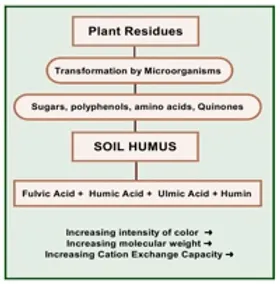
Humic and fulvic acids are products that can improve soil health and increase root vitality. These acids are the end products of the microdegradation of plant matter in soils, composts, peat bogs, and water basins. They are not a fertilizer; rather, they improve the soil by strengthening biological activity and increasing water retention. In addition to these benefits, nutrient uptake is improved and chlorophyll synthesis is increased. Finally, humic acid can chelate micronutrients, breaking ionic bonds and increasing their availability in the soil. Increased soil health results in stronger root growth. Humic acid is available in liquid and dry forms from specialty nurseries.

Other amendments that affect soil composition are gypsum, leaf mold, and manures. Gypsum can loosen clay soil by reacting chemically to the soil’s salts. Leaf mold, shredded composted leaves, also loosens soil and provides organic matter. Manures that are composted are high in nitrogen and other nutrients. However, they also contain salts which may add to the saline content of the soil. Too many salts in the soil can actually draw moisture out of plant roots in a reverse osmosis process.

The addition of mycorrhizae to the soil is a controversial topic for gardeners. This group of fungi develops a symbiotic relationship with plant roots; the roots provide the mycorrhizae with food while the fungi extend the reach of the roots for water and nutrients by attaching to the root and extending long strands of mycelium throughout the soil. Initially rose lovers were enthusiastic about mycorrhizae, but further research has dimmed that enthusiasm. Inoculation of mycorrhizae can be expensive and the exact kind of mycorrhizae that work best with roses is uncertain. Perhaps most illuminating is the research that indicates that the major nutrient a plant gains through mycorrhizae’s increased root capacity is phosphorus. If a plant has enough phosphorus, it doesn’t send out the signals that encourage symbiotic mycorrhizal growth. Adding phosphorus in fertilizer may negate the benefits of any inoculation. Is there a rose lover anywhere who can swear he will never use phosphorus again in fertilizing roses? The money for mycorrhizae would be better invested in a garden wide application of humic acid.

Finally, protect your rose bushes’ roots with a nice two to three inch layer of mulch. This will keep the roots cool and slow down the growth of water stealing weeds. Any roots too close to the soil surface will be cushioned against surface injury. Enjoy the blooms of spring, but don’t forget what lies beneath!

A Fertilizer Primer: What’s In that Rose Food?

Roses love to grow. Given minimal care they will survive and produce flowers. With a regular feeding program and a varied diet, roses will thrive and produce armloads of large, beautiful blooms. There are many types of fertilizers, liquid (soluble) or dry (granular), organic or in-organic. Find a program that works for you, but do it on a once-a-month basis during the growing season.

ORGANIC VS. IN-ORGANIC: Organic (or natural) fertilizers are derived from any formerly living plant or animal matter. Most commonly used are blood meal, cottonseed meal, bone meal or superphosphate, alfalfa meal and fish meal. Manures – chicken, rabbit and steer are also in this category. Organics are generally slower-release, as they require decomposition by soil micro-organisms before being usable by the plant. They supply benefits to the soil in addition to food for the plants, and should therefore be a regular part of your amendment program.


In-organic (or chemical) plant foods are man-made compositions, formulated for various speeds of release, but generally provide an immediate food source for our heavy-feeding roses, as compared to organic foods. Brand name manufactured rose foods include Bandini , Fertilome , Miracle-Gro , RapidGro , Sterns , Peters , etc. Roses utilize natural and chemical food sources equally, and benefit greatly from use of both, on an alternating basis.

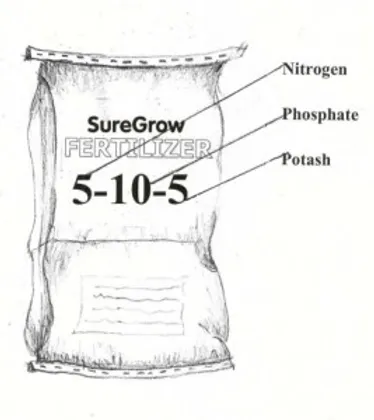
“BALANCED” ROSE FOOD: The term is used frequently, and simply means that a fertilizer has a blend of Nitrogen, Phosphorus, and Potassium (N-P-K), though not necessarily in equal parts, in a formulation beneficial for roses. Nitrogen, Phosphorus and Potassium are the three major ingredients required by all plant materials, in varying proportions, dependent upon the plant s needs. Fertilizers, by law, have a numerical N-P-K ratio printed on the container. A 6-12-6 ratio means that the mixture contains 6% Nitrogen, 12% Phosphorus and 6% Potassium. It contains 24% total nutrients and 76% filler material. 6-12-6 is considered a Balanced Rose Food, as it supplies the basic ingredients in proportions beneficial to roses on a continual basis.

Roses utilize each ingredient at differing times of the growth and blooming cycles. More Nitrogen is needed for early spring growth of stems and foliage, plus continual moderate supply during the entire growing season. Phosphorus is for roots and blooms; a higher phosphorus food should be supplied from 3 weeks before blooming until blooming. Potassium provides health for the plant, a catalyst for Nitrogen and Phosphorus. It also builds in hardiness to heat, drought and cold, and is therefore a good supplement just prior to the dormant season.

Each of the three ingredients may be purchased separately for addition to specialized feedings.

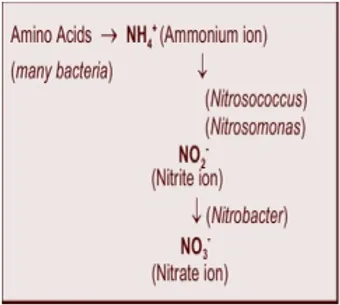
NITROGEN SOURCES When we add organic matter to our soil, its nitrogen content is not immediately available to the plant; it must first be broken down during the decay process. During that process, matter is transformed first into ammonium, then to nitrite, and finally to nitrate nitrogen forms. While the process can take from several days to years, various compounds are formed which are used by soil microorganisms for their own growth.

Since the nitrogen required by rose bushes is mainly in the nitrate form, the importance of chemical fertilizers becomes evident: to supply instantly available nitrogen via nitrate forms; plus nitrogen available within a short space of time via ammonium forms (urea and ammonium phosphates, etc.). A fertilizer containing all three sources – nitrate, ammonium and urea is superior. Learn to read labels to determine nitrogen sources.

PHOSPHORUS AND POTASSIUM Both are supplied as primary nutrients in balanced fertilizers. Phosphorus moves very slowly in the soil, so applications are available only to feeder roots within a few inches of the soil surface. Continued use ensures that a supply of phosphorus will eventually reach the lower root structures, provided the soil Ph is proper. The importance of placing bone meal or superphosphate in the bottom of the planting hole becomes clear – newly planted roses need phosphorus supplied at the root zone. Potassium also moves slowly and is not readily leached from the soil. However, it is extremely mobile within the plant system, where it can be leached from the leaves (its primary destination), by rain or irrigation. A continual supply of potassium is good practice.

SECONDARY- AND MICRO-NUTRIENTS In an effort to provide the ultimate balanced fertilizer for roses, some formulations include secondary nutrients (calcium, magnesium and sulphur, etc.). Sulphur is an excellent ingredient to help acidify alkaline soil. Where soils are acid, additions of Lime will adjust the pH. High calcium content in soils can render magnesium unavailable – another good reason to add Epsom Salts (magnesium sulphate) continually.

Micronutrients (iron, zinc, manganese, copper, cobalt, boron, chlorine and molybdenum) are added in some formulations as well. Percentages are typically small, as roses require only small amounts. Consider a fertilizer with chelated forms of micronutrients as most desirable, as they are the most usable by the plant.

“CHELATED” ELEMENTS (IRON, ZINC, MANGANESE, ETC.) Several trace elements already exist in soils, and are added to fertilizers as an additional supply. If the soil Ph is too high (above 7.0), some elements become unusable (insoluble) by the plant. This is especially true of iron and manganese, and to a lesser degree, copper, zinc and boron.

Chemical reactions in the soil slowly convert the elements into insoluble forms. First, soil Ph must be adjusted to the 6.0 – 7.0 range, then usable forms of the elements must be added. “Chelates”, without getting scientific, are simply forms of each element that remain soluble in the soil, and are readily available to the plant. However, since this solubility allows them to readily move out of the root zone with irrigation, repeated applications are needed.

Hence, the value of a fertilizer with chelated forms of the trace elements included.

This new knowledge of fertilizers is only a basic beginning to understanding the needs of roses. An excellent program to continually acquire new techniques to grow roses is available through a membership in the American Rose Society. The monthly American Rose Magazine is alone worth the low membership fee, and can save you equal amounts in reduced costs through better understanding of how to grow roses!

Soil: Part I and II

Soil is a mixture of weathered rock fragments and organic matter at the earth’s surface. It is biologically active — a home to countless microorganisms, invertebrates and plant roots. It varies in depth from a few inches to 5-feet or more. Soil is roughly 50 percent pore space. This space forms a complex network of pores of varying sizes, much like those in a sponge. Soil provides nutrients, water and physical support for plants as well as air for plant roots. Soil organisms are nature’s primary recyclers, turning dead cells and tissue into nutrients, energy, carbon dioxide and water to fuel new life.


Soil and water

Soil Pores, Water and Productivity

A productive soil is permeable to water and is able to supply water to plants. A soil’s permeability and water-holding capacity depends on its network of pores:

  • Large pores (macropores) control a soil’s permeability and aeration. Macropores include earthworm and root channels. Because they are large, water moves through them rapidly by gravity. Thus, rainfall and irrigation infiltrate into the soil and excess water drains through it.

  • Micropores are fine soil pores, typically a fraction of a millimeter in diameter. They are responsible for a soil’s water-holding capacity. Like the fine pores in a sponge or towel. Micropores hold water against the force of gravity. Much of the water held in micropores is available to plants, while some is held so tightly that plant roots cannot use it.

Soil that has a balance of macropores and micropores provides adequate permeability and water-holding capacity for good plant growth. Soils that contain mostly macropores drain readily, but are droughty and need more frequent irrigation. Soils that contain mostly micropores have good water-holding capacity but take longer to dry out and warm up in the spring. Runoff of rainfall and irrigation water also is more likely on these soils.

What Affects Soil Porosity?

Several soil properties affect porosity, including texture, structure, compaction and organic matter. You can evaluate your garden soil with respect to these properties to understand how they affect its porosity. The only tools you need are your eyes, fingers and a shovel.

Clay particles are the smallest — about the size of bacteria and viruses — and can be seen only with a microscope. They typically have a flat shape, similar to a sheet of mica. Soils rich in clay feel very hard when dry, but are easily shaped and molded when moist. Although all of these particles seem small, the relative difference in their sizes is quite large. If a typical clay particle were the size of a penny, a sand particle would be as large as a house.

Soil texture directly affects porosity. Pores between sand particles tend to be large, while those between silt and clay particles tend to be small. Thus, sandy soils contain mostly macropores and usually have rapid permeability but limited water holding capacity. Micropores predominate in soils containing mostly silt and clay, creating high water holding capacity but reducing permeability.

Particle size also affects the surface area in a volume of soil. Surface area is important because surfaces are the most active part of the soil. They hold plant nutrients, bind contaminants and provide a home for microorganisms. Clay particles have a large surface area relative to their volume, and a small amount of clay makes a large contribution to a soil’s surface area.

Nearly all soils contain a mixture of particle sizes and have a pore network containing a mixture of pore sizes. A soil with roughly equal influence from sand, silt and clay particles is called a loam. Loams usually make good agricultural and garden soils because they have a balance of macropores and micropores. Thus, they usually have good water-holding capacity and moderate permeability.

A sandy loam is similar to a loam, except that it contains more sand. It feels gritty, yet has enough silt and clay to hold together in your hand. Sandy loams usually have low to moderate water-holding capacity and good permeability. Silt loams are richer in silt and feel smooth rather than gritty. They are pliable when moist, but not very sticky. Silt loams usually have high water-holding capacity and low to moderate permeability.

Clays and clay loams are very hard when dry, sticky when wet and can be molded into wires and ribbons when moist. They generally have high water-holding capacity and low permeability. Almost any texture of soil can be suitable for gardening, as long as you are aware of its limitations and adjust your management to compensate. Clay soils hold a lot of water, but are hard to dig and dry slowly in the spring. Sandy soils need more frequent watering and lighter, more frequent fertilization, but you can plant them earlier in the spring. All soils can benefit from additions of organic matter, as described below under “Adding Organic Matter.”

Many soils contain coarse fragments, such as gravel and rocks. Coarse fragments do not contribute to a soil’s productivity and can be a nuisance when you are digging. Don’t feel compelled to remove them all from your garden, however. Coarse fragments aren’t harmful, and your time is better spent doing other gardening tasks. The only time rocks are a problem is when you have nothing but rocks on your land. Then, water and nutrient-holding capacities are so low that it is difficult to grow healthy plants.

Clay — The smallest type of soil particle (less than 0.002-mm in diameter).

Sand — The coarsest type of soil particle (0.05- to 2-mm in diameter).

Silt — A type of soil particle that is intermediate in size between sand and clay (0.002- to 0.05-mm in diameter).

Soil — A natural, biologically active mixture of weathered rock fragments and organic matter at the earth’s surface.

Growing roses is more than just digging a hole in the ground and sticking a rose into it and expect to have great roses. Knowing and understanding the importance of soils and fertilizers is very important to growing roses and other plants.

Soil texture

Texture describes how coarse or fine a soil is. The coarsest soil particles are sand. They are visible to the eye and give soil a gritty feel. Silt particles are smaller than sand — about the size of individual particles of white flour. They give soil a smooth, floury feel. On close inspection, sand and silt particles look like miniature rocks.

Soil Structure

Percentages of clay, silt, and sand in the basic soil textural classes

Individual particles of sand, silt and clay tend to cluster and bind together, forming aggregates called peds, which provide structure to a soil. Dig up a piece of grass sod and examine the soil around the roots. The granules of soil clinging to the roots are examples of peds. They contain sand, silt, clay and organic matter. Aggregation is a natural process caused largely by biological activity such as earthworms burrowing, root growth and microbial action. Soil organic matter is an important binding agent that stabilizes and strengthens peds.

The spaces between peds are a soil’s macropores, which improve permeability, drainage and recharge of air into the soil profile. The pores within peds are predominantly micropores, contributing to the soil’s water-holding capacity. A well-structured soil is like a sponge, allowing water to enter and soak into the micropores and letting excess water drain downward through the macropores. Good structure is especially important in medium to fine textured soils, because it increases the soil’s macroporosity, thus improving permeability and drainage.

Compacted soil resists root penetration and water movement.

Compaction and Loss of Structure

Soil structure is fragile and can be damaged or destroyed by compaction, excessive tillage or tillage when the soil is too wet. Loss of organic matter also weakens structure. Compaction squeezes macropores into micropores and creates horizontal aggregates that resist root penetration and water movement. Compaction often occurs during site preparation or house construction, creating a difficult environment for establishing plants. Protect your soil from compaction by avoiding unnecessary foot or machine traffic. Tilling when soil is too wet also damages soil structure. If you can mold a piece of soil into a wire or worm in your hand, it is too wet to till. If the soil crumbles when you try to mold it, it is dry enough to till.

Compacted soil resists root penetration and water movement. Structural damage caused by human activity usually is most severe within the top foot of soil and can be overcome by proper soil management. In some soils, there is deeper compaction resulting from pressure from ancient glaciers. Glacially compacted subsoils (a type of hardpan) are common in the Puget Sound area, where the compacted layer often begins 18- to 36-inches below the soil surface. Where the land surface has been cut, leveled or shaped for development, the compacted layer may be much closer to the surface. This layer looks like concrete and is so dense and thick that it is nearly impossible to work with. If your garden has a glacially compacted layer close to the soil surface, consider using raised beds to increase soil depth.

Organic Matter

Adding organic matter is the best way to improve the environment for plants in nearly all soils. Organic matter helps build and stabilize soil structure in fine-textured and compacted soils, thus improving permeability and aeration and reducing the risk of runoff and erosion. When organic matter decomposes, it forms humus, which acts as a natural glue to bind and strengthen soil aggregates. Organic matter also helps sandy soils hold water and nutrients. See “Adding Organic Matter” later in this chapter for information on amending soil with organic matter.

Slope, Aspect, Depth and Water

Slope, aspect (direction of exposure) and soil depth affect water availability and use in a soil. Choose plants that are best suited to conditions on your property. Ridge tops and side slopes tend to shed water, while soils at the bottoms of slopes and in low areas collect water. Often, soils that collect water have high winter water tables, which can affect the health of some plants. Soils on ridge tops are more likely to be droughty. Site aspect also is important. South- and southwest- facing exposures collect the most heat and use the most water.

Soil depth also affects water availability by determining the rooting zone. Soil depth is limited by compacted, cemented, or gravelly layers, or by bedrock. A shallow soil has less available water simply because the soil volume available to roots is smaller. Dig below the topsoil in your garden. The deeper toucan dig before hitting a restrictive layer, the greater the soil volume for holding water.

Water Management in Your Garden

Soils and Irrigation

Most gardens in the Northwest require summer irrigation. Themed for irrigation varies, depending on soil water-holding capacity, weather, site aspect, the plants grown and their growth stage. In most cases, the goal of irrigation is to recharge the available water in the top foot or so of soil. For sandy soil, 1-inch of irrigation water is all you need. Any more will leach (move downward) through the root zone, carrying nutrients with-it. A silt loam or clay soil can hold more than 2-inches of water, but you may need to irrigate more slowly to prevent runoff.

Wet Soils

If your soil stays wet in the spring, you will have to delay tilling and planting. Working wet soil can damage its structure, and seeds are less likely to germinate in cold, wet soil. Some plants don’t grow well in wet soil. Raspberries, for example, often become infected by root diseases in wet soil and lose vigor and productivity. A soil’s color gives clues to its tendency to stay wet. If subsoil is brown or reddish, the soil probably is well drained and has few wetness problems. Gray subsoils, especiallythose with brightly colored mottles, often are wet. If your soil is gray and mottled directly beneath the topsoil, it probably is saturated during the wet season. Sometimes, simple actions can reduce soil wetness problems. For example:

  • Divert runoff from roof drains away from your garden.

  • Avoid plants that perform poorly in wet conditions.

  • Use raised beds for perennials that require well-drained soil and for early-season vegetables.

Investigate whether a drain on a slope will remove excess water in your situation. Installing drainage can be expensive, however. When considering drainage, make sure there is a place to drain the water. Check with local regulatory agencies to see whether there are restrictions on the project.

Craig Cogger (cogger@wsu.edu), ‘Guide to Soil and Fertilizer, Parts I & II’, March & April 2014. Thorny Issues. Dan Simmons (puyalluprose@comcast.net), ed. Puyallup Rose Society

Pollinators: Those We Know, Those We Might Not

Pollinators: Those We Know, Those We Might Not

by Julie A. Matlin, Master Rosarian, Butte Rose Society

This is a 2020 AOM winner


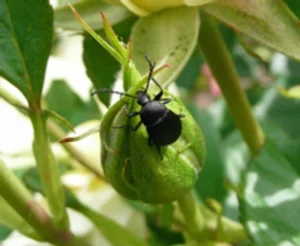
Ever heard of Pollen Beetles (Meligethes ssp.)? They love roses, daffodils, sweet peas, squash, broccoli, and the list goes on! These small black beetles, only about one-sixteenth of an inch long, are most active in the spring and mid-to-late summer when they can be found happily munching on pollen-rich roses, a definite favorite! The beetles usually stay buried deep inside the rose bloom even when cut, but actually cause very little bloom damage.

There is no control for these beetles because of the sheer numbers that make gardens their home. It is specifically recommended never to use any insecticides for control as insecticides not only cause bloom damage, but are highly toxic to all essential garden pollinators and beneficial insects.
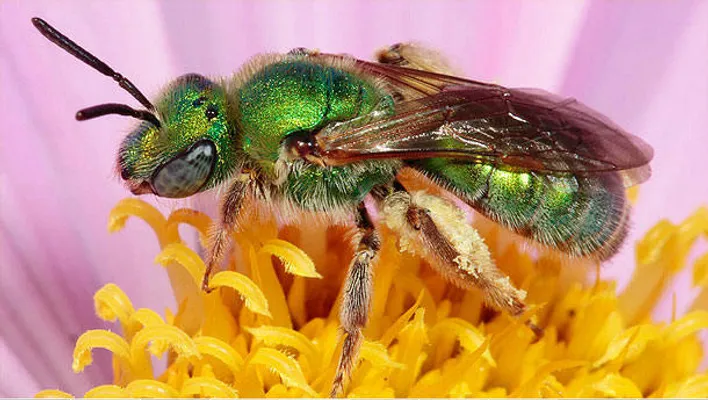
 

ABOVE & BELOW: Bee
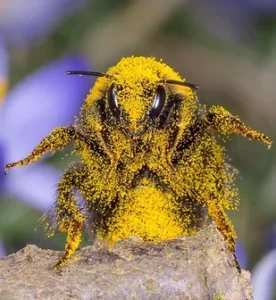
 

Most insects in our rose gardens are not destructive pests. Many are not only useful to the rose, but essential for its survival. The majority are either harmless or beneficial and play a crucial role as pollinators to keep our roses healthy, thriving, and alive! The pollen beetle is responsible for the pollination of 88% of the 240,000 species of flowers across the globe!

Most rosarians probably think of the Monarch Butterfly and the European Honeybee as the most recognizable garden pollinators. Certainly, the honeybee is considered a rosarian’s “best friend”, but our bees and butterflies are disappearing at an alarming rate, and if some human practices are not changed, will prove cataclysmic for mankind! The European Honeybees (Apis mellifera) are crucial to agricultural production in California as pollinators of flowers, fruits, vegetables, and seed and forage crops like clover and alfalfa, and also as producers of honey and wax. Do you know that one-third of a person’s average diet depends on honeybee pollination? Do you also know that pollinators are responsible for 15 billion dollars per year towards California’s economy?
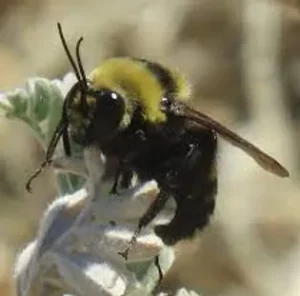
However, there are other less-known garden insects that, although not as recognizable or prolific as the honeybee or butterfly, do important work as pollinators in our rose, vegetable, and / or home orchards. There are some fascinating, beneficial pollinating members of the very diverse honeybee family. Honeybees belong to the order Hymenoptera. This large order includes not only bees, but also wasps, sawflies, and ants! Ground-nesting wasps and bees, such as bumblebees, carpenter bees, leaf-cutting bees, mud daubers, sand wasps, and paper wasps are all important pollinators in California crop and flower production, and important predators of harmful garden pests. Bring on the yellowjackets and paper wasps in spite of their sting!

Bumblebees, with their long tongues, are important pollinators of clover, sunflowers, and roses. Yellowjackets and Paper Wasps are not only pollinators but also beneficial insects in that they are predators of insect pests that damage trees, crops, flowers, and shrubs like roses, but also houseflies! Mining, or “Sweat Bees” as they are commonly called, and Leaf-Cutting Bees, both gather nectar and pollen from roses and other garden flowers and, in doing so, pollination occurs. Carpenter Bees are very similar to bumblebees in appearance. These interesting bees always build their nests in some sort of wood-like structure, and are important pollinators of crops, landscape plants, roses, and flowers. Unlike some of their other bee relatives, carpenter bees are stinger-less.

Unlike the carpenter bees that love wood, Mud Dauber Wasps build mud nests. I find these nests yearly, tucked behind hanging items in my kitchen. Adult mud daubers feed on honeydew secreted by aphids, pollen and nectar in flowers, and are excellent pollinators, although not as efficient as the hairy-bodied bees, as their bodies are sleek and smooth. Mud daubers are beneficial predators of spiders, like the black widow. They very rarely sting.
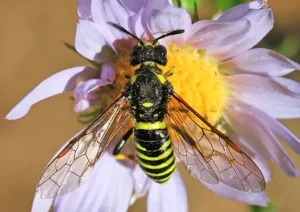
 

Adult Sawflies are important pollinators of crops and flowers, like roses, in California. Unfortunately, the female, when laying her eggs, uses her ovipositor to cut into the young, tender leaves and petioles of roses, and can do severe damage to rose shrubs. Because sawflies feed in groups, they can quickly defoliate plants. The immature or larval stage of the sawfly resembles little caterpillars, and like the adult, can also cause severe plant damage. In California, we have the Bristly Rose Slug, the European Rose Slug, and the Curled Rose Slug. Roses can be “tented” if adult sawflies are a problem, and it is recommended that the “caterpillars” be picked off rose shrubs, unless a major problem. Sawflies do not sting.
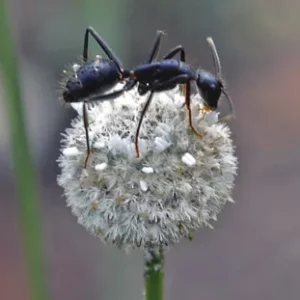
Ants, ants, ants! Most of the 270 species of ants found in California can be generally considered major household nuisances or pests, but they are part of a group of very social insects that are great lovers of nectar. Ants play an important role in our ecosystem, including pollination. They “harvest” plant-sucking aphids clustered on rose canes, stems, leaves, buds and blooms, secreting the sweet, sticky nectar that ants thrive on. As the ants practice “aphid husbandry”, pollination takes place. Ants are natural enemies to a number of insect pests, but have an especially close symbiotic relationship with rose-loving aphids. Aphid husbandry is usually viewed as detrimental because the aphid population can increase. However, aphid husbandry is beneficial because ants kill many plant-eating insects.
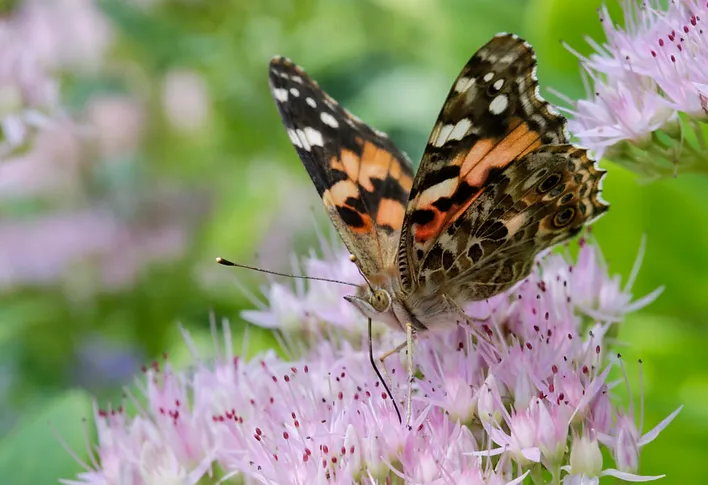
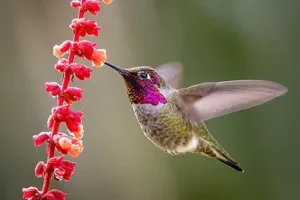
 

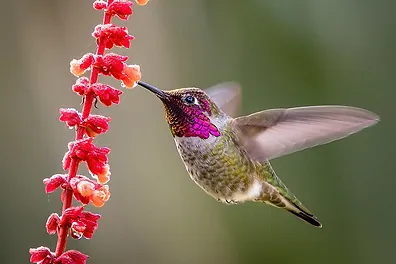
Most adult butterflies, like the Monarch Butterfly and Moths, belong to the order Lepidoptera, and are beneficial pollinators essential for healthy fruit and flower set. They feed on fluids such as nectar with their “sucking” tubes that form siphoning mouth parts. As they fly from plant to plant, pollination occurs! Butterflies are only second to honeybees in pollination, and need to be protected. Interestingly, in the bird population, Hummingbirds are the most important pollinators in California, followed by the honeybees and then, butterflies.

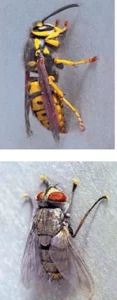
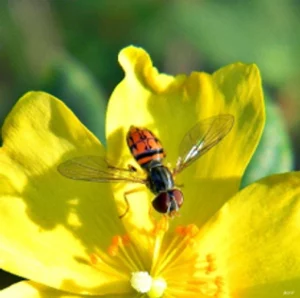
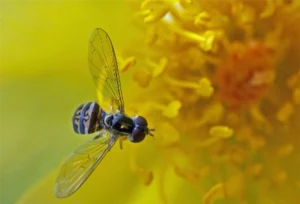
Syrphid Flies, a.k.a. “Flower” or “Hover Flies”, from the order Diptera, resemble honeybees or yellowjackets, but unlike them, can “hover” and race away if disturbed. Syrphid flies love aphids! The grub stage of the syrphid feeds on aphids, and the female syrphid will lay her eggs on plants with aphids so that newly hatched larvae have a ready food source. Adult syrphids feed on both nectar and pollen, and while they are visiting pollen-rich roses and flowers, pollination occurs. Syrphid flies can control up to 70% of an aphid infestation, and play an important role in garden health.


The order Coleoptera, to which Lady Beetles and Soldier Beetles belong, is the largest insect group of animals on Earth. More than 30% of all insects are beetles, which is amazing! The lady beetle, soldier beetle, rove beetle, and the soil-dwelling ground beetle – the natural enemy of soil-dwelling pests – are considered the most important, beneficial insects in this group.


Lady beetles, or lady bugs, as they are most popularly called, are among the most recognizable of beneficial rose garden insects. There are literally thousands of species, with the convergent lady beetle the one most gardeners know in the rose garden. Bring on the aphids! A female lady beetle won’t lay her eggs without aphids nearby! The larvae that resemble little black and orange alligators consume more aphids than the adults. Eggs are normally laid in cluster near their food source. As lady beetles feed, they move pollen around from rose to rose.

Soldier Beetles, noted for their colorful bi-colored, slender bodies of deep brown and orange, can be found happily munching on aphid-infested rose canes, leaves, buds, and blooms. As the soldier beetle feeds on aphids, it also feeds on pollen and nectar, and pollination occurs. Soldier beetle larvae are soil dwellers that feed on fly larvae, soft-bodied insects, soil-dwelling caterpillars, and grasshopper eggs. The larvae help maintain a natural, environmental balance in the garden that protects shrubs, like roses.

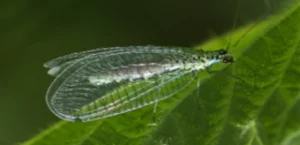
Lacewings, green, brown, and dusty, belong to the order Neuroptera. These soft, slender-bodied insects love aphids, but will also feed on spider mites and their eggs, mealybugs, and immature insects. As adult lacewings feed on nectar and pollen, plants like roses get pollinated. The dusty lacewing can be found devouring spider mites found on roses when major infestations occur. These three lacewing insects are the most important predators of natural enemies in this order.


Our California insect pollinators, whether well-known or not, are a part of a worldwide network of mostly beneficial, pollinating insects that help “our gardens grow”, in the words of “Mary, Mary – Quite Contrary!”, even though some of these insects are quite “contrary” for many gardeners!

We live in a world of amazing insect diversity, and when you’re swatting at that mosquito, gnat, fly, or midge, consider the parasitic species that are considered important, biological control agents, like the syrphid flies. Praying Mantises, beloved by most gardeners, don’t make a huge impact on rose garden pests simply because of their feeding habits and solitary nature, but, we wouldn’t be without them. Minute Pirate Bugs, Damsel Bugs, Assassin Bugs, Ambush Bugs, Predatory Stink Bugs, Predaceous Plant Bugs, Big-Eyed Bugs, and believe it or not, predatory thrips used to control greenhouse pests like aphids, spider mites, flower thrips, and some caterpillars, all play an important role in our gardens and our worldwide green environment – our “bio-diversity”. If you plant a variety of nectar producing plants that mingle with roses, you attract pollinators and beneficials. When you practice ‘IPM’ gardening methods and “invite” pollinators and beneficials to your rose garden, although you may not eliminate all the “bad guys”, you can keep their numbers so low, you won’t even know that they’re there. This is “sustainable gardening”, and if, as gardeners we don’t make some changes, we won’t have roses to garden and love.


Photos submitted by Julie Matlin, courtesy Google Images
Vampires of the Insect World

by Nanette Londeree, Marin County Rose Society, Master Rosarian

Syrphid fly by Garrett Scales


The world is filled with insects – it’s estimated that there are more than a million different kinds. Most go about their daily business nearly invisible to us – pollinating plants, breaking down dead material and being served up as meals for birds, fish and other creatures. Some of them provide us gardeners with the invaluable service of keeping pest populations in check – the good bugs battling the bad ones.


Good bugs, also known as beneficial insects and natural enemies, are predators and parasites that control pests by eating them. Predators attack, kill and feed on their prey like the spider that ensnares the fly. Parasites are like the vampires of the insect world, seeking out victims for their blood or body fluids and living on (or in) their host. Most parasites, like fleas and mosquitos, are certainly not good bugs. However, the young version of some parasites, called parasitoids, are beneficial when they devour their host while they grow.

A predator will dispatch many individuals over the course of its life and is usually bigger than its prey. Parasitoids are much, much smaller than their prey, and have only one host in their lifetime. Parasitoids often complete their life cycle more quickly and increase their numbers much faster than many predators. They are so efficient at pest control that their cumulative impact often outweighs that of predators.


Your garden may be home to a variety of predatory insects. A familiar one, the lady bug, consumes many insects, especially aphids and other sap feeders. Their alligator-looking larvae is equally aggressive with an enormous appetite. Assassin bugs are black, brown or brightly-colored slender insects with an extended needle-like beak and enlarged bristly front legs. Ethereal-looking green lacewings have slender pale green bodies, delicate gossamer wings and immense golden eyes. Adults feed on pollen and nectar while their larvae are the predators. Minute pirate bugs are about the same to twice the size of an aphid. These fierce, generalist predators are somewhat oval shaped, black to purplish in color with a characteristic X-shape on their back. Soldier beetles are about one-half inch long, straight-sided with a red, orange, or yellow head and abdomen and prey on a wide range of bad bugs. Often referred to as flower or hover flies, syrphid flies resemble bees. The brightly colored adults are adorned with yellow banded abdomens and body markings. Again, it’s the larvae that are the predators while adults feast on pollen and nectar.

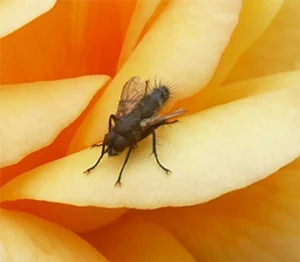
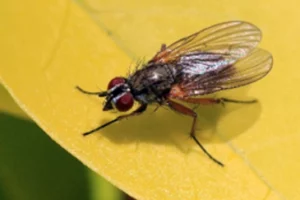
Types of wasps and tachinid flies are the most common parasitoid insects. The nearly invisible, non-stinging wasps with their trademark narrow wasp-waist, attack caterpillars, flies, true bugs and beetles. The immature forms do the damage, getting their nutrition by feeding in or on the body of another insect, while the mature forms are free-living and most often feed on pollen and nectar. Tachinid flies resemble houseflies and are covered with stiff hairs. They are endoparasitoids, developing inside their victims that include the larvae of moths, beetles, sawflies, stink bugs and other insects. ABOVE: Tachinid Fly by Nanette Londeree

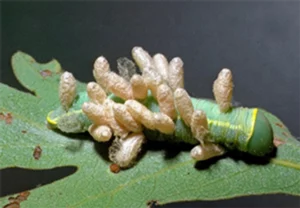
To attract the good guys to inhabit your garden, provide them with food, water and shelter. Diverse plant types encourages a range of beneficials. Some favorites are members of the carrot family – dill, fennel and parsley; the daisy family – coneflowers, daisies and yarrow, and herbs like rosemary and thyme. Use local native flowering plants, trees, and shrubs to best meet the needs of local parasitoids. Include plants with different flowering times to provide nectar and pollen all season long. Avoid toxic chemicals and tolerate low populations of insect pests to ensure that food is available for the hungry garden helpers. ABOVE: Cocoons of a parasitoid wasp are attached to a caterpillar by UC ANR


Heroes in the Garden

by Pat Hamilton, Humboldt Rose Society, Master Rosarian until 2011

This is a 2006 AOM article

This year seems to be a continuation of one rainstorm after another; according to the weather bureau we have had 153 percent of normal rainfall. In our own garden December through the first week of February we had only six days that were free of some type of precipitation. This was followed by ten wonderfully warm spring days, hallelujah!!! We waited a couple of days until the ground didn’t suck at our shoes when we walked on it and then we finally planted our bare root roses that were setting in pots of potting soil because we had despaired of ever getting enough dry weather to put them in the ground. Needless to say, by then we were way behind on our pruning so we got at it as fast as we could go. Fortune smiled on us and we finished 350 roses before the rain made a three day return engagement. Next we were hit by a couple of weeks of hard freezes every night, this took care of a lot of new tender growth and some total classes of my perennials. Now we are on the next to the last day of February and we are being deluged with rain again.


There are benefits to having lots of rain, we don’t have to water at all yet….. I did get all the roses sprayed with Banner Maxx and Aliette so that should protect them against the worse fungi, mainly Downy mildew. We will just enjoy the sound of the rain hitting the windows and the porch roof, and think of the “HEROES” that will benefit from all this water. I am talking about the beneficial amphibians and insects which help us control the aphids, leaf hoppers and other chewing insects.

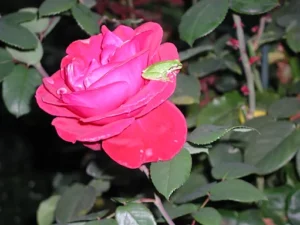
A good example of an amphibian is the Pacific Tree Frog. These little guys only grow to about two inches long and can vary in color from grey green, bronze to shades of brown. The one marking that they all have is a dark band running through their eyes and toward their front legs and a light underbelly. You can often hear their mating call or “rain call” on rainy days, or during mating season. Most people think of the ‘ribbit’ used by Hollywood as the standard frog call, it is however really the call of the Pacific Tree Frog. He is little but he is loud! These “HEROES” search out small insect pests in your garden and eat them. Adult frogs feed on flying and crawling insects and other invertebrates, they will stuff creatures almost as long as themselves in their mouths. ABOVE: Pacific Tree Frog.


These frogs like to lay their eggs in early March to May, in temporary ponds where predators such as Brown Salamanders and Bull Frogs do not live or lay their eggs. By choosing temporary ponds they reduce the number of predators that eat their tadpoles. Newly hatched tadpoles are about 1 cm long and grow quickly on a diet of algae and other water plants. Tree Frog tadpoles are grey green and their intestines can be seen through the skin on their stomach. Their tail fins are well-developed and set high on their body. Tadpoles eat a huge amount of food and leave a large amount of fertilizer.


When the tadpoles are about 4.5cm long they begin to grow back legs then front legs, and lose their tail. This is when they transform from a plant-eater to an insect-eater. At this stage they are only about the size of an adult’s “baby fingernail” but they are eating gnats, flies and mosquitoes.

Tree Frogs are mature adults at about one year old. They have sticky toe pads and can climb bark, leaves, and even glass. Here they like to climb in our roses and are found quite often residing within an over mature flower. We are always very careful not to accidentally toss one in the deadheading buckets. They also frequent the perennial and mixed gardens. The reason we have so many frogs around is that we have available wild areas (our old garden beds) as we never are caught up enough to tame that section and it seems to do all right without us. There is water available in low areas and our barrels that we sometimes use as fountains. The only drawback to the barrels is that when we see a bunch of frog eggs and tadpoles we know it will be pretty late in the summer before we can start our pump and fountain.


The Pacific Tree Frog really likes our rainy weather. Judging from the amount of “rain calls” we have been hearing, we will really have to be careful when we deadhead. These frogs are just one of the many reasons we don’t have to spray with Orthene 97W, however I keep it in my arsenal just in case!


Another “HERO” that is an insect which needs water is the Dragonfly. They deposit their eggs directly onto the surface of the water or into mud at the water’s edge. Their larvae are aquatic and breathe through gills. Their chief predators are fish and frogs while their main source of food is fish-spawn, tadpoles and the larvae of smaller insects. The larval stage can vary in duration from about three months to four or more years.


Dragonflies are fast-flying, four-winged insects with long bodies and enormous eyes. The adult dragonfly has the biggest eyes in the insect world and they are capable of detecting movement up to 15m away! These fascinating and colorful creatures are among the fastest and oldest insects in the world. Their fossilized remains show that they were already here on earth 300 million years ago! Dragonflies are not difficult to separate from other orders of insects: adults have a pair of prominent compound eyes that take up most of the head, a contracted thorax bearing, as well as the usual three pairs of legs, two pairs of large, delicate, membranous wings, and a long, slender abdomen. Dragonflies exhibit voracious appetites, feeding exclusively on small animal matter. Contrary to general belief, they CANNOT sting – nor can they harm humans in any other way! Adult dragonflies that survive the vulnerable period between commencement of emergence and successful maiden flight have an average life expectancy of 4-6 weeks.

We count ourselves very lucky to be blessed with numerous amounts of these. We have Dragonflies who are among the most beautiful insects we have ever seen. They have all the colors of the rainbow, we usually see bright red, blue, yellow and green ones on our bushes, or hovering above waiting to dart upon some unsuspecting flying insect. Dragonflies are formidable hunters as they are very well aerodynamically designed. I love to watch the way they hover and dart.


We must attribute our many Dragonflies to our deep water tank which has been converted to a fish pond, and the many spring-fed ponds in our wooded acre along Strawberry Creek on the back of our property.


I would be remiss if I did not include one more insect which is very common around here and is very helpful in controlling soft bodied insects and caterpillars! For many years I killed these insects every time I saw them as I thought they were ugly and therefore bad. I am talking about ground beetles.


There are about 2,500 known species of ground beetles in North America. These active insects are usually found on the ground under rocks, logs, leaves, bark, decomposing wood and other debris on the ground (mulch). When disturbed, beetles run rapidly but seldom fly. Most hide during the day and feed at night. Both adults and larvae are considered beneficial since they feed on larvae of many harmful insects. The life cycle of most species is usually completed within a year, although adults may live 2 to 3 years or longer. Some adults are attracted to lights and will feed on the crushed remains of their own kind that have been stepped on or run over. Many ground beetles exude or expel foul-smelling secretions that are used to repel their enemies. Some feed on snails and slugs. They will also climb plants to find prey, but because of their nocturnal habits most gardeners do not notice this activity.

I don’t know whether it is the wet weather or the new mulch (shredded redwood bark) that we added to most of the flower beds last year, but we have a plethora of ground beetles. I don’t expect to kill a one!


A partial list of other “Good Guys” in the garden that help you to grow roses with out insect sprays follows:

Lady beetles, one of the top daytime predators. Most gardeners are familiar with at least the adult stage. However the larvae are also predaceous and feed on pesky pests such as aphids, scales, mites and insect eggs. These are well worth protecting.


Next we have a couple of spiders, one a night predator and the other a day time hunter. The wolf spider is commonly found on the ground, where it feeds on numerous types of small insects – its population will increase if you provide it with plenty of cover such as mulch. Wolf spiders do bite so don’t handle them. The crab spider gets its name from the way it holds its legs…out to the side like crab legs. These spiders climb flowers and plants to find a good place to sit and wait for prey. Often these spiders are highly camouflaged looking like the flower they inhabit. These spiders eat various small insects and are quite capable of capturing flying insects that visit the flowers. You will see these in many light colors, we have them in white to shades of yellow and orange.


I would be remiss if I did not list the little wren in my list of predators. I know she is a bird but I have seen one with a beak full of aphids headed for her nest. I have watched one hopping down a climbing rose cane picking up every aphid as she hopped. The only thing I would like better than to see a wren nest in my yard would be to see two or three nest there.


With all the rain we have had already, one would think we were due for some more sunshine, but the weatherman says we are due for a week of rain and showers.


All photos by Pat Hamilton unless otherwise stated.

Good Bugs to the Rescue

by Ryan Tilley, Fort Vancouver Rose Society, Consulting Rosarian

We had a very warm winter on both coasts in 2019-20 this past winter and you know what that means Bugs. It is a shame really that just about every bug known to man passes through our rose garden buffet and stuffs themselves silly before moving on. And there isn’t even a sneeze guard.

But fear not as there are many insect predators that eat the bad bugs. Unfortunately there are not enough good insects to in most cases to keep our buds, blooms, and leaves from being eaten and sucked dry. But they do help enough that you don’t have to worry about every single insect on your roses. Many insects are just passing by and will possibly be gone by the time you notice the damage and mix up a pesticide.

The main reason I always give for using as little insecticides as possible. You will be killing the good bugs as well as the bad bugs. This in turn screws up Mother Nature and makes the problem worse as you move forward and head into summer. Of course there are some occasions when spraying is a must to deal with an unholy hoard of thrips, mites, aphids, and/or cucumber beetles. Be kind by only spraying the tops of the bushes if possible because that is where most of the damage will be done.

Spider-mites are an exception as they must be controlled over the whole bush with a miticide like Avid, Tetra San, Floramite and others. Since you spray the undersides of the leaves to get rid of thrips, the whole bush will likely get wet. But no worries. Miticides are not supposed to kill beneficial insects.

So, here is a list of critters that you should welcome into your garden. If you see them on your roses, For God’s sake don’t kill them!

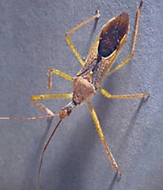
Assassin Bug

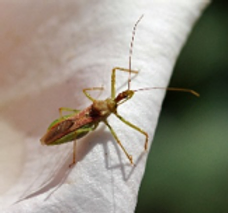
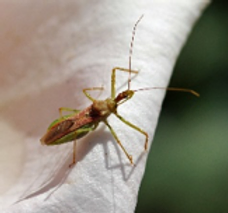
How to recognize :This aptly-named, vicious-looking bug is about 1/4 to one inch long, with a cone-shaped head and wide curving beak. They may cause a painful bite to a human if captured. Some species squeak if caught. Females lay single eggs in cracks, under rocks or in other sheltered spots in summer, and new adults emerge around the following June. There is only one generation per year.

Benefits : Assassin bugs are voracious predators of many garden pests including flies, mosquitoes, beetles and large caterpillars.

Fun fact : Adult and nymph assassin bugs stab their prey with long, pointed “beaks” that are held folded under their bodies while not feeding.

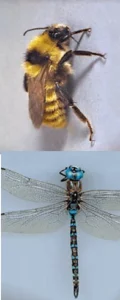
Bumble Bee

How to recognize Large and lumbering, black and yellow bumble bees measure up to one inch in length.

These fuzzy insects make a loud droning buzz as they fly somewhat awkwardly from flower to flower. Bumble bees nest in soil or leaf litter where a single queen lays 8 to 12 eggs in spring and continues to lay eggs through the summer.

Benefits : Emerging workers are able to fly in very cool weather, making them a very valuable pollinator of a variety of plants.

How to attract As these bees nest in soil and leaf litter, try to leave a section of your yard undisturbed. A little “wild” place in your yard can offer a haven for many other beneficial insects that would otherwise be killed by tilling and mowing. Provide native flowers, as they are a primary food source.

Dragon Fly (above)

How to recognize : There are more than 80 species in Washington. They can be identified by their long narrow body, their large compound eyes and the four transparent wings. There is variation in color. Sizes range from one to two inches. The larvae are found in water.

Benefits : They eat mosquitoes, aphids and other bad bugs. I had a pool in Atlanta as well as here in Vancouver and if you take the time to notice you may often see Dragon Flies zipping in the airspace above the pool blissfully eating their fill of bugs, hopefully just the bad guys.

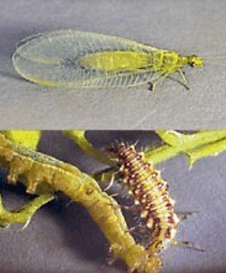
Green Lacewing

How to recognize : Adult green lacewings have delicate, light green bodies; large clear wings; and bright golden or copper colored eyes. They are 1/2 to 3/4 inch long. The larvae are small, grayish brown, and narrow and they have pincerlike mandibles. Eggs are found on plant stems and foliage; they are laid singly or in small groups on top of fine, silken stalks.

Benefits : Lacewing larvae and adults feed voraciously upon aphids and other small insects, insect eggs, and spider mites. They also eat leafhopper nymphs, whiteflies and small caterpillars.

How to attract Plant flowers that produce pollen and nectar. Adults are mobile, but lay eggs where they stop to eat.

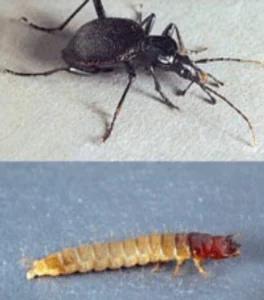
Ground Beetle

How to recognize : While shapes and colors may vary widely, they are usually shiny. Some are very ferocious-looking, but they are not known to bite people. Black is a common color, sometimes with a metallic sheen of another color on their wing covers. Most ground beetles feed at night and hide in the soil or under debris during the day. Adult beetles range from 1/8 to one inch long.

Benefits: These very common garden insects feed on many soil-inhabiting pests such as cutworms and root maggots. Some types eat slugs and snails.

Parasitic Wasp

The mere mention of wasps makes me cringe as I remember running from huge paper nests as big as watermelons that I stumbled onto while pruning the inside large shrubs. But these wasps will not harm you.

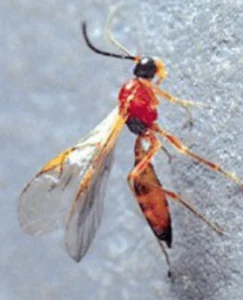
How to recognize : Too small to be noticeable, these mini-wasps don’t sting people or pets. They range in size from the smallest insect known (about 1/50 inch) to about one inch, although most are on the small side. These parasites reproduce by laying their eggs in a pest host (adult or egg). The immature wasp feeds inside and kills its host. A round hole can be often seen where the adult parasite has chewed its way out.

Benefits : Different species may attack aphids, whiteflies, and butterflies or moths, such as cabbage loopers and hornworms.

Predatory Mite

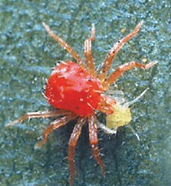
How to recognize : Adult mites are tiny, about half a millimeter in length, and are beige to reddish tan. They resemble pest mites but are faster moving and have fewer hairs.

Benefits : Predatory mites are valuable predators of pest mites such as spider mites.

Honey Bee

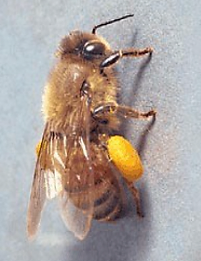
How to recognize – Adults measure 2/3 inch long and are fuzzy, with gold-and-black striped bodies and transparent wings. Honey bees can often be identified by the balls of yellow pollen they carry on the backs of their legs.

Benefits Honeybees are important pollinators of many plants.

How to attract Grow flowering plants. Encourage wild honey bees. Because the spread of mites has seriously reduced honey bee populations, the wild honey bees that are left are even more important.

Spiders.

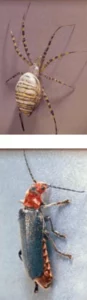
How to recognize Spiders aren’t insects at all. They can be identified by their eight legs and two-part body. Although there are hundreds of species of spider in Washington, they all share this trait. Spiders are far more beneficial than they are dangerous. Most spiders are shy and harmless to humans.

Benefits Spiders are the most important predators on insects, killing more than all other predators combined. They feed on a broad variety of pest insects year-round.

Soldier Beetle (above)

How to recognize : Approximately 1/2 inch in length, the adult soldier beetle has a narrow, black abdomen and bright red head or thorax. The soldier beetle larva is various shades of orange with black markings.

Benefits : Soldier beetles prey upon aphids, caterpillars, grasshopper eggs and beetle larvae, among other insects around the garden.

How to attract Since some soldier beetles feed on nectar, you may be able to attract them with flowering plants.

Fun fact Soldier beetles are nicknamed leatherwings because of their soft, cloth-like wing covers.

Yellow Jacket

Another bee that will swarm over if you stumble onto one of their nests. These guys will sting you in a heartbeat so be careful.

How to recognize : Adult wasps are 1/2 to 3/4 inch long, with characteristic yellow and black stripes and transparent wings.

Benefits Yellow jackets and other wasps are predators of caterpillars, flies and beetle grubs.

Concerns Yellow jackets are often feared for their sting, which is a hazard to people who are allergic. Some yellow jacket species are more likely to sting and scavenge at picnics than others. The scent of pears is a sting signal for yellow jackets. Scent of pears! You mean I should stop eating pears as I stroll the garden? What about pear flavored congac? Yes, pear flavored cognac is a real thing and also delicious.

Tachinnid Fly (above)

How to recognize : Resembling house flies, tachinid flies are 1/3 to 1/2 inch in length and may be brown, gray or black in color. Some species are very hairy.

Benefits There are many species of tachinid flies; many are parasites of pest caterpillars including cutworms, codling moths, tent caterpillars, cabbage loopers and gypsy moth larvae.

How to attract Adults feed on nectar, so plant flowers as well as herbs in the Umbelliferae family such as dill, parsley and Queen Anne’s Lace.

Creature Feature | Praying Mantis

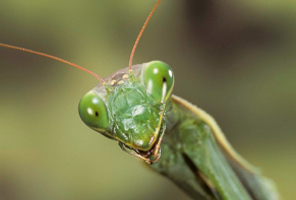
The insect scientifically known as a mantis or mantid seems to charm even the most bug-hating of people. The “praying” modifier was added by the public over time. It has large, raptorial front legs folded as if in prayer and a triangular head with almost inquisitive, bulging eyes that swivel to watch passers-by.

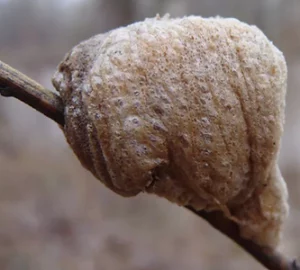
Soon after mating, a female praying mantis deposits a mass of eggs on a twig or other suitable structure. She may lay just a few dozen eggs or as many as 400 at one time. Using special accessory glands on her abdomen, the mother mantis then covers her eggs with a frothy substance, which hardens quickly to a consistency similar to polystyrene. This egg case is called an ootheca. A single female mantis may produce several oothecae (the plural of ootheca) after mating just once.

Praying mantises typically lay their eggs in late summer or fall, and the young develop within the ootheca over the winter months. The foamy case insulates the offspring from the cold and provides them with some protection from predators. Tiny mantis nymphs hatch from their eggs while still inside the egg case.

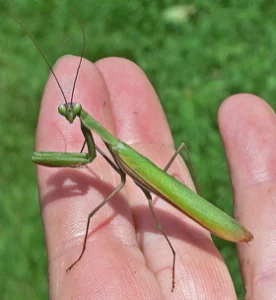
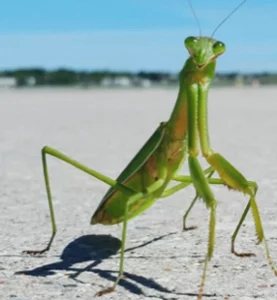
A mantis has a mobile head that can turn around like humans can, large eyes, large front legs to grab prey and four legs meant for walking. Praying mantids vary in adult length between 1 and 16 cm. Praying mantids exclusively eat other insects by catching them with their forelegs. They do not use poison but eat the prey alive while they hold it firmly.

It has six legs, two wings and two antennae. The morphology, or body plan, of a praying mantis is similar to that of many insects. It has six legs, two wings and two antennae. However, they have some special features which makes them unique among insects. First they are able to turn their head around like humans can. All other insects cannot turn their heads, their neck is too rigid to allow it. Furthermore praying mantids have modified front legs; these front legs are especially designed to catch prey and hold them tightly. These arms are very strong and equipped with pointy spikes to keep a firm hold on the prey.

Most adult praying mantids have wings (some species do not). Females usually cannot fly with their wings, but males can. Some mantis species depend on good camouflage to prevent predators from eating them, while others keep a more simple look. Well camouflaged mantids have many projections on their body in the shape of dead leaves, branches, flower petals or even moss. Their colors can vary from brown, to green, white, pink, yellow or a mix of all colors. The more straightforwards looks are simply green, brown or sandy colored but without any special modifications.

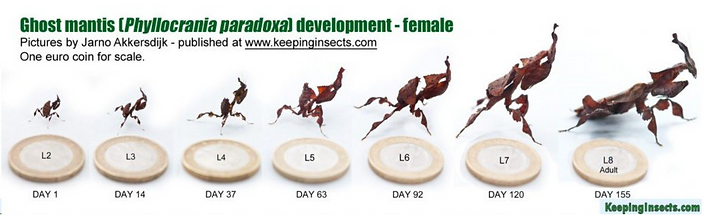
Praying mantids are part of the hemimetabola group of insects; this means they do not undergo a complete metamorphosis. A complete metamorphosis is that of a butterfly or beetle; first you have a caterpillar or larvae, then a pupa (cocoon) and then the adult insect. This adult looks nothing like the first stage of the life cycle. In mantids and other hemimetabola, the newly born insects already resemble the adults.

In praying mantids, the newborn nymphs are almost the same as the parents except their size, color and their wings. These mantis nymphs shed their skin around 6 – 9 times before reaching adulthood. The number of molts depends on the species and the sex of the mantis. Every time the mantis sheds its skin, it will grow. Because of its rigid outer skeleton (skin) the mantis cannot grow in between molts.

Every nymph stage is indicated with a number; newborn nymphs are called L1. After they shed their skin for the first time, they are called L2. This goes on until the mantis is almost adult. When it has only one molt to go before reaching adulthood it is often called subadult, although you could still indicate its life stage by its L-number.

Praying mantis eggs are deposited in the form of an ootheca; this is a cluster of eggs enclosed by foam. This foam will quickly harder after the female has produced the ootheca, thereby protecting the eggs inside from cold, predators and from desiccation.

Natural habitat and natural behavior Praying mantis occur on all continents except Antarctica, therefore their natural habitat is very diverse. There are praying mantis species that occur in trees, bushes, grassland and even rocky or sandy desert environments. They can occur in wet ecosystems or in very dry systems. Their way of life strongly depends on its habitat and the species, but generally a praying mantis is a sit-and-wait predator. This means it will stay in one place and scan the environment for potential prey. When it spots its prey, some species will actively walk towards it to catch it. Other species will continue to wait until the prey is close enough to be caught.

When praying mantises become adult, the female will generally remain at her position while the male will search for her. The male is able to fly, while most female praying mantids are not. The female will emit a pheromone when she is ready to mate. The male can smell this pheromone of his own species from miles away and will fly towards her. Check out bugguide.net for more interesting info on the praying mantis.

Photos submitted by Ryan Tilley

Soil Critters

by Steve Jones, past ARS president

This article is an ARS Award of Merit Winner, originally published in “Rose Ecstasy,” bulletin of Santa Clarita Valley Rose Society, Kitty Belendez, Editor.

ABOVE: There are millions of ‘critters’ in this bucket of soil, photo by Rita Perwich


Most people are not aware that there are literally millions of “critters” in each gram of soil, which equates to about a good pinch of soil. These “critters” are bacteria, actinomycetes, fungi, yeasts, protozoa, algae, and nematodes. They are microscopic organisms that live in the soil. It sounds terrible, but we exist today because of them. They are what give the soil life, which is necessary to grow plants, the backbone of our existence.

Each has a unique function and they exist in most soils. For sterile soils, or ones with low activity, you can actually replenish these bugs, but it is not cheap, and they will do so naturally in the right conditions which will be discussed later in this article.

Bacteria are the most common microorganism. They are found in the top foot or so of soil, and survive most conditions. Of all micro-organisms, bacteria comprise about 70 percent of the total. There are approximately 3 to 20 million bacteria in that gram of soil. Bacteria are important because they feed on organic matter, help with decomposition to return nutrients to the soil, assist in the reactions of materials which will make them available to the plant, especially nitrogen, and fix nitrogen from the air. Without bacteria, plants could not absorb nitrogen, and therefore will not survive. Most of these bacteria are harmless to humans.

Actinomycetes are rod-shaped bacteria that are saprophytes, those who live off, or gain nutrients from decaying matter. The antibiotic Actinomycin is obtained from these soil bacteria. There are about 1 to 20 million actinomycetes per gram of soil which makes up about 13 percent of the total soil organisms. Their main function is to help with the decomposition process and in the process, liberate carbon, nitrogen and ammonia, and help form humus.


Fungus is among us. It is true, in the air, water, plants, and in the soil. Fungus helps break down organic matter. There are between 5,000 to one million fungi per gram of soil which is about 3 percent of the total organisms in soil. The most important fungi are the mycorrhizae. These fungi collect on the roots of the plants and form a symbiosis relationship with the plant, where they “live” off each other without harm to either host. The fungus lives off nutrients in the plant, and provides greater surface area for the plant to absorb water, air, and nutrients. You can purchase mycorrhizae for poor soils, however, it is not cheap and they will form naturally.

Yeasts are present in minor amounts in the soil, from 1,000 to one million per gram of soil. They are generally found around the plant root areas. Their actual function is unknown.

Protozoa are the regulators of the bacteria population. They are present in all soils and there are less than 1/2 million of them in most soils.

Algae are present in about the same levels as the protozoa. They are generally in the top portions of the soil and assist in fixation of nitrogen in the air.

Nematodes are basically small worms. Some are good and others bad. In Florida, a type of nematode invades rose plants, therefore roses are grafted onto Fortuniana rootstock which is resistant to nematodes. However, most soils have good nematodes. They also assist in the breakdown of organic material and they help keep down populations of grubs and termites. There are 10 to 5,000 nematodes per gram of soil.

The ideal soil should contain about 5 percent or more of organic matter. The importance of organic matter is to increase soil organisms, thus making soil more plant friendly, and help grow better roses. With low organic matter soils, bacteria and earthworm activities are poor, and with that, the plant will not have enough nutrients available for growth. If you have a low organic matter composition, add more compost to the top 4-6 inches of the soil. To go from a 2 percent to 5 percent organic mixture in your soil, you need to add about 2,000 pounds of compost per 1,000 square feet and work it into the top 4-6 inches of the soil. 2,000 pounds of compost is about 2 cubic yards, which is about two tractor scoops from a local soil company.

When you add more organic material to the soil, you will also raise the pH of the soil, in other words, more acidic. This is good for our area since we tend to have slightly basic soil. To find out what you have in your soil, do a soil test. The first is pretty easy. Scrape off your mulch cover and take soil samples from different parts of your rose bed. Take a small handful and place in a large jar with a lid. Add water to about 3/4 full, and shake vigorously. The soil particles will drop out depending on the size, rocks, then sand, then silt, then clay, then organic material. The organic material may also float. You can get an approximate idea of how much organic matter is in your soil.

The best test is to send a soil sample to a lab for full analysis. A full test will tell you everything about your rose garden soil including levels of nutrients and pH. Most labs will analyze it for rose growing and tell you how much of what to add to your soil, if necessary. A full analysis will run around $25 per sample. It is worth the price.

© Copyright Steve Jones. All rights reserved.

Support the Beneficials!

Nanette Londeree

Master Rosarian, Marin County Rose Society

This article is a 2019 Award of Merit winner

The world is filled with insects – it’s estimated that there are more than a million different species. Most go about their daily business nearly invisible to us – pollinating plants, breaking down dead material and being served up as meals for birds, fish and other creatures. Some provide us with the invaluable service of keeping pest populations in check – the good bugs battling the bad ones.

Good bugs, also known as beneficial insects and natural enemies, are predators and parasites that control pests by eating them. Predators attack kill and feed on their prey like the spider that ensnares the fly. Parasites are like the vampires of the insect world, seeking out victims for their blood or body fluids and living on (or in) their host.

Encouraging beneficials in your garden is about the greenest method of pest control you can use. “Bug-on-bug” warfare is the way things exist in nature, and while it may not provide you with a pest-free environment, you can reach a tolerable level of damage without the use of any type of chemical control. It’s easy to do. If you know what they look like, their preferred environment and favored foods, you’ll be on your way to creating a more balanced and sustainable gardening environment – that’s good for you and your roses!

You already know the virtues of lady bugs and garden spiders, meet some other beneficials:

Assassin bugs are rapacious predators of aphids, caterpillars, leafhoppers and other bugs (including some other beneficials). The black, brown or brightly colored slender adult insects are about 1/2 to 3/4-inch long with an extended needle-like beak and enlarged bristly front legs. Though winged, they’re poor fliers, and are most likely seen lying in wait for their prey.

The ethereal-looking green lacewings, with their slender pale green body, delicate gossamer wings and immense golden eyes, are natural enemies of several species of aphids, spider mites, leafhoppers, mealybugs, leaf miners, thrips, whiteflies, small caterpillars, beetle larvae and insect eggs. The easily identifiable adults are not the main predators – it’s the ferocious, grayish to brown, mottled and spiny alligator-shaped larvae that are the ravenous hunters.

Ground beetles are often abundant in gardens, but due to their generally nocturnal habits, aren’t seen much. These voracious predators may consume their weight in pests every day. They stalk soil-dwelling insects, caterpillars, beetle grubs, grasshoppers, and other small animals such as snails and slugs. The larvae are equally aggressive; they live below ground where they use their large pincher-like mandibles to devour soil-dwelling insects.

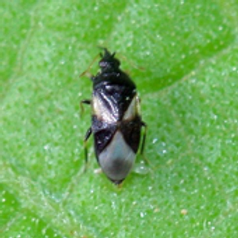
About the same to twice the size of an aphid, minute pirate bugs are black to purplish in color with a characteristic X-shape or chevron on their back. Often the first and most common predaceous insects to appear in the spring, the fierce, generalist predators feast on aphids, leafhoppers, spider mites, thrips, whiteflies, small caterpillars and other tiny insects and their eggs. They feed by sucking juices from their prey through a sharp needle-like beak; one of these hungry critters can consume 30 or more spider mites per day! While great to have in the garden, be careful; like assassin bugs, they can inflect an irritating bite to humans if threatened.

Soldier beetles are predators to a host of bad bugs including aphids, cucumber beetles, spider mites, various caterpillars, grasshopper eggs, beetle larvae and other insects and their eggs. Also known as leather-winged beetles, adults are relatively soft bodied, straight-sided beetles about one-half inch long with a red, orange or yellow head and abdomen.

Syrphid flies appear like a small bee hovering helicopter-style over a flower. Commonly known as flower flies or hover flies, the brightly colored adults range in size from 1/4 to 3/4-inch long, are black or brown with yellow banded abdomens and body markings. Though their resemblance to bees may be striking, syrphid flies have a single pair of wings, compound eyes and stubby antennae, while bees are equipped with two pairs of wings, simple eyes and long antennae. Again, it’s the larvae that are the predators going after aphids, small caterpillars, thrips and other small insects, consuming as many as 400 aphids in their very short lifetime. The adults feast on pollen and nectar; and their movement from flower to flower makes them an important pollinator.

Types of parasitic wasps and tachinid flies are the most common parasitoid insects. The nearly invisible, non-stinging wasps with their trademark narrow wasp-waist, attack caterpillars, flies, true bugs and beetles. The immature forms do the damage, getting their nutrition by feeding in or on the body of another insect, while the mature forms are free-living and most often feed on pollen and nectar. Tachinid flies resemble houseflies and are covered with stiff hairs. They are endoparasitoids, developing inside their victims that include the larvae of moths, beetles, sawflies, stink bugs and other insects.

To attract the good guys to inhabit your garden, provide them with food, water and shelter. Diverse plant types encourage a range of beneficials. Some favorites are members of the carrot family – dill, fennel and parsley; the daisy family – coneflowers, daisies and yarrow, and herbs like rosemary and thyme. Use local native flowering plants, trees and shrubs to best meet the needs of local parasitoids. Include plants with different flowering times to provide nectar and pollen all season long. Avoid toxic chemicals and tolerate low populations of insect pests to ensure that food is available for the hungry garden helpers.

Destructive Critters in the Rose Garden

James E. Armstrong

Consulting Rosarian, San Francisco Rose Society

NCNH 2009 Award of Merit article

Deer, and gophers, and raccoons, and skunks—O My! With a few apologies to Dorothy and Toto, and since June is the second “holding” month in our rose gardens, I’ve decided to take this opportunity to give a little advice on a topic that is one of my most challenging and frustrating rose growing issues: “Destructive Critters in the Rose Garden.” But first, one quick nag to urge you to keep up your basic schedule of watering, fertilizing, deadheading, and controlling insects and fungal diseases. I’m even attempting to follow my own advice and keep on top of that stuff this year. Call me selfish, but I want loads of blooms until late October.

One thing most gardeners in San Francisco can be thankful for is that they probably do not have to deal with deer munching on their roses. (Animals I fondly think of as “rats with hooves.”) But for those of us in the “burbs,” it can be quite a different story. Although I live on one of the busiest residential streets in Pacifica, the deer trot right down from the hills to feast upon my roses. Although a hungry deer will eat an entire bush, thorns and all, they especially like to eat plump buds just before the flowers open. When the deer first discovered my front garden many years ago, they consumed an entire bloom cycle in just two nights.

I have read of many interesting methods of repelling deer; everything from applications of coyote or lion urine, to placing bags of human hair around the roses, or stringing pieces of Lifeboy soap around the garden’s perimeter. The only thing that everyone agrees works is to build an eight foot fence. Fortunately, I’ve had excellent success with a much simpler method. As soon as I notice that buds are missing, I spray with a mixture of one teaspoon of Chinese hot pepper oil (make sure you get the kind without the pieces of hot pepper in it) and one raw egg per quart of water. I add it to my regular spray materials and it really seems to work. Since I use two gallons of mixed spray for my 200 or so roses, I place 8 shelled raw eggs and 8 teaspoons of hot pepper oil in a blender and add 10 ounces of cold water and blend on low until thoroughly mixed. I measure out two gallons of water, dump 10 ounces, and add the water and fungicides (and insecticides if needed) to my sprayer. I add the egg/oil mix to my sprayer last and mix well. Although the mix will wash off in the rain or foggy summer drizzle, I find I only need to use it twice a year or so. Apparently a hot mouth makes a big impression on a deer!

Gophers are an equal opportunity pest to city and suburban gardeners alike, and they are by far my biggest “critter” problem. Just last week my Iceberg seemed to be dieing, and the whole bush came right out of the ground with just a gentle tug. There was not a single root left! I’ve tried inserting poison in the gophers’ tunnels (and why would an animal that eats roots eat poison mixed with grain anyway?); I’ve tried the battery powered sonic vibration gadgets (I think they enjoyed the “good vibrations”); I’ve tried sprinkling a granulated mole/gopher repellant around each bush (its supposedly used by golf courses) and can’t decide if it had any effect or not. I even tried a device that you attach between your car’s exhaust pipe and a garden hose, stick the hose into a gopher hole, turn on the car, and supposedly gas the evil little critters to death. This concept seemed so logical to me that when my first effort was unsuccessful, I bought another one of the devices and connected it to our second car and placed the second hose into a different gopher hole and ran both vehicles for an hour to make sure there was plenty of carbon monoxide flooding the gophers’ tunnels. I’m fairly sure the gophers are still laughing about that effort. I have sought advice from the rosarian the Monterey Bay Rose Society has nicknamed the “Gopher Queen” and discovered that she traps and “disposes” of 60 or so gophers a year from her country garden. You have to dig up a small middle section of a gopher tunnel and place the trap so that the tunnel runs right through it. When a gopher walks into the trap, doors slam closed and a little flag pops up to let you know that you have a live gopher in your trap. Then you “dispose” of the living gopher. While I fully admit that I want all of my gophers to die, I just haven’t been able to make myself be that “up close and personal” in their demise.

I have settled into a not so peaceful coexistence with my gophers. Although I might be fooling myself, (after all “da Nile” is not just a river in Egypt!) I try to apply the repellant as often as the label recommends. But far more importantly, every rose I have planted in the ground in the last three years is protected by a “gopher basket.” Gopher baskets are strong wire baskets that you use to “line” the hole before you plant a rose bush. When a gopher tunnels up to the bush, it is confronted by strong wire that it can’t chew through, and the roots are protected. (Although it is probably too much to hope that the gopher breaks its teeth on the wire so it can’t consume the roots of my unprotected roses!) At least two companies make gopher baskets, and I have used both. They come in one, five and fifteen gallon sizes. Although the fifteen gallon size claims it is for trees, and the five gallon size claims it is for shrubs, I only recommend using the fifteen gallon size for rose bushes. If you use a five gallon, the majority of the bush’s roots will grow through the basket into the surrounding soil where the gophers will happily munch them down to the edge of the basket. The baskets come flat with the top few inches painted green. You have to open them into a basket shape and place the opened gopher basket into the hole and then plant the rose bush inside the basket. Make sure you leave the green section above the surface of the soil, or gophers will climb over the top of the basket and think they have landed in Nirvana. Although most of the large “home and garden” centers do not carry gopher baskets, both Sloat and Regan’s do, but it is always a good idea to call in advance to make sure they have the fifteen gallon size in stock. If you are putting in a whole flower bed, you may want to consider lining the entire bed with gopher proof wire.

Raccoons are usually only a minor nuisance, occasionally knocking over pots as they search for grubs. However, ten years ago I read an article that advocated placing several sheets of newspaper over bare ground and then covering it with a layer of mulch to keep weeds from sprouting. Since newspaper is free (and you all know how I love free gardening things) I decided to give it a try. In very short order, the raccoons dug through the mulch, encounter the newspaper, and ripped it into little pieces that scattered all over my garden. Sometimes you get what you pay for!

I’ve never had skunks bother my garden, but skunks are always a potential threat to the gardener! Skunks are nocturnal animals, and I often go into my garden after dark. Several years ago I went into my back garden and walked directly over to the side to check on some recently started cuttings. I heard a noise, and when I turned towards the noise, my flashlight illuminated the business end of a skunk, tail held high, only two or three feet away from me. I pulled “the deer in the headlights” routine, and froze in place while I watched the skunk walk slowly and majestically to the back of my garden and disappear. If you live in an area with skunks (and they are fairly common in some San Francisco neighborhoods) whenever you’re about to go into your garden at night, first shine your flashlight all around the area you’re walking towards to make sure you don’t have any unexpected visitors. Further, skunks are one of the most common carriers of rabies. If you ever see one out in the daytime, especially if it appears lethargic or sick, do not approach it and call animal control.