The Yellow Leaves of Roses (Or Early Autumn Color)

by Ed Bradley, Master Rosarian, San Antonio Rose Society

This is a 2020 AOM winner


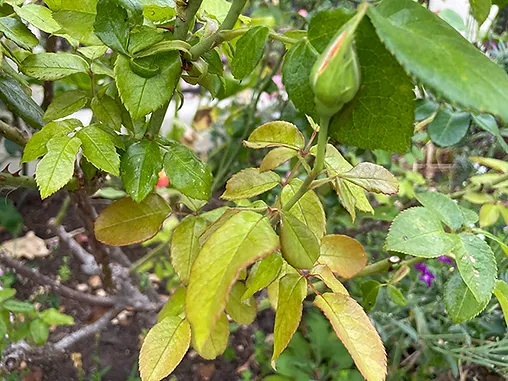
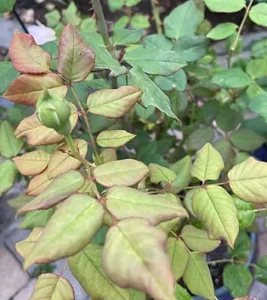
Good Rosarians try to keep the foliage on their rose bushes green, clean and healthy. However, in spite of our best efforts, sometimes we experience a “yellowing” of leaves. Unfortunately, those yellow leaves usually drop from the bush, sometimes leaving the bush with an inadequate amount of leaves to produce plant food (via photosynthesis), thus reducing the vigor and vitality of the bush.


Yellow leaves on roses are not normal (even in the autumn). Leaves are supposed to be green. Yellow leaves should be immediately examined in an effort to determine why they are yellowing, then take the appropriate measures to correct the situation. Let’s take a quick look at some of the more common reasons for yellowing leaves.

Drought: In the heat of our summer, probably the most common cause of yellow leaves is simply not enough water. An indication that drought stress is occurring is that the leaves have a weathered bronze-green color. We tend to under estimate the amount of water a rose bush needs, and we tend to over estimate the amount of water we give it. A healthy rose bush requires one-to-two inches of water each week during the hot summer. Even in the winter, or especially during the winter, we tend to let roses really dry out, unless we are getting good and regular rains, because we sometimes think the roses don’t require watering because it is cool. Not so. The one-to-two inches of water should be delivered in applications of 1/3 to ½ inch; in other words, you will be watering about every-other day. The use of a good mulch will enhance the effectiveness of your watering program.

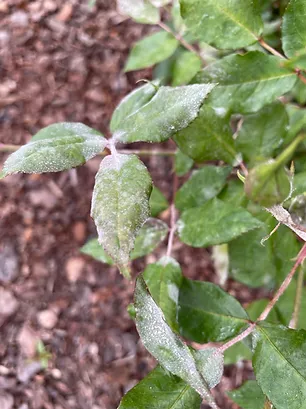
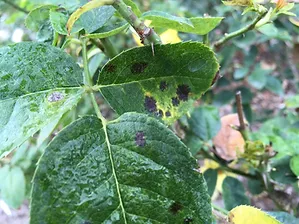
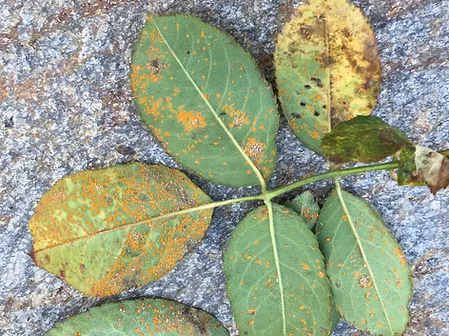
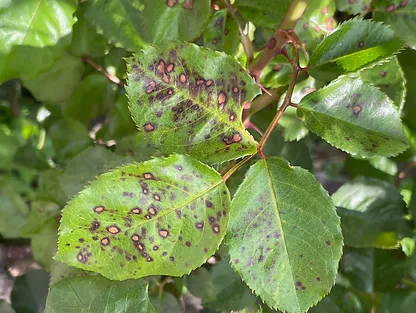
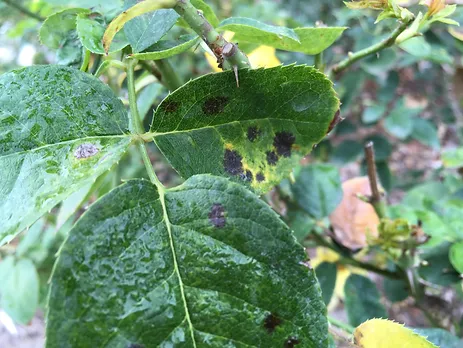
Fungus: The most common fungus here is blackspot; however, we can also be bothered by mildew. Almost everyone experiences blackspot in their garden, to some degree. Moisture on the leaves in early mornings will soften the leaf surface and activate blackspot spores. After the fungus spores penetrate the leaf surface, the black spots appear. The leaves will then turn yellow and drop off. An infected leaf is doomed. No matter what you spray with or how often you spray, the spotted leaf will not turn green again. There is a three-step solution: Remove as many of the infected leaves as possible, by hand. Spray weekly with a cleanup fungus-killer fungicide. Then spray with a preventive fungicide.

(The prevention fungicide (Honor Guard, Banner Max, Rose Pride – choose only one) and the fungus-killer fungicide (Manzate, Mancozeb, Pentathlon – choose only one) can be mixed and sprayed at the same time. If this regimen is followed, the fungus problem should be eliminated in two to four weeks. Remember, however, that prevention is the key, and a regular spraying program must be followed to preclude recurrence.

Spider Mites: These little devils can defoliate a rose bush in a week or so. They climb onto the bush from the ground, or from an adjoining bush which is infected. The lower leaves should be removed from the bush to make it a little more difficult for the spider mites to get a foothold. A high-pressure water-wash is most effective in removing the spider mites. If severely infected, washing needs to be done every third day for nine days. (Why three times? You won’t get all of them with one washing. Eggs already laid will hatch, and each subsequent washing will blast away the new mites.) Effective control has also been achieved using a spray mix of liquid seaweed and agricultural molasses (1 Tbsp each per gal. water). There are also some effective miticides available; however, they must be applied to the underside of the leaves where the mites live and reproduce. (Avid, Floramite, and Shuttle).

Too Much Water: Strangely enough, too much water exhibits almost the same characteristics as too little water – wilting and yellowing of leaves. Wet, soggy soil deprives the plant of sufficient oxygen, and the plant is actually suffocating. Make sure your soil drains well. That’s why we promote raised beds and use sand in our rose soil mix. Sometimes a good soil will become compacted by heavy rains, or the mulch may prevent water penetration to the root zone. Aerate your soil frequently with a spade fork, rake, or similar tool without damaging the root system.


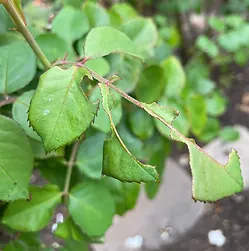
Damaged Leaves: Leaves that are broken, partially eaten by insects, or damaged by thorns on an adjacent cane will likely turn yellow and drop off. Some of this is normal, and there’s not much you can do about it. Obviously, you can kill the insects, and you can keep the extraneous growth cleaned out to minimize the damage from neighboring canes.

Dieback: Cane dieback is a mysterious disease which seems to defy explanation. There seems to be no common cause – fungus, bacteria, virus, whatever? The tip of the cane may simply begin to turn brown, and it will continue all the way to the origin of the cane (bud union). Other times, the entire cane will begin to turn yellow, followed by all leaves turning yellow, then the cane will turn brown (dead). When discovered, these should be immediately removed, all the way to the bud union.

 
Miscellany: The leaf on an older cane, directly below a newly-grown stem will eventually be aborted from the plant. This is normal and to be expected. All of the nutrients are going to the new growth, thereby depriving the older leaf of sufficient food. Additionally, the growth of the new stem literally pushes the older leaf away from the stem until it drops off.

Yellow leaves usually result from some kind of stress. Rosarians need to examine the circumstance to determine the cause, then take corrective actions to keep the bush green, clean and healthy. If you have an abundance of leaves dropping to the ground, keep these cleaned from under your bushes. They could very well harbor fungi or insects. Rake them away, or use your leaf blower to remove them. If you have difficulty determining the cause of yellow leaves on your bushes, call a Consulting Rosarian, or take samples to your local full-service nursery.

Finally, early autumn color on roses should be in the flowers – not the foliage.

Nutritional Deficiencies

Remember that roses are heavy feeders. Healthy rose bushes produce an enormous amount of growth over the course of our 8 to 9 month growing season. As they bloom, we remove long stems, and they produce 2 or 3 more in their place. The removal and re-growth process occurs throughout the growing season. And, at the end, it is not unusual to have a bush 6 or 7 feet tall and 3 to 4 feet wide. And, when you realize that you have removed at least that much growth during the season, it is no wonder that they consume a huge amount of rose food.


Roses require a good, balanced fertilizer. That is, an ample amount of the major elements – Nitrogen (N), Phosphorous (P), and Potash (K), plus an available supply of the 17 trace elements. Deficiencies of N-P-K become readily apparent in the color and vigor of the bush. A deficiency in any of the trace elements may not be as immediately conspicuous, but will show up over time by discolored, distorted, dead or dying leaves.


A good soil mix, with plenty of organic material, normally contains an adequate amount of the trace elements. They are called “trace” or minor elements because only a very small amount is needed for normal plant growth. However, most quality fertilizer producers recognize the need for these trace elements, and the better fertilizers generally include a sufficient amount to sustain healthy growth. “Trace” elements are sort of like vitamins in our diet. Eating normally healthy foods generally gives us enough of the vitamins needed; however, if we have a special condition or as we grow older, it may be necessary to supplement our diet with certain vitamins. So it is with “trace” elements for plants.

Most cases of trace element deficiency are caused by some interference in the availability or uptake of these elements from the soil, rather than by an actual shortage of these nutrients in the soil. Poor aeration, over watering, root-knot nematodes, high levels of soluble salts, excessively high or low soil temperatures, and high or low pH may cause the trace elements to be unavailable to the plant.


Having said that, however, we all see spotted leaves, yellowing leaves, brown leaves and dropping leaves – and wonder “What’s going on in the garden?” So, let’s take a look at some of the common deficiencies and symptoms.


First, the N-P-K deficiencies:

Nitrogen: leaves show an overall yellow-green color, with random leaf spots. Older leaves may turn yellow and drop off. Flowers of darker varieties may appear several shades lighter than normal.


Phosphorous: stunting of leaves and stem growth, followed by older leaves losing their luster. They may become a gray-green and drop off without turning yellow. Some may show dark red or purple colors. Petals of pink flowers may become dark pink.


Potassium: stunted growth, shorter flower stems; small, short, deformed flower buds. Browning and dead tissue mainly at edges of leaves.


Now, let’s look at the trace element deficiencies:


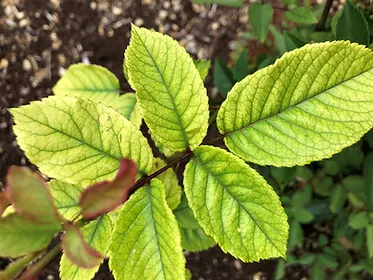
Iron: areas between the veins of young leaves turn yellow, but veins remain a light green. There is generally an adequate amount of iron in the soil; however, because of the normally high pH of our soil, the iron is rendered unavailable. Therefore, the need to periodically add iron to our feeding program.


Calcium: young leaves are distorted, hooked or curled. Older leaves become a dull gray-green and may bend down at the edges. Later the edges may turn yellow, then brown with discolored blotches.


Boron: young leaves are light green at base, and twisted.

Copper: young leaves are permanently wilted with no chlorosis (yellowing).


Magnesium: yellowing starts from center of leaf, with signs of dying tissue.


Sulfur: leaves are light green with lighter green veins.

Zinc: large areas of dead tissue at tips and between veins.


Remedies can be very specific, such as Sprint 330 for iron or Epsom Salts for magnesium; however, a good application of a balanced fertilizer with trace elements will cure most unhealthy leaf problems caused by nutritional deficiencies. Lightly stir the soil for aeration, and add a good compost mulch to enhance the effectiveness of the fertilizer.

Rose Diseases Illustrated

by Jeff Wyckoff, ARS past president

This is a 2020 AOM article and was written for a PNW publication


Roses are like people in that they are subject to a number of ailments and diseases. Some of these are temporary, some are persistent. Some are curable, others are not. Some are viral, some are bacterial, some are fungal. Whatever the case and the cause, it helps to have some knowledge of them, to be able to recognize their respective symptoms, and to know what, if anything, you can do about them.

As Seattle’s spring bring us changeable weather, the foliage on our roses often does weird things, changing colors, shriveling, dropping, all of which lead us to think that some dreaded pathogen has invaded our garden. Serious diseases seldom manifest themselves in the spring, so panic is premature. ARS Consulting Rosarians can usually tell you what the trouble with your leaves is not, rather than what it is. The best advice is probably to prune out the offending foliage and then monitor the plant carefully to see if the problem recurs or spreads.

Possibly the most widespread rose “disease” and the easiest to cure is mineral deficiency. In addition to the “big three” – nitrogen, phosphorous, and potassium – roses also need small amounts of so-called “micro-nutrients”, calcium, magnesium, sulfur, boron, zinc, copper, manganese and iron. These are often, but not always, included in both organic and chemical fertilizers, but you should read the label to confirm. Rather than trying to diagnose which mineral might be missing from your roses’ diet, I would suggest using a combination product, usually labeled “trace elements”, which are now widely available both online and off.


Our next disease is easier to recognizes and identify – most of the time. This is crown gall, caused by a bacteria, specifically Agrobacterium tumefaciens. This typically appears on the crown/bud union of a plant, but may also manifest itself on the roots, or, as in the accompanying image, on the canes. These galls are generally caused by infections in the soil getting into cuts in the roots or lower canes. There is no cure for crown gall; once it gains access it infects the whole plant, and may be spread by untreated pruners or other tools. In a worst case scenario it saps the energy of the plant, which then gradually goes downhill.

However, all is not lost. Many rosarians have managed to keep the disease at bay by removing the gall and treating the infected area with a bleach solution. A more stringent regimen is recommended by an online source: “Remove the infested plant and prune out gall tissue. Soak the entire root system and damaged areas for 15 minutes in a solution of 2 level Tbsp of Actinovate [active ingredient: Streptomyces lydicus] per 2-1/2 gallons of water.”

But wait! There’s even better news. I have had crown gall on two roses for over 15 years, and both are still going and growing strong, so don’t be too quick to dispose of an infected plant, as some rosarians suggest. Wait until it’s obvious that the bush is going downhill before removing it.

Let’s digress here for a moment and consider what I would call the “language of pesticides” as it relates to roses. First of all, any pesticidal product, whether homemade or commercial, organic or chemical, an insecticide, fungicide, or miticide, has one of two modes of action: contact, which covers the foliage at the time of spraying but does not enter and remain in the entire plant, and systemic, which does. Both have advantages and disadvantages; most organic products are contact in nature.

Commercial pesticide manufacturers use a wide array of verbs to describe their products in their advertizing and promotion. Three of these frequently found are prevent, control, eradicate. “Prevention” is clear; it is the first line of defense in disease control, spraying or treating your plants before they show signs of disease. “Eradication” means complete removal and is possible with some pathogens and will be discussed later. “Control” however, is a very relative term. Does it mean preventing it from spreading, keeping it at an “acceptable” level, or just a word they use because you can’t define or explain it with regard to plant health?

A promotional blurb for Garden Safe [Organic] Fungicide 3 states: “Controls rust, powdery mildew, spider mites and listed insects”. The active ingredient in Fungicide 3 is Neem oil, not just ordinary Neem oil but “Clarified Hydrophobic Extract of Neem Oil”. The National Pesticides Information Center says of this product: “Azadirachtin is the most active component for repelling and killing pests and can be extracted from neem oil. The portion left over is called clarified hydrophobic neem oil.” Control indeed! The overriding messages here are “check the active ingredients” and “let the buyer beware”!


Rust is one of the least pernicious diseases we encounter on our roses. For one thing, it seems to be selective, targeting certain varieties – often repeatedly – but not others. Secondly, I have not found it to be contagious, certainly not to the extent of black spot. In the Pacific Northwest it does not present long term harm to the plant by causing leaf drop or foliage deformity. And finally, it characteristically occurs on the bottom side of the leaves, so you can ignore it if you choose. Rust is caused by a fungus, Phragmidium tuberculatum, and can be treated with any number of chemical fungicides that may not eradicate it but will keep it from spreading.


This look may be desirable on your dieffenbachia but not on your roses. It is a viral pathogen known as Rose Mosaic Virus. It is similar to, but not necessarily caused by, Prunus Necrotic Ringspot Virus and Apple Mosaic Virus, two diseases of stone fruit. The variegation and discoloration may look different on different leaves and different roses, but the chlorotic banding should still be recognizable. This virus is spread through infected rootstock, and about 20 years ago it was rather prevalent. Since then the big nurseries have cleaned up their understock and had their infected varieties heat treated, so it is much less in evidence today.


Much like crown gall it may or may not affect the health of the plant, and is not contagious. There is no cure or treatment for rose mosaic virus.


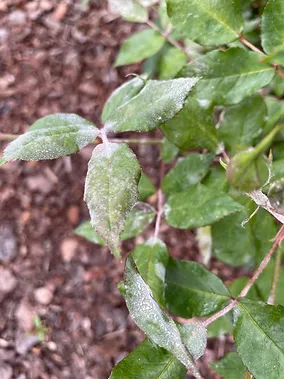
Powdery Mildew is a fungal disease that affects many different types of plants. It seems to thrive in moist, humid conditions like we get in late summer and autumn. It will curl and deform the foliage which can lead to reduced photosynthesis if left untreated. It is very easy to identify, and hence its chief drawback may be the unsightly look it gives to your rose garden. A number of rosarians have reported success using neem oil on powdery mildew. Colorado State University Extension Service recommends the use of potassium bicarbonate, an organic product with proven effectiveness, and then moving up to a chemical product like Triforene if necessary.

At least three rose diseases manifest themselves through spots on the leaves: black spot and downy mildew, both of which will be discussed later, and anthracnose. Anthracnose is caused by the fungus Sphaceloma rosarum and is most often seen during cool and moist weather of spring and autumn. In contrast to black spot, anthracnose spots tend to be rounder and, as they age, develop a white center. Like most of the “lesser” rose diseases discussed previously, anthracnose can be prevented with a chemical fungicide and possible an organic one like neem oil.

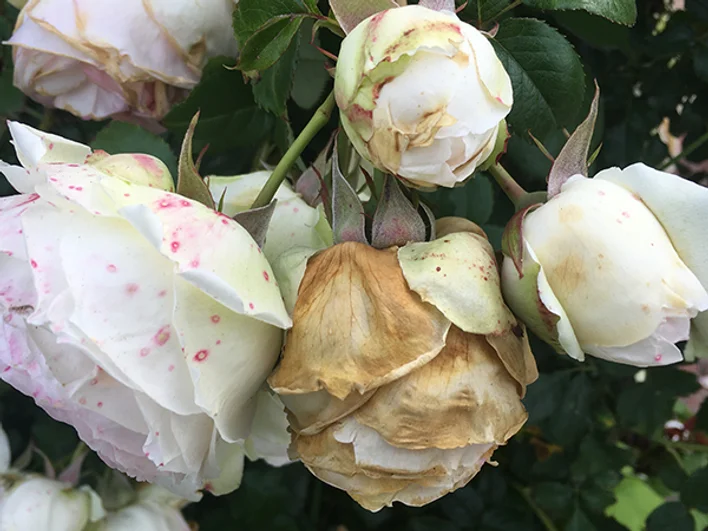
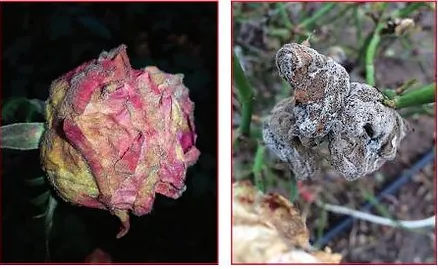
Botrytis (LEFT, photo by Texas A&M Agrilife Extension), sometimes known as gray mold, is primarily a disease of grapes and other food crops, but the fungus, botrytis cinerea, does show up on roses. It characteristically appears on petals and buds as large, rotten-looking brown spots that soon develop into gray mold. It is fostered by cool wet conditions so air circulation and proper irrigation techniques are encouraged. There is no cure for botrytis and the disease can spread so affected plants should be removed. Texas A&M Agrilife Extension recommends preventive organic fungicides such as Actinovate or PlantShield and chemical products like Daconil or Medallion. Another source says that Aliette is effective against botrytis.


We come now to the first of the “big three” of rose diseases, those that can cause serious and permanent harm to your plants. Black spot is the bane of rose growers throughout the United States in damp climates like ours. Dr. David Slezak of the University of Wisconsin estimates that there are c. a dozen strains or “races” of black spot, all of which can migrate, mutate, and build up resistance to fungicides. We can fight black spot and hopefully keep it at bay, but we can never eliminate it from our environment. I’m sure we’ve all had it at one time or another, so there should be no problem recognizing it. The fungus, Diplocarpon rosae, produces spores that can overwinter on the soil and the rose plants and then come to life in our wet springs.

The leaf drop caused by black spot reduces a plant’s ability to photosynthesize food. If left untreated over time it will weaken the bush and cause the decline of rose production. There are a variety of ways to prevent and to treat black spot. A few of them include:

  • Purchase disease resistant varieties. Talk to a Consulting Rosarian, a garden supervisor, other knowledgeable experience rose growers or try online sources.

  • Avoid wetting the foliage. Black spot thrives on ambient water, from above and below. We can’t stop the rain, but we can control our watering methods and systems.

  • Use a fungicide! The best way to combat black spot is to prevent it. If I were to choose an organic product it would probably be potassium bicarbonate, which is fairly widely available. There are dozens homemade recipes on the web using sodium bicarbonate – baking soda – and some of these may work for you.

  • Any number of chemical fungicides, if used regularly, will prevent black spot. It is recommended that you alternate a contact product with a systemic one to avoid a buildup of resistance.

  • To eradicate black spot (at least temporarily) spray every couple days with a chemical fungicide. This should break the reproductive cycle of the fungus spores.

Often confused with black spot (at least temporarily) is Downy Mildew. Temporarily, because downy will completely defoliate a plant in a matter of days rather than months. Why it is called downy is a mystery, since it anything but soft and fluffy. “Peronospora sparsa, an oomycete (a fungus-like organism more closely related to algae than to fungi), causes the disease.” (Texas A & M). It originates primarily in the greenhouses and growing fields of rose suppliers and needs a window of high humidity – 80% and above – and temperatures in the 60° – 80° range to manifest itself. Its spotting differs from that of black spot in that it does not cross the leaf veins (see illustration).

Since the disease is characteristically already in the plant when you buy it, preventive spraying is pretty much useless. The only known fungicidal product known to work against downy is Fosetyl-Al, most commonly sold under the trade name Aliette, but also available in Monterey Garden Phos, containing potassium salts of phosphorous acid which are a component of Fosetyl-Al. Defense against downy mildew would include careful monitoring during periods of high humidity, removing infected plants as quickly as possible, and having a supplier of Aliette on overnight delivery.


Much on the minds of rose breeders, the academic community, rose growers of all stripes and the gardening press of late is RRD, Rose Rosette Disease. There is no preventative, treatment, or cure for RRD and it is devastating private and public gardens in the eastern two-thirds of the United States. The virus is a member of the emaraviradae family and its only known vector is the eriophyid mite, Phyllocoptes fructiphilus, a minuscule creature that, according to Utah State “cannot be seen without a 20x hand lens or greater magnification”. They are small enough to be carried by the wind, and can also move from to plant on their own. As with all rose diseases, RRD’s symptoms appear as noticeable changes in the plant’s foliage. Here the leaves become deformed, crinkled, and brittle in a witches broom proliferation of small shoots, characteristically red in color. The plant will stop producing blooms and gradually go downhill.


Now for some good news. No cases of RRD have been found in either Oregon or Washington; all purported appearances of the disease have been discredited and found primarily to be herbicide damage. Rose Rosette Disease now has its own website, https://roserosette.org/ complete with a reporting system for suspected occurrences and a distribution map showing outbreak locations. In addition, there are experts available to visit a garden and confirm or disconfirm any suspected sighting.

An article by Dr. Tony Liberta in the 1994 ARS Annual warned of the dangers of RRD and concluded with these words: It appears now that the scientific and rose growing communities have become sufficiently aware of the threat posed by RRD to prevent the “epidemic” that might have developed had it gone unheeded.” Unfortunately this warning went pretty much unheeded for the next 20 years. Roserosette.org states: “This disease has been reported since the early 1940s but only in 2011 did research demonstrate that it is caused by a virus, aptly named the Rose Rosette Virus (RRV). Diagnosis of RRD prior to 2011 was primarily done based on observed symptoms and the presence of the eriophyid mite that is believed to be the vector of RRV.” This appears to be somewhat disingenuous. Why would the lack of knowledge of a viral (or other) pathogen have seemingly slowed academic research rather than accelerated it? As for the commercial rose industry, they are purportedly experimentally breeding with a number of species varieties in order to come up with new varieties that are resistant to RRD, despite the report from roserosette.org that all roses are believed to be susceptible on some level to the disease.

It would seem that a more promising approach would be to develop an effective preventative miticide. At this time a number of such products have shown “limited effect” against the eriophyid mite, to include Avid© (abamectin active ingredient) Talstar© (bifentrhin), Sevin© (carbaryl), and petroleum-based horticultural oils. If RRD were to creep into Washington I think that an immediate and continued rotation of a couple of these would be advisable unless a better product were to come along.

Abamectin, bifentrhin, carbaryl, who knows anything about these chemicals? Are they safe for humans, pets, aquatic life, benign insects, etc.? To find out, I recommend that you consult the Pesticide Action Network (PAN) data base here wherein every pesticidal product in the United States is cross-referenced to its chemical active ingredient(s), and every chemical is analyzed according to multiple levels of safety and toxicity. Chemical pesticides can work, but their uninformed use can be dangerous.


All photos by Rita Perwich unless specified otherwise.

Garden Gladiators

Garden Gladiators

by Rich Baer, Master Rosarian, Portland Rose Society


Growing beautiful gardens is always a challenge. If you have one problem and you can figure out a way to get around it another one is sure to show up. I have often said that I find destructive insects in the rose garden to be an exceedingly small problem. One of the reasons for this is that nature maintains a balance if you let it, usually. Well maybe not for Grasshoppers and Cicadas which are in the news this week but not in our area. Sometimes other garden invaders can also become a problem which requires intervention to keep the damage to a reasonable amount.

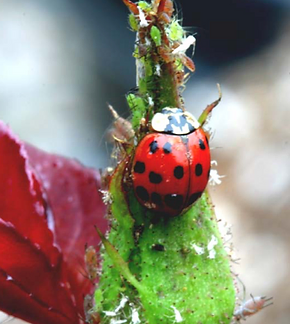
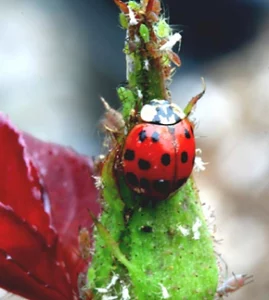
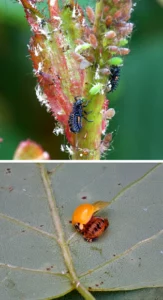
When asked about bothersome insects the most common answer from rose gardeners is aphids. They are common in my garden but not usually to the extent that I feel that I must intervene. When asked what I do about them I generally say that I turn my back on them and wait two weeks by which time I usually find that they are no longer a problem. One of several reasons for this occurrence is the presence of ladybeetles in my garden. First, lets look at their name. If you are a taxonomist or entomologist you would have to call our most common ones Hippodamia convergens. In the insect world they are in the family Coccinellidae and are Coleoptera, which are called beetles. That is a lot of name for a small insect so the more common name has evolved. Originally the name “ladybeetle” was coined by European farmers who prayed to the Virgin Mary when pests began eating their crops. After ladybeetles came and wiped out the invading insects, the farmers named them “beetle of Our Lady.” This eventually was shortened to “lady beetle” and “ladybeetle.” NASA even sent a few ladybeetles into space with aphids to see how aphids would escape in zero gravity.


Adult lady beetles have very characteristic convex, hemispherical to oval shaped bodies that can be yellow, pink, orange, red, or black, and usually are marked with distinct spots. This is a type of warning coloration to discourage other animals that may try to eat them. Like many other brightly-colored insects, they are protected by an odorous, noxious fluid that seeps out of their joints when the insects are disturbed. The bright body coloration helps some predators to remember the encounter and avoid attacking insects with similar markings.


Ladybeetles appear early in the year in the garden. Often they are one of the first insects that you will notice in the garden. They appear early because in the fall the adults find a sheltered area and hibernate. Sometimes that sheltered area maybe inside your home, but usually it among the detritus in the garden. They are known to congregate at hibernation time into exceptionally large groups. These groups are the insects that are often harvested and offered for sale as garden predators. When the weather warms the adults leave the hibernation state and appear in the garden looking for food. Early in the year that food usually consists of aphids which also appear early in the rose garden.

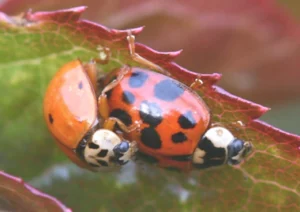
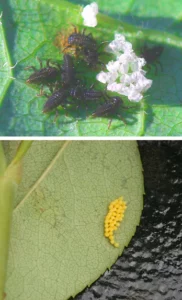
When the adults have fed for awhile on the early aphids the next phase of their life is to reproduce. I have read that the adults find each other through the presence of pheromones. These are scents produced by one ladybeetle that is sensed by another ladybeetle to enable them to get together. I have witnessed a lot of ladybeetle mating through the years in my garden and it seems that they are indiscriminate in finding mates that look like they do. So it appears that the different varieties of ladybeetles found in your garden are all sexually compatible. After mating the female will lay eggs almost immediately or up to three months later. The eggs are almost always located on the lower sides of the leaves where the adults have found food, aka aphids. The normal clutch of eggs is between ten and 50 at a time, but an adult female ladybeetle can lay up to 1,000 eggs in her lifetime.The eggs are usually laid on the bottom of leaves, in our garden it is on the bottom of rose leaves. When normally walking through the garden you would not notice them as they are not very large. However, when any pruning is done I always turn the stem over so that I can look at the bottoms of the leaves.

On an average day I will see a number of egg clutches. When I spot one, I cut the leaf off and tuck it back onto the bush so the eggs will get the chance to hatch on the bush. They would hatch in the garbage can, but they would not be likely to live if they did that. I have looked at a lot of insect eggs over the years and there is no other insect that lays eggs that look like or could be confused with those of the Ladybeetle. So when you encounter them you should try to make sure that they have a future in your garden where they can carry out their major life function, feed and grow into adults. Within a few days the eggs will begin hatching. The newly hatched lady bug larvae certainly bear no resemblance to the adult insects they will become. The picture on the right shows the tiny larvae as they are emerging from what are now the white egg cases. They will soon crawl around the rosebush looking for small insects to eat. The adults insects usually pick a place in the garden to lay their eggs where there is a good supply of food. This food will be readily found by the larvae and they begin eating it.

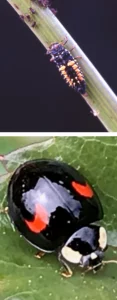
The newly hatched larvae will eat the smallest of the aphids they find and they will change their looks slightly by growing some orange markings on their backs. If food is plentiful the larvae eat lots of and grow rapidly through four larvae stages called instars shedding their skins between stages. If the food in plentiful the larva grow quickly while devouring between 350 and 400 aphids each. This leads to the formation of the large ladybeetles you see in the garden. If food is scarce the larvae continue to eat what they can find but they do not grow as fast or as large. The adults resulting from these larvae tend to be quite a bit small than the largest ones. When the larva mature after the fourth stage they pupate. What this entails is that the mature lady bug larva attaches itself to the plant by its abdomen. It remains still during the pupae stage which can last from seven to fifteen days. During this time the genetics of the insect break down the larva body and rebuild it to the adult ladybeetle, quite a remarkable achievement. When the pupation period is over the pupa splits down the back and the new adult ladybeetle emerges. The new adults are generally yellow in color and their bodies are soft. Soon after hatching the ladybeetle body firms up, The shell becomes hard and the bright colors we associate with ladybeetles appear. Their Bright coloring may be an example of aposematosis, in which the bright colors warn predators of toxicity and/or bad taste. Also, female adults can reflex bleed from leg joints. The blood (hemolymph) has a repulsive smell that can fend off predators such as small birds and lizards.


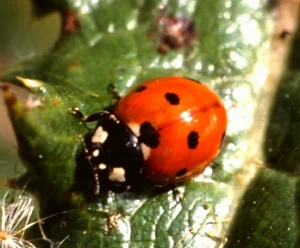
We have a lot of different colored lady bugs in our area and you should be on the lookout for various ones in your garden just for your enjoyment of nature. My favorite is the one pictured to the right which is called the twice stabbed ladybeetle. Although not an actually ladybeetle it is closely related and has the same life style, garden predator with an affinity for aphids and other small insects including scale insects. It however is an insect that brings back some interesting memories. When I worked at Edmunds roses I usually got to deal with customers who wanted to know about certain insects. Their description of the insect of the day usually began with, they look like an alien. Since I have never seen an alien that never helped much. However, the only insect that I was ever sure of a positive identification was one described as a small black insect with two red spots. I was sure I knew what the lady had. After we talked for awhile, she said it really did not matter what the insect was, because she had sprayed them with Orthene and it killed all of them. Sometimes a little knowledge would be worth a lot.

Fragrance in Roses

Scent is an incredible potential tool in the repertory of the gardener. Fragrance can tease, evoke memories and emotions, or set a mood. However, most of the time, we fail to make use of scent in even the most elemental way when planning a garden. There are some good reasons for this common neglect of one of our senses. Scent is something that enhances our lives, at this point in our evolution. It is not a human survival tool. Although our noses are considered to be 10,000 times more sensitive than our sense of taste, we humans have rarely tried to learn to identify what we are smelling, or to develop vocabulary to put our impressions into words. The vocabulary we have is very primitive, and is often based upon terms used in connection with food. Additionally, people have quite different levels of sensitivity to fragrances, and different reactions to them, based upon their past experiences – or what we call “scent memories.”

Fragrances are exuded from glands on the lower petal surfaces (and in some cases, leaf surfaces, as with R. eglanteria) and the bristly glands of the moss roses. The amount of fragrance is determined by a number of factors, including particular rose varieties and climatic conditions. Since fragrance in flowers is associated with the attraction of pollinating insects, the genetic triggers for releasing fragrance are associated with the time of day and conditions that these normal pollinators are active. Substances detected primarily by human smell are generally soluble in oil. In contrast, substances that are detected by human taste are usually soluble in water. Sunny, warm weather releases odors found in volatile plant oils. Humidity helps to prolong the smell because it reduces the rate of evaporation. The actual fragrance of roses is produced by oil-based compounds of alcohols and sugars, produced and combined in the chloroplasts, near the surface of the petals. These ingredients are surrounded with glucose, which causes the formation of scentless glucosides. Scent becomes apparent when the glucoside is hydrolized by enzymes, a process that occurs, in part, when climatic conditions are right. Since some of these compounds evaporate faster than others, the fragrance of a rose can change as the bloom opens. In addition to sun, soil, and pH, adequate water is an important factor. When additional moisture is present, the scent ingredient in the chloroplasts increases, which adds more potential fragrance.


 

People can educate their palate to fragrances by taking the time to notice differences, and by trying to identify dominant qualities of each – much the same as a professional wine taster does. A number of years ago, on a trip through California wine country, I was given a copy of a wine aroma wheel. The wheel divides the known aromas of wine into three levels of identifying terms. A wine example, also present in flower fragrances, is the term “fruity,” which divides into the sub-categories of citrus, berry, tree-fruit, tropical-fruit, and dried-fruit. Each of these is divided into a third level. Tree-fruit divides into cherry, apricot, peach, and apple. An amazing list of possible aromas has been accumulated on wines. This list covers a range from the fruity and floral (each with its sub-terms) to less-commonly-recognizable aromas, with sub-terms such as soapy, horsy, burnt toast, and wet cardboard. We have a long way to go, in classifying rose fragrances, to reach the level of sophistication found in the wine industry. This does, however, point out some obvious possibilities in the direction that we might go.

So far, there over thirty compounds have been involved in rose fragrance. Many of these occur in combination. Some of the most common rose scents are apple, clover, lemon, nasturtium, orris (iris root) and violet. Others include green tea leaves, cloves, raspberry, bay, spice, musk, parsley, wine, lily of the valley, linseed oil, fern, moss, hyacinth, orange, anise, honey, marigold, banana, apricot, quince, geraium, peppers, melon, and myrrh.

Additional connections have been found between rose classes and scent, and even rose colors and scents. There is a certain amount of genetic logic in these discoveries. Classes of roses, especially Old Garden Roses, are identified with particular color ranges, and also with particular fragrances. Gallica Roses come in crimsons, deep pinks, mauves, and stripes and splashes. They are most often described as having Old Rose fragrances, which can be intense and spicy. Damask Roses are white to dark pink, with unusual fragrances often associated with fruity perfumes. However, the further into complicated genetic crossings that hybridizers go, the more complex and elusive our modern rose fragrances can become. Crossing two roses, with unrelated fragrances, can produce offspring lacking in noticeable fragrance.

Many people point to the classes of OGR’s, and expound upon their abundance of fragrance by comparison to that of our modern roses. What they have forgotten is that the older roses we are familiar with are only a small percentage of the OGR varieties originally developed. Those that are commercially available today were chosen, and became commercially successful, at least partially because of their fragrances. Flower form was not the primary interest of hybridizers during the height of the OGR era. Many OGRs were developed which did not have good fragrance. Most of these roses have been forgotten.

Some years ago, James Gamble (whose name is associated with the ARS Fragrance Award) ran tests on more than 3,000 Hybrid Tea Roses. He concluded that approximately 25 percent had little or no fragrance, 20 percent were intensely fragrant, and the rest were somewhere in between. It would appear that these results are well within the bell-shaped curve of natural occurrences. Increasing the odds of producing new roses with fragrance is taking a great deal of work, since the gene for fragrance is recessive.

Probably more important than hard work will be perseverance, and a considerable amount of luck on the part of the rose hybridizers. Sam McGredy, the renowned hybridizer from New Zealand, has said (obviously, with his usual sense of humor showing) that it is simple to produce a fragrant rose. It takes about five generations of crosses and back-crosses to produce a line of fragrant roses. The roses will likely be pink in color, with poor form, and probably will be leafless, since the plant will be susceptible to most of our rose diseases. The commercial appeal would be questionable. When evaluating a new introduction today, after looking for beautiful flowers with good form, the next characteristic looked for is disease-resistance. Fragrance sometimes comes along as that special bonus.

(With thanks to “Heritage Roses,” Quarterly Newsletter of the Heritage Roses Group, Vol. XXV, No. 3, Aug., 2000, Rae Chambers, Ed. previously printed in the North Central District Newsletter, “Petals and Thorns,” and the Minnesota Rose Society Newsletter, “Roseways.”)

Growing Miniature Roses Indoors

by Nanette Londeree, Master Rosarian, Marin County Rose Society

ABOVE: Soil covered with a layer of mulch retains moisture while suppressing weeds, photo by Nanette Londeree.

Drought – it is a scary thing, especially when your only source of water comes from seasonal rains and they don’t materialize. This past winter was the one of the driest in our local history, and now we are mandated to cut back on water use. While roses perform best with ample water, they can make it on much less. The plant may not grow or produce many flowers during the hot summer months, basically going dormant until cooler temperatures arrive, but they will survive.

The volume of water a rose plant needs depends on many variables; the age, size, and location of the plant, the type of soil it is growing in and air temperature, humidity, and wind conditions. Often watered frequently for short amounts of time, garden roses develop shallow roots and have a tougher time during times of reduced water availability, often wilting or exhibiting leaves with brown, dead edges. But it’s not how they start out. Most modern roses are grown in production fields located in super-hot areas like Bakersfield, California and Phoenix, Arizona. They are deeply watered only once per week (furrow irrigation for about half a day), no matter if the temperatures are in the triple digit range for weeks. And they do just fine.

To maximize your water use and keep your roses healthy:

Reduce what you need to water: Take a hard look at your roses – are they all producing the abundance of healthy foliage and blooms you desire, or do you have some that are stingy with flower production and magnets for mildew and other disease? If they fall into the latter camp, give them the boot and shovel prune! Don’t waste precious water on plants that aren’t performing. 

Smaller may be better: After the big spring bloom, trim plants back significantly to reduce their overall size. The more foliage on the plant, the more water it will require to keep the plant healthy. You may lose some bloom (it supposedly takes 35 roses leaves to produce one rose blossom), but come fall with its cooler temperatures, you’ll likely get another good crop of flowers.

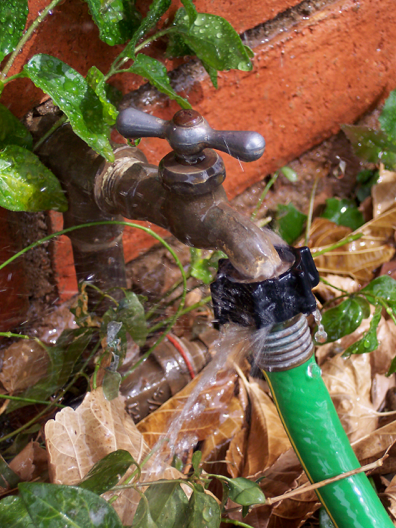
Leave the leaves: Whether cutting roses for bouquets or deadheading spent blooms, leave as much foliage on the plant as you can. While the leaves require water to stay hydrated, they are the cooling system for the plant. Leaves also provide shade for the base of the plant, potentially reducing moisture loss from the soil. LEFT: Be sure all watering equipment is in good working order; repair any leaks, photo courtesy Wikimedia Commons. 

Check your tools: No matter what you use to water your roses, make they’re in good working order. Fix leaky hoses or faucets; check drip irrigation, sprinkler systems, and timing devices regularly to ensure proper operation. If you water by hand, have an on / off valve at the use end and shut the water off when moving between plants. 

Timing is important: Water during the early morning hours when temperatures and wind speed are the lowest, and where possible, stretch the interval between irrigations. Roses do best when 50% of available water is depleted between irrigations. Don’t water based on the calendar or a schedule, watch the weather and your plants, and monitor the moisture in the soil.

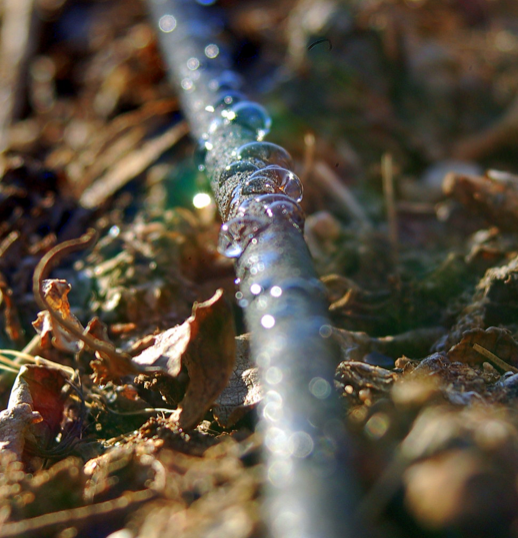
Technique makes a difference: Water your plants slowly and deeply; apply water only as rapidly as the soil can absorb it. When possible, divide your watering cycle into shorter periods to reduce runoff and allow for better absorption every time you water. Apply water within the “drip line” of the plant (that imaginary line of from the outermost leaves of a plant down to the soil). RIGHT: Drip irrigation is a good way to apply water slowly and deeply, photo courtesy Flicker. 

Mulch, mulch, mulch: Add a layer of mulch to the soil to moderate soil temperature, reduce evaporation, and reduce weeds. The amount of mulch you add depends on the texture and density of the material you are using and the quality of drainage of the soil you are covering; a good rule of thumb is two to four inches. Remove weeds first, then carefully spread an even layer of mulch over the soil surface, keeping it a few inches away from the base of the plant.

Forget the fertilizer: Many rose growers apply chemical fertilizers monthly spring through early fall to stimulate growth and flower production. An actively growing plant needs more water. Give the plants a rest through the hot summer months (June – September); keep them hydrated but avoid anything that stimulates growth. If you do fertilize, use an organic material like fish emulsion, that releases nutrients slowly into the soil.

Control weeds: Weeds will compete for precious water. Remove them by hand (and get the entire plant when they are small before they go to seed). Use mulch to prevent them from growing back. 

With a little planning and extra care, you can keep your roses alive, while reducing your overall water use. Then come next season, after a winter of “normal” rainfall (we hope), they’ll be ready to perform once more.

American Rose Society Announces Award Winning Roses

American Rose Society Announces Award Winning Roses


SHREVEPORT, LA – The American Rose Society announces six roses have been given three separate awards for their hardiness, longevity or tested quality.

The American Rose Society Members’ Choice: These awards honor roses receiving high national garden ratings in “Roses in Review”, both are widely grown and do well in most parts of the country. The Members’ Choice for 2023 goes to ‘Celestial Night’, a mauve, floribunda from Weeks Roses, hybridized by Christian Bedard and introduced in 2019. This rose is widely grown with a garden rating of 8.7 and slightly fragrant. The 2023 Members’ Choice for Fragrance Award goes to ‘Sweet Spirit’, a red blend grandiflora from Meilland, introduced in 2018. This rose is widely grown with a garden rating of 8.5 and is the highest rated for fragrance.

The American Rose Society Miniature and Miniflora Rose Hall of Fame: Since its creation in 1999, the Miniature and Miniflora Rose Hall of Fame has honored those miniatures and minifloras that have stood the test of time in commerce for at least 20 years, recognizing excellence and longevity. Each year a “Call for Nominations” is printed in American Rose, posted on the ARS website and distributed to bulletin editors. This year 150 nominations were received from 36 rosarians, and 47 different varieties were nominated. The ARS Miniature/ Miniflora Rose Committee determines the honoree(s) from the nominations submitted. Since 1998 there have been 57 miniature or mini flora roses inducted into the Hall of Fame.


This year the three Miniature and Miniflora Rose Hall of Fame honorees are ‘Nancy Jean’, hybridized by the late Vernon Rickard, ‘Erin Alonso’, a sport of ‘Bees Knees’ found by Peter G. Alonso, Jr. and ‘Simplex’, hybridized by the late Ralph Moore.


  • Nancy Jean (‘RICnancy’) is an apricot blend miniflora borne mostly solitary with outstanding exhibition form, but no noticeable fragrance. The foliage is large, dark green and glossy. Its parentage is (‘Fairhope’ x ‘Michel Cholet’); it was introduced by Almost Heaven Roses; and it is Vernon’s first introduction to enter the Hall of Fame.
    • Erin alonso (‘ALOerin’) is a medium yellow miniature sport of ‘Bees Knees’ which flowers full, high centered, borne mostly solitary, with exhibition form, but with no noticeable fragrance. Foliage is medium size, dark green and semi-glossy. Erin Alonso was introduced in 2002 by Peter G. Alonso, Jr., and it is Peter’s first Hall of Fame honoree.
    • Simplex is a white single miniature, borne singly and in small clusters with slight fragrance. The foliage is leathery, and the plant shows vigorous bushy growth. Its parentage is [(R.wichurana x ‘Floradora’) x seedling]. ‘Simplex’ was introduced by Sequoia Nursery in 1961 and is Ralph Moore’s seventh Hall of Fame honoree.


The American Rose Society Award of Excellence: In 1973 the American Rose Society Board of Directors established the Award of Excellence to recognize new miniature and miniflora rose varieties of superior quality and marked distinction. Since the inception of the Award, there have been 142 AOE winners.


Miniature and miniflora roses which have been in commerce for less than one year, as well as unnamed seedlings or sports, are eligible for evaluation for two to three years in five AOE public test gardens and two private gardens, spaced geographically across the United States. Since 2013 roses may be entered in a “no spray“ division, a “preventive spray” division or both. Each public garden has an AOE supervisor and five evaluators who score the entries on eleven criteria four times during each growing season. At the end of the trial period, Awards of Excellence are given to deserving entries, with a maximum of five per year. The public test gardens are: American Rose Center, Shreveport, Louisiana; Edisto Memorial Gardens, Orangeburg, South Carolina; Mesa Community College Garden, Mesa, Arizona; Toledo Botanical Gardens, Toledo, Ohio; and Virginia Clemens Rose Garden, St. Cloud, Minnesota.

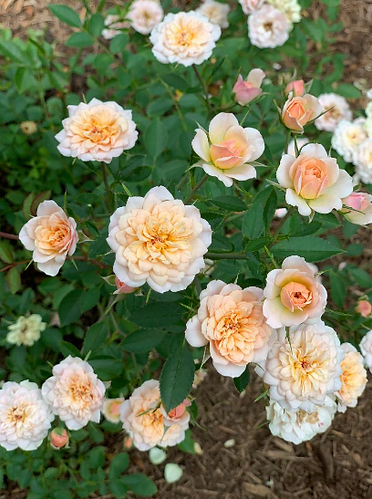
The official public announcement of the Award of Excellence winner(s) is made each year in American Rose and at the awards banquet of the ARS National Rose Show and Conference. After two years of evaluation one Award of Excellence winner has been selected. The 2024 AOE winner is ‘Petite Peach™’, an orangepink miniature sport discovered by Teresa Byington and propagated and entered in the no spray division of the AOE Trials.

‘Petite Peach™’ PPAF (AOE #2021-03)(BYIbloomthyme) Teresa Byington discovered this orange-pink to apricot miniature sport of ‘Petite Pink™’ which was hybridized by David Zlesak. It has decorative form with about 50 petals which fade to white with age and is borne one to a stem and in clusters but with no appreciable fragrance. The low growing rounded plant is very floriferous, “the showplace of a garden”, and quite disease resistant. It will be introduced by High Country Roses and is an excellent garden rose (photo courtesy Teresa Byington).

PHOTO CAPTIONS, TOP TO BOTTOM:

2023 ARS Members’s Choice: ‘Celestial Night’, photo Weeks Roses.


2023 ARS Members’s Choice for Fragrance: ‘Sweet Spirt’, photo Star Roses & Plants. PAGE 1: 2023 ARS Hall of Fame Inductee: ‘Nancy Jean’, photo Jim Hering. PAGE 1: 2023 ARS Hall of Fame Inductee: ‘Erin Alonso’, photo by Jim Hering.


2023 ARS Hall of Fame Inductee: ‘Simplex’, photo by Rich Baer.


2024 Award of Excellence: ‘Petite Peach’, photo by Teresa Byington

AMERICAN ROSE SOCIETY ANNOUNCES NATIONAL HONORS | Press Release

NEWS RELEASE – June 13, 2023

AMERICAN ROSE SOCIETY ANNOUNCES NATIONAL HONORS

SHREVEPORT, LA – The American Rose Society announces two national honors bestowed at its recent National Convention in Shreveport, Louisiana.

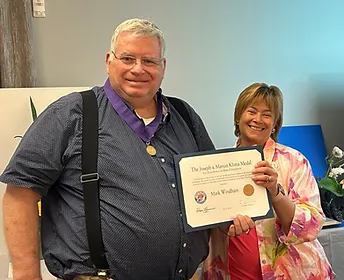
Dr. Mark Windham of Knoxville, Tennessee has been awarded the Joseph and Marion Klima Medal for Excellence in Rose Education. This award is given in fulfillment of the wishes of the late Joseph and Marion Klima of Kentfield, California. This award was established in the field of horticultural education concerning “The Rose.”

Windham, Emeritus Professor of Plant Pathology at the University of Tennessee, is known for his rose education presentations across the nation, speaking at field days, grower meetings, rosarian workshops, master gardener events, extension agent trainings and Consulting Rosarian schools. He spent the last 10-15 years giving education presentations to rose societies across the country. He has been instrumental in helping understand blackspot, cercospora leafspot, downy mildew, and more importantly in the last 10 years, the dreaded rose rosette disease. Windham is considered the country’s leading authority on rose rosette disease.

Windham, along with Dr. Alan Windham also from University of Tennessee and Dr. Alan Henn from Mississippi State University authored the 2018 e-book, A Guide to Rose Diseases and their Management (www.rose.org/publications). Windham continues to take part in research on roses, as he has secured funding with Dr. David Byrne of Texas A&M University and others for USDA Specialty Crop Competitiveness Grants pertaining to rose rosette research. Windham is involved in the research on many of the project objectives but goes the extra mile to then educate rose lovers through educational programs.

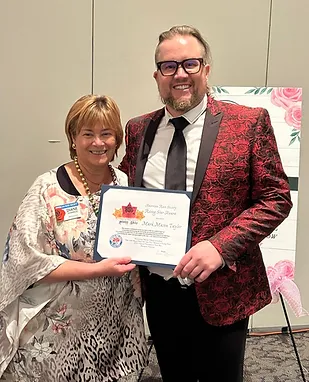
Mark Mason Taylor of Sandy, Utah, has been awarded the Rising Star Award. This award is established to honor new stars in the rose world in hopes of recognizing and honoring the work of the next generation of rosarians. It is created to recognize those 45 and younger for outstanding achievement by an individual in promoting the culture and appreciation of the rose — our National Floral Emblem.

Taylor serves as the Strategic Development chair for the Utah Rose Society. The Utah Rose Society (URS) was founded in 1935, a fact that Taylor researched and confirmed. Taylor has presented rose-related talks in his community, authored several articles and helped his local rose society to build a new website. He helped build a discount program for URS members which resulted in a 121% increase in membership. On the state and national level, Taylor has built a relationship with the Utah State University Extension Division to update their public information about landscaping with roses. Taylor is also an evaluator for the American Rose Trials for Sustainability program at the Conservation Garden Park in West Jordan, Utah.

Taylor is the founder of Perfume Punk, a worker’s co-op which was responsible for saving eight million gallons of water in 2022 through waterwise rose gardens.

Media Contact: Beth Smiley, Publications Director • beth@rose.org • 318-938-5402. Press release and photos available at www.rose.org/press

Photo captions: TOP: Photo caption: Dr. Mark Windham receives the Klima Medal for Excellence in Rose Education from ARS President Diane Sommers. Photo by Beth Smiley. BOTTOM: American Rose Society President Diane Sommers presents Mark mason Taylor with the 2022 Rising Star Award. Photo by Beth Smiley.

The American Rose Society is a non-profit, educational organization working to promote the beauty, culture and preservation of the rose. Their headquarters home, the American Rose Center – America’s Rose Garden – features more than 7,000 rose bushes – this translates into more than 400 different types of roses in one place. The grounds also include various sculptures and water features, as well as a playground and picnic area. The American Rose Center, located at 8877 Jefferson Paige Road in Shreveport, LA, is open Monday through Saturday, 9 a.m. to 5 p.m. and Sunday, 1 p.m. to 5 p.m., Apr 1 through Oct 31.

American Rose Society

8877 Jefferson Paige Road • Shreveport, LA 71119

Phone: 318-938-5402 • www.rose.org

Come for the Roses, Stay for the People!

Fragrant Rose Editor Jason Capote Visits the National Convention

Hello, my fellow rose growers and I come bearing greetings from the 2023 ARS National Convention and Rose Show in sunny Shreveport, Louisiana! On the weekend of May 5-8, almost 300 rose lovers from all across the United States (and even a few from our neighboring countries of Canada and Bermuda) descended on the headquarters of the American Rose Society to hear lectures from world renowned rosarians, see the sights of the city of Natchitoches, Louisiana, honor those rosarians that contributed to our great society, judge new rose varieties in the ARS International Rose Test Garden, and see the newly restored rose garden at the American Rose Center! Additionally, rose growers from across the country participated in the National Rose Show where the nation’s top rose growers compete and display their prize-winning roses. Even if you are not someone who regularly shows their roses, simply viewing a national rose show is a much-anticipated event with high spectacle. As just a viewer you get to see what grows across the country and may see new or rare rose varieties that you would like to add to your own collection. As such, I try my best to attend as many national rose shows and conventions as possible and I encourage all of you to do the same. While there will not be another national rose show and convention until the 2024 convention in Providence, Rhode Island (www.seaofroses.org), there will be district conventions and rose shows held in multiple states across the country, especially in the autumn months. In fact, in the northeast region of the U.S. alone there will be four district rose shows or conventions held over the course of three weekends in September. First up is the New York District Rose Show and Convention in Binghamton, NY from September 8-10. That is followed by the Penn-Jersey District Rose Show in Hershey Gardens and the Yankee District Rose Show held in Cape Cod on the weekend of September 15-18, and last up is the Colonial District Rose Show and Convention held in Charleston, West Virginia on the Weekend of September 22 – 24. Of course, there are district rose shows and conventions held across the country and not just in the Northeast. For more information, please click here.

Lastly, as we approach June, I want to encourage all of you to exhibit your roses at rose shows in your area. Most local rose societies hold rose shows in the spring, usually during the time that the roses are in peak bloom in your area. Rose shows serve two functions. First, they educate the public who come to view the rose show as to what rose varieties grow best in your area. This is a very valuable function that cannot be overstated. Second, rose shows, just like national and district rose conventions, are a great place to connect with fellow rose growers and forge friendships over the love of growing roses. Some of the best friends I currently have are from people I met through my travels exhibiting, judging and simply attending rose shows and conventions. As a result, many rose lovers truly believe in the statement “I came for the roses, but I stay for the people!”

In the spirit of encouraging all of you to attend rose shows and conventions in the future, this addition of The Fragrant Rose features articles on exhibiting roses in shows. It also features photographs from our most recent national convention and rose show. Lastly, this month’s featured fragrant rose is ‘Yolande d’Aragon’, a hybrid perpetual rose exhibited by top national exhibitor Satish Prabhu that won the Most Fragrant Rose class at the national rose show in Shreveport. I know I plan to go to many rose shows and conventions during the rose growing season. I hope to see many of you there!

2023 Award of Excellence Winners

by Dr. Jim Hering

CHRISTIAN BEDARD, JIM SPROUL & CHRIS WARNER

In 1973 the American Rose Society Board of Directors established the Award of Excellence to recognize new miniature and miniflora rose varieties of superior quality and marked distinction. Since the inception of the Award, there have been 141 AOE winners. Miniature and miniflora roses which have been in commerce for less than one year, as well as unnamed seedlings or sports, are eligible for evaluation for two to three years in seven AOE public test gardens and two private gardens, spaced geographically across the United States. Since 2013 roses may be entered in a “no spray“ division, a “preventive spray” division or both. Each public garden has an AOE supervisor and five evaluators who score the entries on 11 criteria four times during each growing season. At the end of the trial period, Awards of Excellence are given to deserving entries, with a maximum of five per year. The public test gardens are: American Rose Center, Shreveport, Louisiana; Edisto Memorial Gardens, Orangeburg, South Carolina; Farmers Branch Public Rose Garden, Farmers Branch, Texas; International Rose Test Garden, Portland, Oregon; Mesa Community College Garden, Mesa, Arizona; Toledo Botanical Gardens, Toledo, Ohio; and Virginia Clemens Rose Garden, St. Cloud, Minnesota.


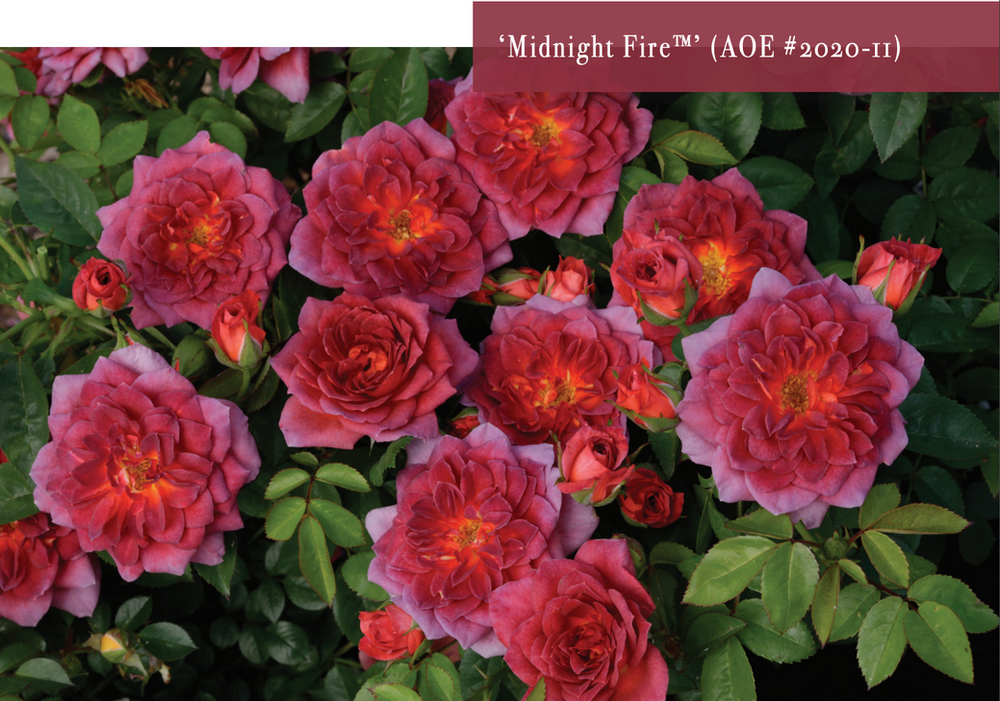
The official public announcement of the Award of Excellence winner(s) is made each year in American Rose and at the awards banquet of the ARS National Rose Show and Conference. After two years of evaluation (three for climbers) four Award of Excellence winners have been selected. The 2023 AOE winners are ‘Midnight Fire™’, an orange blend miniature, and ‘Life’s Little Pleasures™’, a mauve miniflora, both hybridized by Christian Bedard, ‘Baby Dainty Bess’, a miniature medium pink single, hybridized by Jim Sproul and ‘Ringo™’, a yellow miniflora with a red center, hybridized by Chris Warner.

‘Midnight Fire™’ (AOE #2020-11)

This orange blend miniature appears to be orange overlaid with purple smoke and has decorative form with 40-70 petals borne one to a stem and in clusters and with mild tea fragrance. The medium size rounded plant is very floriferous with glossy medium green foliage which is quite disease resistant. Parentage is ‘Smoke Rings’ x ‘Cinco de Mayo’. It was hybridized by Christian Bedard (his seventh AOE winner), is introduced by Weeks Roses and is an excellent garden rose (photo courtesy of Weeks Roses, Inc.).

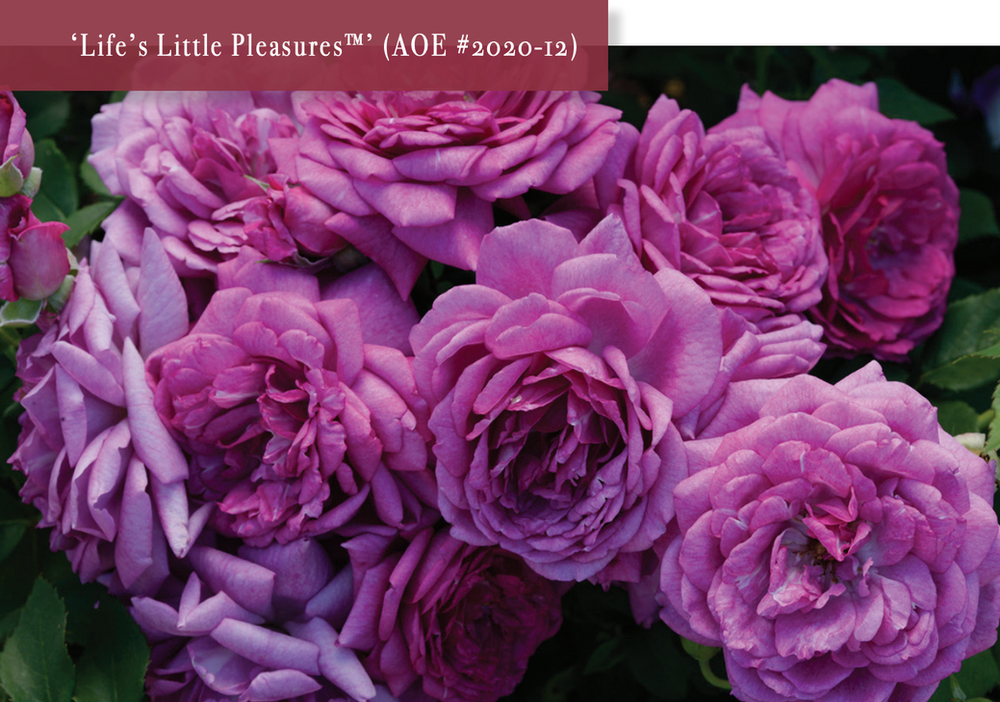
‘Life’s Little Pleasures™’ (AOE #2020-12)

Although classed as a mauve miniflora, this variety appears to be an old-fashioned lavendermagenta double with 50-65 petals and moderate fruity fragrance. It was hybridized by Christian Bedard from ‘Sweet Chariot’ x ‘Enchanted Evening’ and is introduced by Weeks Roses. The plant is rounded and bushy, of medium height and has glossy medium green foliage and good disease resistance. The blooms are 2-3 inches in diameter and are borne in clusters. This is Christian’s eighth AOE winner (photo courtesy of Weeks Roses, Inc).

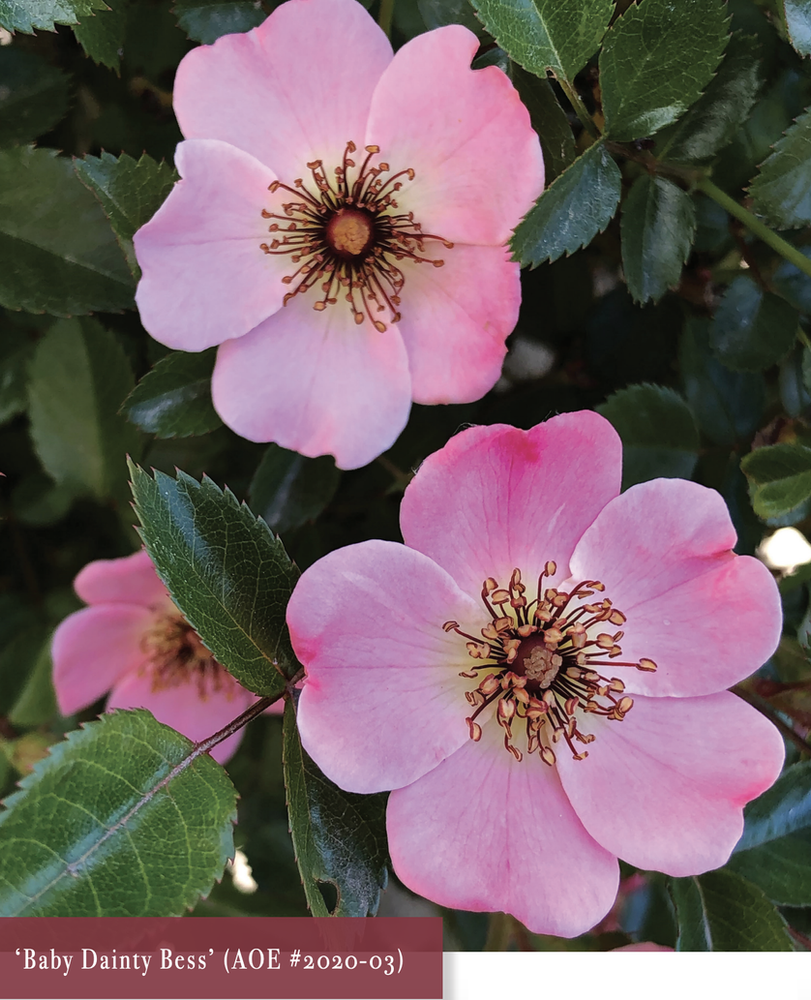
‘Baby Dainty Bess’ (AOE #2020-03)

This single, medium-pink miniature was tested in the “no spray” division, demonstrating excellent disease resistance. It is a carefree true miniature rose having small clean foliage to match the petite single petal blooms. Its dark colored stamens are reminiscent of those on the single petal hybrid tea ‘Dainty Bess’, of which it is a diminutive facsimile and from which its name was derived. The blooms are borne most commonly one to a stem, sufficient in length for exhibition. It was hybridized by Jim Sproul (his third AOE winner. Photo courtesy Jim Sproul.

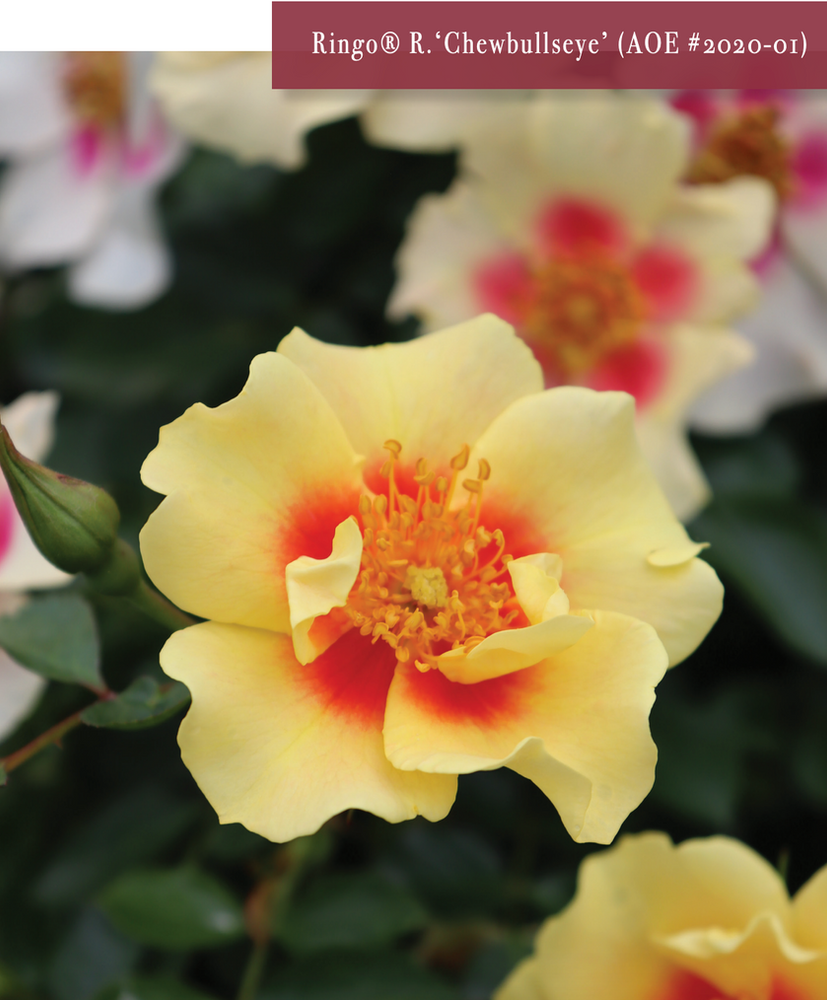
Ringo® R. ‘Chewbullseye’ (AOE #2020-01)

Spring Meadow Nursery has entered the AOE trials with another outstanding seedling in the “no spray” division. It is a yellow miniflora single with a red eye and glossy dark green foliage which Spring Meadow will market as a Proven Winners® Color Choice® shrub. The opening color is striking and remains attractive as it ages. It was hybridized by Christopher Hugh Warner (his fourth AOE winner), grows 3-4 feet in height and has exceptional disease resistance. Photo courtesy Spring Meadow Nursery.

Right Rose – Right Place

Right Rose – Right Place

by Suzanne Gilbert


ABOVE: ‘Pretty Polly White’


A love of roses comes to individuals in different ways. When I was a girl growing up in Baltimore, Maryland I went on a trip with my parents to Longwood Gardens in Pennsylvania. I came home with three roses ‘Peace’, ‘Chrysler Imperial’ and ‘Tropicana’ (LEFT, by Delana Jaggers). From that time on they were the favorite plant in my garden. Ask any rosarian and they will have a story about how roses came into their life. I am currently retired; however, my profession was teaching. The grade I enjoyed teaching the most was kindergarten, because they were beginners, and ready to learn so much in school. If you are new to growing roses, remember it is okay to be an enthusiastic beginner. Growing roses is a fun, exciting experience that will reap rewards in your garden. It can also be an avenue to make new friends who share your hobby.


The bulk of my rose growing experience for more than 30 years has been in Houston, Texas. As a zealous novice rose gardener, I made many mistakes. The focus of my articles will be to help you choose the right rose for you, the right place to grow it and the best ways to nurture it throughout the growing season. Let’s start at the beginning finding the right rose and the optimum location to grow your new rose.


I am often asked to give presentations to garden clubs that I call “Roses 101.” Often people tell me growing roses is too hard because roses are fussy and require lots of care. That is simply not true! Roses are easy to grow and make excellent garden plants that produce color throughout the growing season. Like any plant they have specific requirements. Making sure your rose has those requirements will help to ensure your rose growing success.


Requirement #1 – Location- Location -Location


Before deciding which rose or roses you would like to grow, you must choose the correct location. Roses require about 6-8 hours of sun daily. Find a place that meets their sun needs. Plant your roses away from trees and the canopies of trees. As the tree grows, the canopy will expand. A rose planted under a tree might be growing in sun at first. After a few years it will be in shade. Tree roots will steal water and nutrients your rose needs. Also, roses growing in too much shade will not produce many blooms and develop disease. One of the reasons for growing roses is the beautiful blooms the plant produces.


Give your rose good air circulation. Allow generous space between your rose and fences or walls and also other roses and plants. Depending on the type and size of the rose, I like to plant them on at least three-foot centers.


Requirement #2 – Pick the right rose for you


This is a topic entire books have been written about. I am going to try to keep it simple for you. Picking the wrong rose is the issue I feel that gets new rose growers in trouble, discouraging them in their new hobby. They see the beautiful hybrid teas in a florist shop or at a rose show and decide to grow them. A hybrid tea grows tall, upright and has one bloom per cane on a long stem. Hybrid teas have a bloom cycle which can be six-to-seven weeks. This means that after the first flush of blooms there is a waiting period while the plant prepares itself to bloom again. This continues throughout the growing season. As lovely as they are, they can be fussier than other kinds of roses to grow successfully, so for now wait to try them until you have more rose growing experience under your belt.


In my opinion the easiest roses that provide beginner success are floribundas, shrub roses, polyantha roses and groundcover roses. Floribundas produce roses that flower in large clusters. This means they have more than one bloom in flower at a time. Floribundas create colorful displays in the garden continually throughout the growing season. Even their name means “flowering in abundance.” These roses do well as cut flowers. One cluster can fill up a vase! ‘Europeana’ (BELOW), ‘Cinco de Mayo’ (LEFT), ‘Lavaglut’ and ‘Hot Cocoa’ (ABOVE) are floribundas that have grown well in my garden. ‘Hot Cocoa’ grew so well for me that I was continually grooming it to keep it in bounds so it would not encroach on its neighbors.

ABOVE: ‘Lavaglut’


Shrub roses are also a good choice for beginners. They are hardy, vigorous and bear large quantities of flowers throughout the growing season. Shrub roses growing in a location that they like can become very large plants spreading 5 to 15 feet in every direction. ‘Gaye Hammond’, a yellow blend was a favorite in my garden. She started out in a small pot and was moved a couple of times. When I found her happy spot, she bloomed profusely from April to November or later. Another great shrub rose in southeast Texas is ‘Belinda’s Dream’. The flowers are medium pink and the blooms have the shape of a hybrid tea. I grew this rose for a while in my garden. At one point I was redoing a bed and gave this rose to my son and his wife who had just bought their first house and wanted a rose for their sunny backyard. They took it home planted and watered it then got on with their busy lives. The next time I saw this rose it had doubled in size, was covered with beautiful pink blooms and had minimal care!

ABOVE: ‘Pretty Polly® Pink’


For small urban or suburban gardens polyanthas and groundcover roses can be the ticket. Polyanthas are much smaller plants than floribundas. They produce flowers in clusters about an inch in diameter. They are sturdy, hardy plants. These roses work well in small beds or containers. ‘Pretty Polly®’ roses are polyanthas that come in variety of colors pink, lavender and white. The bushes are about 2 ½’ high and 3’wide. An excellent groundcover rose I have used extensively in my garden is ‘Pink Drift®’. The ‘Drift®’ series of roses come in a rainbow of colors to choose from. Many Houston landscapers use these roses for traffic medians and other commercial uses. They are tough and robust in the heat of the Texas summer. I am always delighted to see them blooming away in spite of car exhaust and blazing sun! (LEFT: Roses at Whataburger, by Author)

Tools to Assist You in Finding the Right Rose

    • As you begin your rose growing journey, gaining knowledge and choosing the best roses for your garden a great place to start is to find the local rose society in your area of the country. Connect with the Consulting Rosarians in the society and find their best recommendations of roses which do well in your area. There is no charge for Consulting Rosarian services. They want to help you be a successful rose gardener.
    • Join the American Rose Society. The ARS website has all kinds of information on growing roses, www.rose.org. Many online programs are available. As part of your ARS membership, you will receive The Handbook for Selecting Roses. This is published yearly. It is an excellent rose buying guide. More than 3,000 varieties appear in the Handbook. Keep this with you when you go to buy roses!
    • Check out these websites: American Garden Rose Selections™ https://www.americangardenroseselections.com and American Rose Trials for Sustainability® https://www.americangardenroseselections.com. There are several rose trials established around the United States currently. Roses are grown and scientifically evaluated under conditions similar to where you live. They are tested for disease resistance and pest resistance. Plants featured on the websites are worthy of a place in your garden.

The Next Step

Now your homework is to take a walk around your garden/yard and evaluate where the roses you will introduce to your garden will grow the best. Remember you will need 6-8 hours of sun and stay away from those trees. Research local rose societies and peruse the websites suggested for hardy and beautiful roses that will grow in your area.

Next time I share some mistakes I have made and we will discuss how to plant those new roses you have selected for your garden!