Easy Elegance Roses: Simple, Carefree & Beautiful


by Angelina Chute

Award of Merit 2017 winner

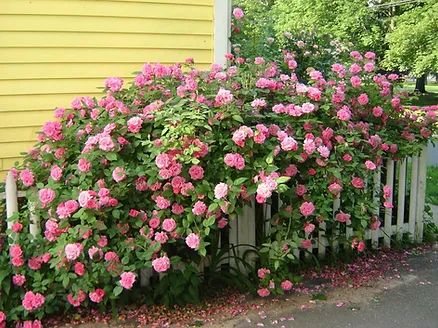
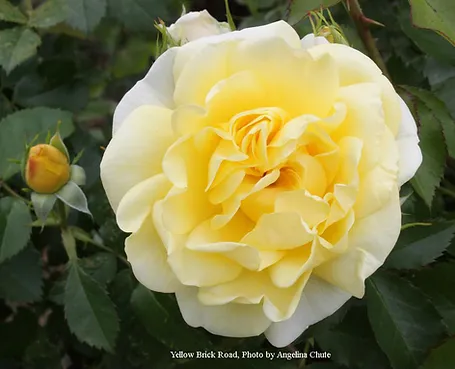
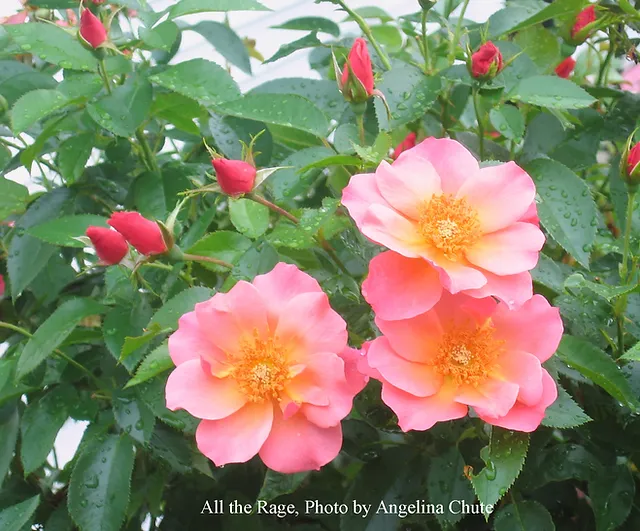
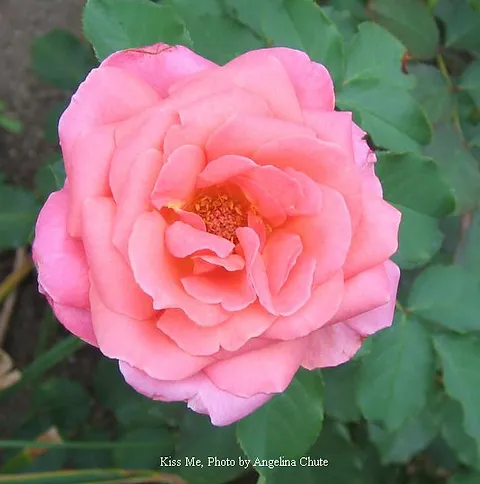
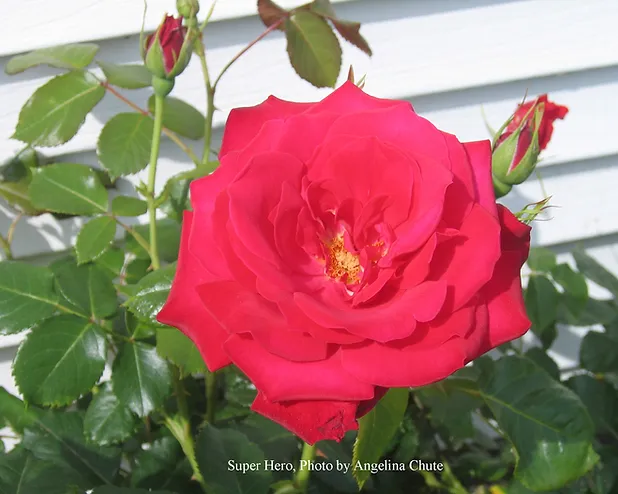
I’m a big fan of Easy Elegance Roses. They’re not only sustainable and easy to grow, but also produce roses that have great color and form throughout the season. My “old” favorites include All the Rage and Yellow Brick Road. But I have more favorites: Super Hero, Kiss Me and My Girl.

Easy Elegance roses were hybridized by Ping Lim and introduced by Bailey Nursery. According to Ping, the term Easy Elegance was inspired by an ideal lifestyle that was simple, carefree and beautiful. The roses he created certainly have these attributes.

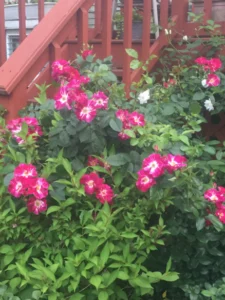
Each year I look forward to seeing the small red roses of Super Hero, one of the first bushes to bloom in the spring. The flowers start out with hybrid tea form and then open to round flat blooms. I like to cut Super Hero because it fits perfectly into a small vase.

All the Rage is a single, but what a gorgeous rose it is with apricot blooms and a bright yellow center. When the bloom is fully open it is 3-4 inches. This rose bush was one of the first roses we planted in our sustainable rose garden 9 years ago and it still remains one of my favorites.

There are now more, newer Easy Elegance roses available. I don’t have room to plant all of them in my garden, but I manage to find space for a few more each year. All the roses described below were on display as potted roses at this year’s Rose Show.

If I had to choose my favorite potted rose on display at the Rose Show, I think it would be Champagne Wishes. I’m attracted to clear, creamy white roses and Champagne Wishes has clusters of white blooms packed with 24-30 petals. The flowers start out as apricot buds — attractive at even the bud stage — and open to white. We planted this rose in our garden this year and the Friday morning before the Rose Show I saw a fresh spray of Champagne Wishes in bloom that I thought I could enter in the Sea of Roses class. Since I had no previous experience with Champagne Wishes, I wasn’t sure its blooms would stand up over night without losing its petals, but the morning of the show, it still looked good. I entered it in the show and was pleasantly surprised when I saw it won Best of Class! Champagne Wishes is hardy to Zone 4.

Last year we planted Calypso in a bed at the back of our garden. It doesn’t get as much sun as some of our other roses, mainly because it’s planted next to our Renaissance Roses which grow quite tall. I didn’t pay too much attention to Calypso last year, but this year when I saw it in bloom, I really liked its delicate, light apricot flowers that have 25 petals. Calypso has a compact, rounded habit and is hardy to Zone 5.

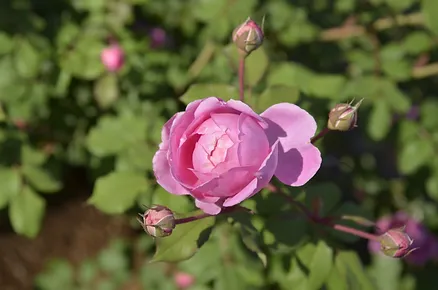
Coral Cove has been around since 2010, but we planted it in our garden this year. It really caught my eye with its bright orange-pink roses. The blooms are ruffled and the outer petals start out as dark pink before changing to orange. The buds are a combination of orange and yellow and just as eye-catching as the fully opened flowers that have bright yellow centers. Coral Cove has 20 petals. It’s hardy to Zone 4 and has a small habit of 2-3 feet.

Little Mischief, a deep pink shrub, has small 1 inch blooms with a white eye that look great against its glossy green foliage. The flowers have 20 petals and the bush is low growing to 2-3’ which make it perfect for a small garden. Little Mischief is hardy to Zone 4 and very disease resistant.

Music Box is a flashy rose with its yellow blend petals that have outer pink on their edges. The blooms have 30-35 petals and the foliage is a glossy medium green. Music Box can grow from 4-5’, but so far its habit in our garden is only 3’. It is hardy to Zone 4.

A shrub rose that would do well in a container is Paint the Town which grows 2-3’ high and has medium red flowers. Its hybrid tea shaped blooms have 20 petals and the foliage is a glossy dark green. Hardy to Zone 4.

The shrub Pinktopia got a lot of attention at the Rose Show with its appropriately named clusters of medium pink blooms. The single flowers of 10-15 petals are about 3” when fully opened. Pinktopia grows to a height of 4’ and is hardy to Zone 5.

If you’re looking for some disease resistant roses to add to your garden, you may want to keep some of these simple, carefree and beautiful Easy Elegance roses in mind.

Ring of Fire – Rose of the Month

Suzanne Horn, Master Rosarian, Pacific Rose Society

This is a 2018 Award of Merit article

‘Ring of Fire’ has literally burst into flames on the national scene for home gardeners and exhibitors alike. Created by local hybridizer Chris Greenwood of Glendora, California under the working title of ‘Apollo’s Fire’, it was introduced to the buying public in 2017 by Certified Roses. This stunning orange hybrid tea was one of the most eagerly anticipated releases to the market in years thanks to word of mouth from growers of test plants around the country. Since its release, ‘Ring of Fire’ has exploded on the retail market, having been distributed to top nurseries around the country and literally flying off the shelves. (ABOVE: ‘Ring of Fire’, photo by Kitty Belendez)

ABOVE: Left, ‘Ring of Fire’ – 2021 David Fuerstenberg Prize, photo by Dona Martin. Right, Ring of Fire-2021 David Furstenberg Prize.


This is not Chris Greenwood’s first introduction. The talented amateur hybridizer has produced a number of excellent roses and has had a goodly amount of success with the hybrid tea ‘Crowd Pleaser’ (introduced by Weeks Roses), floribunda ‘Tootsie’, miniflora ‘Hello Sunshine!’ and miniature ‘Hello Gorgeous!’, to name a few. However, nothing to date has come close to the phenomenal success of ‘Ring of Fire’. It has rapidly become the most popular new hybrid tea rose in the country and has drawn national recognition to its Southern California hybridizer. (ABOVE: Chris Greenwood with Jolene Adams receiving Rose Hills Award)

‘Ring of Fire’ was produced from what Chris Greenwood observes was “a happenstance cross” in May of 2007 between Marilyn Monroe and Hotel California. He notes that he had tried using Marilyn Monroe in his breeding program in the past but with no results. Marilyn Monroe presents very little pollen, and no seed had set. In 2007, he harvested numerous Marilyn Monroe flowers and obtained just a small amount of pollen. Since he had a couple of flowers of Hotel California ready to pollenate, he used what little Marilyn Monroe pollen he had on those two blooms. Fortunately, hips set and he was able to harvest about 20 seeds that fall. After placing them in the refrigerator, he planted those seeds in February of 2008. (ABOVE: ‘Ring of Fire’ bloom in bud vase, photo by Chris Greenwood)

I well remember the first bloom on this rose, which was really exciting. Chris cut the bloom and brought it to a rose society meeting in a mini bud vase. (See attached photo from that day and note the size of the vase on this first-year bloom.) He passed it around and elicited lots of “ooohs” and “ahhhhs” from the rosarians present. It was perfect – a glorious rich color with lots of substance and perfect, high centered hybrid tea form. It was a small glimpse into the greatness to come for this rose. (LEFT: ‘Ring of Fire’ – Best of Show photo with exhibitor Suzanne Horn from Santa Clarita Show, photo by Peter Alonso)


Chris notes that subsequent flowering on this rose was even better. With high hopes, he sent some budwood over to Weeks Roses. A small bump in the road occurred when his seedling plant died the following year due to a bad placement in the ground. But Chris really believed in his as yet unnamed orange hybrid tea, and you couldn’t keep a good rose down!

Other top hybridizers took a liking to the rose as well including the great Tom Carruth. In 2010 Tom budded more plants, and he and Christian Bedard continued to evaluate the rose. Another bump in the road occurred in about 2012 when Weeks decided it was not a variety they wanted to continue with. However, the silver lining was that Christian sent 10 plants to the Rose Hills Trials for Chris; and that was where it became a star! (ABOVE: ‘Ring of Fire’ – Cycle of Bloom shown by Suzanne Horn, photo by Dona Martin)


Chris recalls, “In April of 2014, I received a call from Christian to get over to Rose Hills, that my baby was in full bloom and very spectacular!” I remember going to see it on May 31, 2014, and it was still in full bloom. To say it was spectacular was an understatement. It was the most stunning display in all of Rose Hills. I found myself begging Chris for a test plant. (LEFT: ‘Ring of Fire’ bloom at Rose Hills, photo by Chris Greenwood)

As time progressed, Tom Carruth, who was now working with Certified Roses, recommended that they pick up the variety. Tom opined, “Ring of Fire is a jazzed-up version of Touch of Class. It has those same broad round petals that hold a perfect show form but with a brighter, clearer, orangier color. Even in hot weather, the flower size holds up. Its Grandfather is Saint Patrick so you can expect the flowers to last and last in the vase.”

Chris sent a boatload of budwood to Certified Roses, and it performed very well in Glendale, Arizona. This speaks very well for how well the rose performs in the heat. The rose was also sent to the Costa Farm Trials in Miami, where it showed absolutely no sign black spot, quite an achievement for a rose in Florida. Chris noted, “It appears that this variety is equally at home in hot climates as well as cooler ones. So far, I’ve not seen any fade in the color even with the extreme weather of hot then cool. Furthermore, I have not noted any disease whatsoever on any of my nine plants.” (ABOVE: ‘Ring of Fire’ – Vase of 12 shown by Suzanne Horn, photo by Dona Martin)


In October of 2014, ‘Ring of Fire’ (at the time dubbed “orange hybrid tea”) was awarded the gold medal for the Best Hybrid Tea in the Rose Hills Trials. This was a huge achievement for Chris as an amateur hybridizer, and the rose had now officially reached star status. See the attached photo of Chris receiving this award from then President of the American Rose Society, Jolene Adams. (LEFT: ‘Ring of Fire’ bloom, photo by Kitty Belendez)


As noted above, ‘Ring of Fire’ became commercially available across the country in 2017, and the response was remarkable. There are now large plantings of ‘Ring of Fire’ at Rose Hills, the Wrigley Garden and the Huntington Rose Garden. In addition, the rose is currently in the Portland Rose Trials. Tom Carruth conveyed to Chris that he anticipates this rose will be particularly stunning in the Portland trials and believes the flowers should be huge in the cool climate of Portland. As such, rose enthusiasts all over the country now have the opportunity to see and fall in love with this fabulous new rose.


I began growing this rose in 2015 as a test plant, which I grew in a large container in my Glendale, California garden. At the time I originally wrote this article, I was growing three plants, all of which were growing vigorously in these containers. Suffice it to say that I now grow many, many more. Glendale has a very hot climate, and ‘Ring of Fire’ thrives in it. The roses present a rich, non-fading orange hue with just a hint of yellow at the base. The blooms present a light fragrance, and just looking at them makes me think about fresh squeezed orange juice. They are produced almost exclusively as one bloom per stem and have a high percentage of great exhibition form. (They had me at “great exhibition form”.) Those blooms are presented on long straight stems and are cloaked in dark, rich, clean foliage, which create a complimentary frame for their dramatic color. I have not seen a speck of disease on any of my plants since I started growing them. In addition, the blooms present great substance, those legendary “petals of steel”, which were no doubt inherited from its parent plant, Marilyn Monroe. I have added to Chris Greenwood’s royalties as I continue to add more and more of these plants to my garden. (ABOVE: ‘Ring of Fire’ – Horizon Roses cover photo, rose photo by Chris Greenwood)

For the exhibitor, ‘Ring of Fire’ has everything you could possibly dream of in a show rose. It has great, classic form with lovely spiral centers that hold for days. The stunning electric orange color will surely grab a judge’s attention from across a crowded room. It is what exhibitors like to call a “Queen Machine”.


A wonderful rose for the garden as well as the show table, you will find ‘Ring of Fire’ to be one of the most striking and dramatic splashes of color in the yard. The bright, glowing orange hue is a real eye-catcher, and the beautiful blooms are nothing short of dazzling. The color remains fresh and vibrant through all stages, from bud to exhibition form to fully open bloom. As a cut flower, it is unbeatable and it has a long vase life as well. (ABOVE: ‘Ring of Fire’ bed at Rose Hills, photo by Chris Greenwood)

Needless to say, ‘Ring of Fire’ has a very rosy future. Everyone who sees it falls in love with it. You won’t want to miss out on adding this fabulous new star in the rose world to your own collection. Furthermore, rosarians everywhere are now looking forward to the great new introductions that are pending from the country’s newest star hybridizer, Chris Greenwood. (ABOVE: ‘Ring of Fire’ spray, photo by Chris Greenwood)

*** November 2020 Update ***

Since this article was originally written in 2018, the fame of ‘Ring of Fire’ has continued to grow. Chris Greenwood observes, “With every bloom cycle I get more and more impressed (proud papa). Whether it is on its own roots, Dr. Huey or Fortuniana, the results are still the same. Spectacular. Every bloom has stunning form and her performance on the show table is amazing.”

There have also been some new developments worth reporting. As of 2018, ‘Ring of Fire’ had already reached Number 5 on the list of Top Exhibition Hybrid Teas and Grandifloras on Roseshow.com. To date, it has logged 21 Queens of Show, 5 Kings, 13 Princesses, 14 Courts of Honor, 11 Challenge Classes, 2 Sprays and 1 Open Bloom. Furthermore, I have personally won three Cycle of Bloom awards with the rose, plus trophies for vases of 6, vases of 12 and Best of Show. I’m sure there are many more undocumented trophies for ‘Ring of Fire’ around the country that do not fall within the top recorded classes.

In addition, the most current issue of “Horizon Reports 2020” has recently come out, and ‘Ring of Fire’ is the cover rose. Furthermore, editor Bob Martin reports that ‘Ring of Fire’ received more reviews than any other rose – a record number of 85! Rave reviews came in from exhibitors all over the country. Space constrictions prevent me from sharing them all, but here are some of my favorite comments (edited for space).


Great rose overall! (Alonso); The red-orange blend of the blooms is stunning and they hold substance. Bloom, stem and foliage have all the characteristics of a champion exhibition rose for years to come. (Bechtle); What a beautiful exhibition rose! Attractive orange color with great form. Growth is much better this year with longer stems. Will continue to be on the trophy table for years to come! (Becker); This is the best orange hybrid tea I’ve grown in 33 years of growing roses, and one of the best exhibition hybrid teas we’ve ever grown. It produces perfect bloom form with very little grooming, fantastic fluorescent orange color, and long stems. Foliage is dark green, glossy and disease free. Insects seem to avoid it. The blooms hold form and color in the garden, but do not clam up in the floral fridge. It’s always the earliest and first hybrid tea to bloom in my garden, and it has a very fast bloom repeat. It has won us many local, district, and national trophies. (Belendez); Always a contender for Queen. Best show rose I grow. (Bever); A sure- fire beautiful shade of flaming orange and spectacular form. defines the phrase – Absolutely Awesome! (Blevens); A good bloom at the show will dazzle, I’m sure. (Borrmann); Cannot say enough good things about this rose. Beautiful form, beautiful color, long staying power in vase and on bush, nice leaves, a great show rose, always a Queen! (Brennan); Healthy bushes with good foliage are providing the blooms that we all know and love. Striking, deep orange with high centers. Honor Roll bound. (Dale); There aren’t enough superlatives. Color, form, this bloom has it all. (Eckley); The best hybrid tea in my garden, by far. (Ekuan); Blooms are spectacular vibrant orange. Excellent form with good centers and size. (Garman); Outstanding variety! Rich orange blooms have size, form and substance. (Garrett); A great rose to be sure. Forms, stems, disease resistance. It’s a keeper and will be Honor Roll quickly. (Guillebeau); Orange with outstanding exhibition form. Already a national queen. (Hering); One of the best roses in the last 40 years. Continual show quality blooms, disease resistant, statuesque and sublime color. (Huffer); Best hybrid tea of the decade. Wonderful color and form. (Lester); This has become my favorite – second to Gemini. Holds forever as a show exhibit and looks amazing in arrangements (Mahoney); An exceptional rose with vibrant orange blooms of great substance derived from its pollen parent, Marilyn Monroe. Like Marilyn, who starred in Some Like it Hot, the rose likes heat. Its seed parent, Hotel California contributes wide petals that enhance is near perfect hybrid tea form. The bush is a strong, upright grower and well productive of bloom on long straight stems. It has already proven to be one of the best hybrid teas ever. It is a must-have for exhibitors and it will be on the Honor Roll. (Martin); This is an outstanding rose and one of the best new roses in my rose garden in recent years. (Mayhew); This is an exceptional hybrid tea rose from Chris Greenwood. The orange blend color is truly beautiful, and the exhibition form is impeccable. This rose will not only win Queen, it will be on the Honor Roll. (Merriam); A winner for the garden and the trophy table. (Shockley); Color is beautiful and it is rare to get a bloom that is not PERFECT form! All stages of bloom are beautiful! Best rose for exhibition I have had in a long time! (Snellgrove); Obviously one of the best exhibition hybrid teas around. Great form and color, huge productive plant. (Streeper); One of the best roses to be introduced. It has everything I want in a hybrid tea. (Wilkinson).


As for me, I couldn’t be more pleased with this gorgeous hybrid tea, which has become my favorite. It seems to be almost everyone’s favorite now, with talk about it being the “rose of the century” frequently bandied about. The only downside to it is that everybody and their brother is growing it, and you will see up to a dozen blue-ribbon quality entries for Queen at the Southern California rose shows. It is certainly winning more than its share of trophies and I look forward to seeing it on the Honor Roll soon.

Lastly, perhaps the most significant development for this remarkable rose occurred this year when its hybridizer, Chris Greenwood, was awarded the American Rose Society’s 2021 David Fuerstenberg Prize! Established in 1929, this accolade is awarded from time to time to the originator of any new rose of American origin suitable to the American climate which may deserve honor. I couldn’t think of a more deserving hybridizer to receive this grand award.


Chris Greenwood continues with his backyard hybridizing program and has produced a number of new roses including a highly regarded floribunda named ‘Shannon Lanaya’ that we will be seeing more of on the trophy tables soon. In the interim, hearty congratulations to him on his David Fuerstenberg Prize and the incredible success of his outstanding creation, ‘Ring of Fire’.
‘One-derful’ Once Bloomers

‘One-derful’ Once Bloomers

by Joan Goff, Consulting Rosarian, Marin Rose Society

All photos submitted by Joan Goff

This is a 2006 Award of Merit article.

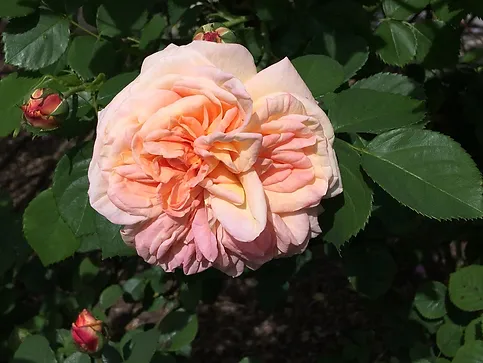
Now that I have been seriously growing roses for over 10 years I can say that I am hooked. Hooked on singles, hooked on old roses and really hooked on those once bloomers. I know a lot of you will say, “Oh, why grow a rose that only blooms once?” Well, I will tell you, when a once blooming rose blooms, it blooms! (LEFT: ‘The Alchemist’)


Once blooming roses are different from repeat bloomers in more ways than one. They will throw more buds which of course mean more blooms. They bloom longer than repeat bloomers and for the most part, their blooms last longer. A big exception is Alain Blanchard which the blooms only last about 3 days. Once bloomers also don’t all bloom at the same time. Some start as early as late April here in Marin County, but others start in May and some even don’t start until June. So here in Marin, you can have blooms from April to July with a once blooming rose.


Why are we so hard on a rose that only blooms once? Most other perennials also only bloom once and we don’t mind that a bit! Many of my favorite garden plants only bloom once. Daphne odora (winter daphne), night blooming jasmine, tulips, daffodils and most bulbs and so many other trees and perennials only bloom one time a year.


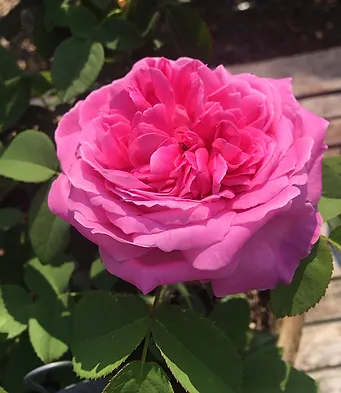
I now have seven varieties and nine plants of once bloomers: Alain Blanchard, Alchymist, Complicata, Duchesse de Montebello, La Belle Sultane, Leda and Rosa Glauca. (LEFT: ‘Yolande D’Aragon’)


Alain Blanchard, a hybrid gallica (1839) is a mauve semi double that is one of the most famous spotted roses. It is one of the most intensely spotted of all, with light crimson spots on a deep crimson-purple background. It has an ARS rating of 8.5. It is a knockout in every sense of the word. I fell in love with it from an article written by Linda and Ted Burg in the Criterion. I had to have it. I bought it bareroot in January 2001 and each year it gives me a few more blooms. It doesn’t grow very fast and its habit doesn’t lend itself to an upright…it forms a thicket of canes about 4 feet high and five feet wide. I have it against a fence and have tried to get it to grow upward and to tie it to the fence. The blooms only last about 3 days at best but oh what a sight!

Alchymist, A shrub introduced by Kordes in 1956. Although listed as a shrub, it makes a tall climber and can grow over 12 feet. The color is an apricot blend, very double and very fragrant. Parentage is ‘Golden Glow’ x Rosa elglanteria hybrid. ARS rating is 7.9.


Complicata, also a hybrid gallica with no certain date is probably the most famous of a once blooming single. ARS rating is 8.8. Nanette Londeree, in our society, has one plant that is about 12 feet wide and 8 feet tall and in bloom has literally thousands of blooms. It is a spectacular sight for about six weeks. The bloom is light pink with 5 petals and the stamens are bright yellow. I now have two plants, just having bought my second plant a few months ago. The first plant has only been in the ground for a year and a half and hopefully one of these years can match up to Nanette’s.


Duchess de Montebello, also a hybrid gallica was introduced by Laffay in 1824-25. The bloom is a double light pink with good fragrance. No ARS rating is given. I just bought this plant in 2005 at Heirloom in Oregon.


BELOW: Belle Portugaise

La Belle Sultane, also known as R.gallica violacea. It is supposed to have originated in Holland in the 1700’s or earlier. The bloom is a dark red crimson purple, almost single with 12 or so petals and bright yellow stamens. It has an ARS rating of 8.3. I planted my plant a year ago as a bare root and even though it has grown tremendously and now tops out at about 6 feet, it has not bloomed in my garden. I have high hopes for the blooms in 2006.

Addendum: In 2006, La Belle Sultane was the big winner in my garden: Not only did she put out over 150 blooms but she won Best of Show in the Marin Rose Society annual rose show. This rose is a super winner in every way. She also has NO disease in my organic garden.

Leda, damask, before 1867, is listed as a double white but it has a slight line of red crimson on the edges. Truly a unique looking rose. Its ARS rating is 8.3 but in my garden it does get some mildew. It doesn’t bother me as the mildew comes after the blooms are spent. So I just remove all of the leaves so the mildew doesn’t spread.


BELOW, LEFT ‘Souvenir de Victor Landeau’, RIGHT: ‘Souvenir du President Lincoln’

Rosa Glauca is my last and newest once bloomer rose. It is a species rose introduced about 1789 and also known as rosa rubrifolia with its foliage being the main attraction. In full sun the leaves take on a dusty mauve and in shade they turn a grayish mauve. Even the canes are a mauve color. The bloom is a single star shape and is dark pink on the outside with a whitish center. The blossoms are fragrant and followed by bright red hips that stay on the plant all winter. Very disease tolerant and the ARS rating is 8.8. This rose can grow to over 20 feet! Put it on the side of your house like I have or on a fence and combine with another climber that is a continuous bloomer to have a great look all season.


Have you noticed one of the common elements of the listed varieties? They all have ARS ratings of over 7.9! They won’t need spraying, they bloom like crazy and the bugs don’t like ‘em! I don’t know about you but in my garden this a big plus. Mix them in with your repeat bloomers and you will be as delighted as I am to have these spectacular roses in your garden and you won’t be disappointed at all that you only get blooms once a year.

Growing Roses in Pots — Winterizing Your Roses

By Jason Capote

Article from the Manhattan Rose Society Newsletter, Skyscrapers & Roses, October 2018

So now that you read about how easy and rewarding it is to grow roses in containers, I will bet that you are now all gung ho about planning out your patios, decks, driveways, balconies, and stoops with planters upon planters of roses. But most of you might be asking the obvious question, “Just how do I winterize them!” If I had to guess, some of you may have already had an unpleasant experience in the past where a rose that you just loved that was planted in a container and did not pull through the winter. Some of you may have even looked online for information on the subject matter and most likely came away empty handed. I should know, I was once in this situation myself, and until I discovered the following methods, I have lost many beautiful roses to the harshness of winter. The methods presented below are not perfect, but they tend to work in the majority of all cases provided that the instructions are followed as they are written, and as such, I would not plant a prized rose in a container because there is still a likelihood that even if the instructions are followed, a rose may still not come back after a really harsh winter. Second, the three methods presented below are provided in increasing order of difficulty.


Method 1: Planting the Pots


This first method is perhaps the simplest one. Just plant the pots in the ground. That is it. No other special instructions need to be followed. By planting the pot in the ground, you are, in effect, planting the rose in the ground, but have the added advantage of being able to dig up you rose in the Spring when weather conditions permit. This method works great for roses in small pots on patios and decks or for roses planted in hanging baskets, both of which are usually plated with Miniature and Mini-flora roses. The main problem with this method is that it is very difficult to bury, and later in the Spring, to lift out, larger roses that are planted in large containers. Also, in the case of large roses, it more or less defeats the purpose to plant the pot in the ground because if you had the space to do so, you probably would have chosen to plant your larger roses in the ground in the first place. As a result we turn to Method 2.


Method 2: Bring the Pots Indoors for the Winter


This is a more involved process then Method 1, but in some respects is easier. Simply leave your roses outdoors in their pots until they have dropped their leaves and gone dormant, which usually happens after the first real freeze. Then you remove any dead or dying leaves remaining on the bush and move them indoors to an unheated location that receives very little light. An excellent place to move these roses to are to an unheated garage or tool shed. The word here “unheated” is of critical importance. Because most garages and sheds are sheltered locations, most of the time they remain warm enough to prevent the plant from freezing. However, if the location that they are held in becomes ambiently warm, the roses may break dormancy early and start growing possibly causing them to dry from either drying out or not receiving enough light. This is to be prevented at all costs. To keep your roses from drying out, they can still dry out even if they are dormant, it is advised that you provide your large pots with a gallon of water once every two weeks. The pots do not need to be, and should also not be wet, but neither should the soil be allowed to completely dry out. In respect to this matter, use your better judgment. To help you move your roses indoors, you may want to consider placing your planters on wheeled stands to help you move them indoors. The use of a hand truck should also work, but you may risk damaging the pot. While this method is very effective, especially for protecting Hybrid Tea and Floribunda Roses as well as the more delicate Standard or “Tree” roses, it has its limitations. Some roses, such as large Shrubs and Climbers may be planted in large containers that may be too difficult to move effectively or safely for either you or the plant. Second, in the case of us urban gardeners, such as those of us that live in apartment complexes or in row style townhouses, there is simply the absence of any unheated indoor space to move any roses to for the winter. Under these conditions, we move to the most challenging and detailed method yet, Method 3.


Method 3: Overwintering Roses in Containers Outdoors


This is the trickiest method as it is the most detailed, but before I explain, let me make a few statements that add a few conditions to some of the rules normally found online about planting roses in containers.


  1. Rose selection is of the utmost importance. Since plants in pots effectively have their entirety exposed to the elements, roots and all, they tend to freeze easier then plants that are planted in the ground. As such, cold hardiness of the selected rose cultivars is key. Any rose that is planted in a container that you intend to overwinter outdoors, must be at least hardy to at least 2 zones below the zone in which you live. Since our region of the country is largely in Zone 7, that means that any rose that you expect to survive outdoors for the winter must be cold hardy to Zone 5 and below with roses that are more cold hardy being able to survive better and require less protection to survive. Roses planted to 1 zone below our zone, in our case to Zone 6 may still pull though if they are very vigorous varieties, but keep in mind that doing so is a gamble. Lastly, choose large, own root roses if possible. While budded roses should pull through the cold just fine, mature, own root roses have a better chance of surviving an unusually cold winter as they can return from their roots in the event of their canes significantly dying back. This rule applies not just to roses, but to almost every other woody ornamental plant that is to be overwintered outdoors in a container.
  2. The choice of the container is important. Roses that are to never be left outside are to never be planted in ceramic or glass pots as these can shatter in below zero conditions or be damaged in the course of moving the plants. Also, choose the largest containers possible for your roses. Not only does this allow their roots more room to grow and expand to produce better quality plants, it also serves to better insulate your plant’s roots in the event of a deep freeze. Lastly, how deep you plant your roses in these containers is of critical importance. The bud union or crown (if planting own root plants) should be planted at least 6 inches below the soil level as they would be if they were planted in cold climate regions of the world. Never fill your pots with soil to be flush to the rim! Leave an addition 6” or more of space from the soil line to the top of your pots to be filled with mulch or compost for the winter to provide greater insulation from freezing and to provide the greatest possible protection of drying out from the winter. Most containers have decorative rings or bands around the pots. Use these as your guide for where your soil level should lie.
  3. The greatest risk your rose has of dying over the winter is actually not freezing, because as you might have guessed, the ground in which your other roses are planted in also freezes. The greatest threat to your roses is them desiccating (or drying out) over the winter from a lack of water from rain or melting snow and from the cold drying winds that are naturally low in relative humidity. This is true of all woody ornamental plants that are left outdoors in containers and why many evergreens, such as dwarf pines and Rhododons do not survive the winter if they are planted in pots as these plants are not completely dormant and continue to lose water from transpiration and photosynthesis. There are many different methods for preventing desiccation of your container grown roses over the Winter, all of which will be described below.


With that being said, this is the method that I have found to work the best for successfully overwintering roses outdoors.


The first thing you want to do is to pull each container aside and force your roses into dormancy. This is achieved to pruning the canes of your Hybrid Tea, Grandiflora, and Floribunda Roses back to about 18 to 24 inches in length, and by cutting your Climbers and Large Shrubs in half. Then remove all remaining leaves and spray your roses with dormant oil. By the time you are done, all your roses should look like bare root roses that were just potted.


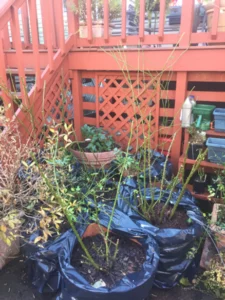
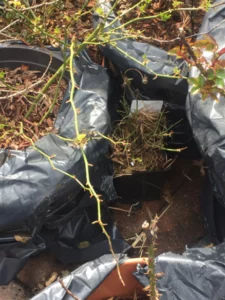
The second step is to insulate the pot. First, fill the pot to the brim with mulch or compost. Second, wrap your pots with black plastic. Why black plastic? This is because black plastic (easily obtainable by cutting apart large black contractor bags) serves a dual function. It not only insulates your pots, but it also draws in heat from the light of the sun’s rays. This helps to prevent desiccation as mentioned above, especially in the event of your roses breaking dormancy during a winter warm spell. What usually happens during a winter warm spell is that your roses are in dire need of water as they are attempting to grow, however, the soil and water in your roses’ container is still frozen preventing the rose from up taking the much needed water. By having your pots wrapped in dark colored materials (and by using dark colored pots for that matter) the pot defrosts at the same time as the plant allowing your plant to remain hydrated.


Third, once the dormant oil dries on your roses, you want to spray them with an anti-desiccant. These chemicals are made of a wax like, waterproof resin that prevents your canes from drying out and dying back from the dry winds. This resin is similar to the wax that your bare root roses are covered in when they are shipped to your home. A good product to use is Wilt Stop by Bonide. Do not worry about this wax preventing your roses from breaking dormancy in the Spring. Wilt Stop is an all-natural resin, is completely biodegradable, and is soluble in warm water. As a result, Wilt Stop and most other commercially available anti-desiccants will need to be reapplied in the winter if we experience a day of over 40 degrees with heavy rain for it to remain effective.


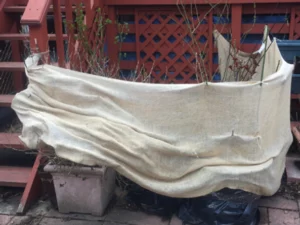
Lastly, you want to corral your pots to keep them warm and protected from the wind. Place them up against your house or a wood plank fence or brick wall if possible. If this is not possible, like would happen if a deck, porch, or chain link fence is in the way, then you must create a loose wind break. Plastic painter’s tarps tied to the lattice work of a deck, porch, or chain link fence works great for this. Huddle your pots in a circle. The largest and heaviest pots should remain on the outside, and the smallest pots should be on the inside of the circle. If you have any miniature or young rooted cuttings in small pots, these can be inserted into the gaps between where the circles of the tops of the pots touch. Don’t worry about these small roses not getting enough light. They will be just fine, they are dormant.


Lastly, wrap the canes of the outer rung of pots with burlap (why burlap, because it provides enough wind protection while letting the roses breathe preventing them from overheating and breaking dormancy in the winter). What you should now have looks like a holding pen of dormant roses. Do not move the roses from this pen until the last threat of freeze has passed! Prematurely moving roses out of this pen, even if they are breaking dormancy, can result in the death of the plants in the event of a late freeze. Also, do not forget to water your roses! The roses in pots cannot be allowed to have their roots dry out as the plant then runs the risk of death from desiccation. If the day temperatures are above freezing during the winter, and there is no snow cover on your pots, and it hasn’t rained in a week or more, crack out the garden hose and provide your plants with a through watering.


If these directions are followed to the letter, for which ever method you choose to overwinter your roses in containers, your roses should be well prepared to survive the long winter and bloom for many season ahead!

Rose Classifications

from the 2018 American Rose Society Handbook for Selecting Roses


Classification of Roses

The American Rose Society recently approved a new classification scheme that reflects both the botanical and evolutionary progress of the rose. There are three main groupings: Species (i.e. wild roses); Old Garden Roses (classes in existence before 1867); and Modern Roses (classes not in existence before 1867).

Classification Characteristics — No other flower has a wider range of size, color, shape and flower form than the rose for attractive and easy adaptation to any garden setting. Roses are among the most versatile of plants. They come in every shape, size and color imaginable with architectural dimensions, both in bloom and plant size, that make it possible to please everyone! They bloom constantly from early spring to late fall, providing a rich tapestry of color in the garden.

Starting out on the rose selection pathway, the architectural shape and dimensions are of prime importance. To navigate this panorama of size and space, the following explanations have been compiled to explain the range of classifications available.

Species Roses — Often referred to as “wild roses,” species roses are usually single-petaled (4-8 petals), once-blooming and have a bush size ranging from two2 to 20 feet. They are listed according to their Latin name, beginning with R. for Rosa and can have common synonyms. For example, R. foetida bicolor is also known as ‘Austrian Copper’.

Old Garden Roses — In 1966, the American Rose Society defined old garden roses as those types that existed prior to 1867, the year of introduction of the very first hybrid tea, ‘La France’. Within this generic definition, a number of popular subdivisions exist based on natural historical developments and characteristics. The flower form can be quartered, cupped, imbricated or expanded, reflexed, globular or compact. After an initial spring crop of blooms, some varieties may produce no more flowers the rest of year, but their hip production does add a different kind of beauty to the garden. The beauty of the old garden roses often lies in the heavy fragrance they can impart to the garden. The most popular classes are:

Alba — Known as “white roses,” these plants are upright, often climbing, have dense blue-green foliage and are disease resistant.

Ayrshire — This group of climbing, sprawling roses originated in Scotland and are once blooming.

Bourbon — Developed from the hybrid chinas, these were the first repeat-flowering roses. They derive their name from the location of the first members of the class, the Ile de Bourbon in the Indian Ocean. Plant size can range from 2 to 15 feet tall. Repeat blooming.

Boursault — This is a small group of thornless rambling-type, once-blooming roses developed by the French gardener who gave his name to the class.

Centifolia —These Dutch hybridized roses derive their class name from the fact that the flowers often contain more than 100 petals. Plants are 4 to 8 feet tall, winter hardy and are once blooming. They are also referred to as “cabbage roses” and are featured in Dutch flower paintings of the 17th century.

China — This group’s most important characteristic is its ability to repeat bloom. The plants are variable in height, with relatively few thorns. They are generally winter-tender, not surviving well below USDA zone 7. The flowers tend to be borne in small clusters. China roses originated in Southeast Asia and are one of the most important historical groups of roses.

Damask — These roses are best known for their intense heavy fragrance. Plants generally range in size from 3 to 6 feet. Some varieties are repeat blooming.

Hybrid China — These plants are generally small, ranging from 2 to 3 feet tall, and are repeat blooming. Stems are often too weak to support the clusters of blooms, which have a spicy fragrance. Plants are not hardy and require winter protection in cold climates.

Hybrid Gallica — These plants are small, 3 to 4 feet tall, and are winter hardy. Blooms are fragrant, come in brilliant colors, and are once blooming.

Hybrid Perpetual — Popular during the 19th century, these roses are characterized by their repeat bloom, plant size (about six feet tall, upright), fragrance and color range (mostly pinks and reds).

Moss — Named for the mossy thorn growth on the peduncle just below the bloom and sepals, this group releases a pine-scented oleoresin when the moss is rubbed between the fingers. Plants are generally winter hardy and 3 to 6 feet tall. Some varieties are repeat blooming.

Noisette — This classification originated in the United States by Philippe Noisette of Charleston, SC, who later introduced them in France when he moved there in 1817. Plants are large and sprawling, often reaching up to 20 feet tall. Blooms are produced in fragrant clusters.

Portland — This small group of roses was derived from crosses involving hybrid gallica, damask, centifolia and hybrid china. They are small in stature, usually 4 feet tall, repeat blooming and have very short peduncles. This class was named in honor of the Duchess of Portland.

Tea — Characterized as variable in height, with some of the best cultivars being Climbing Teas. Teas have large blooms on weak stems, resulting in drooping, or nodding, flowers. This group is one of the immediate ancestors of the modern Hybrid Tea. Tea roses are relatively winter-tender. They grow best when only lightly pruned.

Modern Roses

The era of modern roses was established in 1867 with the introduction of the first hybrid tea, ‘La France’, by the French breeder Guillot. This variety was considered unique for a number of important horticultural reasons. First, it possessed the general habit of a hybrid perpetual as well as the elegant shaped buds and free-flowering character of a tea rose. By the late 20th century, more than 10,000 hybrid teas had been bred with great success. The introduction of ‘La France’ heralded the era of modern roses. Breeders were quick to recognize that planned parenthood could evolve new flower forms, size, growth habit and colors. Therefore, the following new classifications based on growth habit evolved.

Hybrid Tea & Grandiflora — Perhaps the most popular class of modern roses is the hybrid tea, easily recognized by the large shapely blooms containing 30 to 50 petals. Flowers are borne on long stems either singly or with several sidebuds. In 1945, the ‘Peace’ rose heralded the modern era of the elegantly formed hybrid teas. So dramatic was the overwhelming public acceptance and praise accorded this variety that its place in history was instantaneous. Since 1945, many thousands of new hybrid teas have been bred and introduced.

In 1954, the introduction of a rose bred from crossing the hybrid tea ‘Charlotte Armstrong’ with the floribunda ‘Floradora’ resulted in a carmine‑rose and dawn pink variety. It displayed not only the characteristics of a hybrid tea but also the ability to bear clusters or trusses and grow to a commanding height of 6 to 8 feet or more. To accommodate this variety, the class of grandiflora was born. ‘Queen Elizabeth’ had the distinction of being the very first member of this class.

Floribunda & Polyantha — Second only to the hybrid tea and grandiflora in popularity, the floribunda is characterized by its profuse ability to bear flowers in large clusters or trusses with more than one bloom in flower at any one time. This class is unrivaled for providing massive, colorful, long-lasting garden displays. The distinct advantage of the floribunda is its ability to bloom continually whereas the hybrid tea exhibits a bloom cycle every six to seven weeks. Floribundas as a class are hardier, easier to care for and more reliable in wet weather than their hybrid tea counterparts.

Polyanthas are generally smaller but sturdy plants with large clusters of small 1-inch diameter blooms often used for massing, edging and hedges.

Miniature & Miniflora — These classes have increased in popularity due to their novelty and versatility. They can be used for edging beds, growing in containers and rockeries or even for taking indoors as temporary pot plants for decoration. The height of the average plant is about 15 to 30 inches, and flower form and foliage are indeed miniature versions of both hybrid teas and floribundas.

Miniflora roses are a new classification adopted by the ARS in 1999 to recognize another step in the evolution of the rose, intermediate bloom size and foliage falling between miniatures and floribundas.

Shrub (Classic & Modern) — Shrubs are easily characterized by their sprawling habit. There are five popular subdivisions within the class: hybrid kordesii, hybrid moyesii, hybrid musk, hybrid rugosa and shrub. They can grow from 5 to 15 feet or more in every direction given the correct climate and growing conditions. Noted for their hardiness, they are usually vigorous and produce large quantities of clusters of flowers.

The unique group of roses hybridized by David Austin (often called English Roses) belong to this class. They resemble old garden roses in shape and form but are recurrent bloomers and often have fragrance.

Large Flowered Climber, Hybrid Gigantea, Hybrid Wichurana — These varieties are dominated by their growth habit, long arching canes with the ability to climb up fences, over walls, and through trellises, arbors and pergolas if properly trained and tied. These varieties offer a wide range of flower forms, shapes and colors.

Petals, Form & Substance

One of the wonderful aspects of growing roses is the range of wide choices offered — petals, flower form and foliage. Over the last two centuries, a large selection of pleasing shapes has evolved.

For instance, roses can have a petal count stretching from the simplicity of five petals all the way to 50 petals or more. Petals even have their own architecture whether it be plain, reflexed, ruffled or frilled similar to a carnation.

Roses offer a very wide selection of flower colors — single, bi-color, multi-color, blend, striped and hand-painted. Overall shape of the blooms comes in an equally diverse selection — globular, open-cupped, quartered, flat, rosette, pompon and high centered (often called exhibition form).

Foliage surfaces can be glossy, semi-glossy or matte with a range of color from light green to dark green including even bronze-tinted. All these factors add up to a versatile flower with an appearance to please everyone.

In the late 19th century, old garden roses dominated the scene, bringing the grace and elegance of such forms as globular, quartered, flat, rosette and pompon. With the advent of hybrid teas, grandifloras, floribundas and miniature roses in the 20th century, the high-centered, symmetrical floret became a popular addition to flower form — petals arranged symmetrically in a circular outline with a high center or point to the bloom.

Another criterion for selecting roses is referred to as “substance of the petals.” This quality is extremely important in warm climates where temperatures may soar into the 90° Fahrenheit range. Essentially, substance depends on the amount of starch in the petals capable of holding moisture. The more starch, the better the variety can sustain exposure to high temperatures. Otherwise, moisture is lost, and the blooms begin to droop.

Finally, some roses that are only once blooming in the spring have the added value of putting on an autumn display of rose hips. Most shrubs and old garden roses have the edge here. They produce that extra bonus of massive clusters of rose hips of various shapes and sizes — round to elongated and prickly. For instance, ‘Dagmar Hastrup’ has one of the largest, tomato-like, red hips you can find in roses.

Winterizing Roses in the North Central District

Lois Ann Helgeson, helge006@gold.tc.umn.edu , Consulting Rosarian, Minneapolis/St. Paul, MN

The American Rose Society’s North Central District includes the states of Minnesota, Wisconsin and North and South Dakotas, situated in USDA plant hardiness zones 3, 4, and 5. Rose lovers here face a unique set of extreme conditions in which to grow their favorite flower. Temperatures in the winter can drop to -40° F and rise to over 100° F during the summer. The growing season is shorter than that of much of the rest of the country. While there are variations within the different states included in the district and even within the individual states themselves, the first Hybrid Tea roses generally can come into bloom late in May and the growing season is really considered over by the end of October.

In spite of the difficulties placed on us by Mother Nature, people in the upper Midwest successfully grow and enjoy rose varieties from the full range of the available rose classes. Growers wanting to experience the enjoyment of the most tender varieties have learned to protect them from the effects of winter extremes. Often they use a method called the Minnesota Tip which was developed specifically for zone 4.

The Minnesota Tip

It is known that the tender varieties of roses are severely or even fatally damaged at temperatures below approximately 20° F. It was considered imperative to find a method where these lower temperatures could be avoided. In addition there was concern for the late winter/early spring temperature freeze/thaw fluctuations that can also bring damage.

Midwest growers can thank Albert Nelson, an avid local gardener, for the development of the Minnesota Tip method of winter protection for tender roses. Having grown roses since the 1920′s, Nelson was determined to find a better method to winter-over tender roses than what was then being used. In the early 1950′s he heard about local raspberry growers who were tipping their plants and covering them with soil to protect them over winter. About the same time he learned about a lady in Massachusetts who was having some success protecting roses by bending, pegging and covering with evergreen boughs and soil. In 1952 Nelson first tried bending and then half covering roses with soil here in Minnesota. However, it was in 1954, when he bent the roses and totally covered them with soil, that he realized that he had found the right combination. It was to be a significant contribution toward successfully growing tender roses in cold climates.

The process was refined in the next few years to the method used today. In 1966, Jerry Olson and Carl Holst demonstrated the Minnesota Tip at the ARS convention held in Omaha, Nebraska. For that presentation, Jerry Olson and Dorothy Campbell wrote what was the first of the Minnesota Rose Society’s guide sheets on rose care. Charles Campbell named the process the Minnesota Tip.

Procedure

Roses are dormant sprayed in mid to late October at the time when you are doing general fall cleanup. It is recommended that old mulch be removed to control a prime source of disease infection for the following season.

Tie the rose canes together using a synthetic twine that will not decay over winter. This process can be described as lacing up the plant – generally starting from the bottom and working up. It is important to have an extra length of twine either left at the top of the plant or added around the mid section of the tied plant. This will be allowed to extend above the ground to help the gardener locate and lift the plant in the spring.

A trench is dug on one side of the plant and then the soil is loosened all around the plant, using a garden fork to minimize root damage.

The plant is tipped into the trench, using the garden fork, and taking advantage of the plant’s flexibility just under the graft union. With planning, the roses have been planted so that they will bend toward the side where the graft is attached, reducing the chances of breakage.

The plants are covered with the soil that was removed, being careful to leave the end of the extra length of twine exposed.

It is a good idea to water the bed well at this point to help settle the soil and to simply keep the canes and roots in good shape over the winter. Growers understand the importance of summer watering their roses and having rose beds with good drainage, however, the plants can also be stressed if they enter the cold weather season too dry.

As the temperatures drop in early November, a blanket of leaves 12″ – 18″ deep is added. Watering will help keep the leaves from blowing around. An alternative is to simply place bagged leaves on top of the bed. Containers containing rodent bait are tipped on their sides and placed in the leaves or between the bags of leaves.

Early in April the leaves are removed. By the middle of April, the rest of the process is reversed.

Containers

Container grown roses, including trees, can be successfully protected by laying them on their sides and burying them, without removing the plants from their containers. Roses may also be dug and bundled bareroot, and then the bundle buried, much as in the Minnesota Tip. Healthy roses, protected by burying over winter, generally survive with very minimal cane damage. Growers, especially those in the portion of the NCD that lies within zone 5, have found that there are other methods that provide sufficient, successful winter protection.

Zone 3 and 4 growers may not find that these methods provide an acceptable level of protection from winter dieback and damage. Some of these methods are described here.

Additional Methods of Winter Protection

Mounding

The base of tender rose bushes can mounded or hilled with 10″ to 12″ of soil. This is particularly important if the rose is grafted. The bud union is the source of all new cane growth for these plants, and if it is damaged over winter, the plant may be lost. A wire cylinder can be used to help contain the soil. Tall plants can be pruned and tied to prevent whipping in the wind. As with the Minnesota Tip, the roses should be dormant sprayed. The mounded roses are also covered with leaves and containers of rodent bait should be added.

Rose Cones

Roses may be protected using rose cones. The plants are sprayed, tied and pruned to fit inside the cone. Soil and leaves may be added to protect the graft union. If the graft union is below ground level, only leaves may be necessary. Cones with detachable tops are best as they allow the tops to be removed during warm spring days and replaced at night. If the tops are not detachable, four 1″ ventilation holes can be added on the sides near the top. The bottom of the cone should be sealed with dirt and the top weighed down with bricks.

Rose Boxes

A rose bed may be protected by constructing an oversized cold frame or rose house over it. Plants are sprayed and pruned to about 2′ or to fit the rose house. A simple wooden frame is constructed that will hold sheets of building styrofoam that make up the sides. Additional sheets of styrofoam are used as covers for these boxes. In the spring the covers can be slid open during warm days to provide ventilation and closed again at night. The box must be constructed in a manner to insure against the weight of the snow and rain as well as strong winds. In the spring these rose houses are dismantled and stored until the next fall.

Indoors

An alternative method of protecting miniatures – and other container grown roses – is available to those with either an unheated garage or room where there is a reasonable degree of control of the winter temperatures. Keep in mind that most tender roses must be maintained at temperatures above 20 degrees, preferably in the 40s during the winter months. An alternative source of heat may be necessary during extreme cold periods. The potted plants are sprayed, tied and watered. To keep roses from drying out, the pots are placed into plastic garbage bags, two to a bag with the miniatures. The tops of the bags are tied. The bags are placed on pallets or platforms to separate them a few inches from the floor. This method is used by growers in all three growing zones in the North Central District. Some report, as a negative, that plants may respond to warm spring temps and began to grow before it is warm enough to move the pots back outdoors.

Factors in Cold Hardiness

Cold hardiness has three factors – plant acclimation to cold in the fall months, actual mid-winter hardiness and de-acclimation in the spring.

Acclimation in plants takes place in response to shortening day lengths and declining temperatures. Biochemical and physiological changes gradually occur that make plants more cold tolerant. Plants, including the different classes of roses, and the varieties within each of these classes, differ in their ability to make these changes. In fact, this ability can change somewhat from year to year for any particular plant due to changes in plant health and by annual variations in temperature patterns.

Mid-winter hardiness refers to the actual lowest temps that a plant will tolerate, without damage, once it has acclimated during the fall months.

De-acclimation occurs in the late winter and early spring. This basically is a decrease in hardiness in response to warming temperatures. It is a process that is opposite to that of fall acclimation.

Good Health is Important

Plants, including roses, that acclimate too slowly, can be damaged by early cold temps. In an unusual year an early cold snap that occurs before acclimation or hardening off can injure plants that normally are considered winter hardy. A plant weakened by poor health may never reach its normal maximum mid-winter hardiness level and thus may suffer tissue damage at considerably warmer temps than expected. Additionally, plants that deacclimate too rapidly during late winter thaws may suffer damage due to late spring frosts.

To at least some extent, the rose varieties that people choose to grow and the methods that they use to protect them will be influenced by these hardiness factors. The choices will also depend upon how much dieback – and subsequent reduced bloom that follows and in some cases increased risk of plant loss – that a particular grower is willing to accept. This is weighed against the amount of additional work that they might be willing to do in the spring and fall for seasonal protection.

There has been a term coined, dieback hardy, for those roses that generally can be grown with minimal winter protection, that are likely to sustain considerable winter damage, yet are known to be able to regrow the following spring and bloom quite well by June. It should be acknowledged, however, that while this, with certain varieties, is acceptable to most growers, that these same varieties will perform substantially better in the years when there are milder winters and reduced damage. Additionally, growers must understand that healthy plants – of any class and variety – will be better able to survive winter weather using any of the available protection methods. As an example, plants, defoliated by black spot or stunted by heat and water stress, face winter with a significantly reduced chance of survival.

Location Factors

Some marginally hardy varieties can be helped by careful choice of planting location – such as the east side of buildings or in areas where snow accumulates. Some areas are subjected to drying winter winds, and if without reliable natural snow cover, this can inflict additional damage on rose canes. Protection by shrubbery or buildings may create areas where the desiccating effect of the winds is substantially reduced. In my yard, the city snowplows push snow around the fence bordering a long perennial bed near the street providing the necessary additional protection for a number of Hybrid Perpetuals. Most years these, otherwise zone 4 marginal plants, have experienced little dieback and reward me with outstanding bloom.

Watering

Hardiness can also be improved by fall watering. Additionally, stopping nitrogen fertilizers and discontinuing deadheading after August will encourage the hardening off, or maturing, of the canes. Mounding the base of the plant with extra soil and mulching in the fall can provide extra protection. If a plant is grafted, the bud union should be placed 2″ – 4″ below the soil surface when planting (not necessary when using the Minnesota Tip). This will provide additional protection for the bud union and may also result in the plant growing roots from the area above the graft – turning the plant own rooted – which is generally desirable for roses in colder climates.

Natural Hardiness

Popularity and availability of the hardier roses has grown in recent years. Successfully choosing varieties for colder climates requires some understanding of how cold hardiness relates to the various classes of roses. It is important to note that within even the most hardy classes of roses, there are some particular varieties that are more cold hardy and others that are more tender. The tenderness is often attributed to the amount of china or tea in their genetic makeup.

In the North Central District, hardy roses come from two general classes – Old Garden Roses and Shrub Roses. Generally OGR classes of Alba, Centifolia, Damask, Hybrid Perpetual (best in sheltered locations), Gallica and some of the Moss, Species and Species Hybrid roses are considered Minnesota zone 4 hardy. Most Alba and Centifolia roses are zone 3 hardy. Shrub classes of Kordesii and Hybrid Rugosa are generally zone 3 hardy. The Shrub subclass contains roses of varying degrees of hardiness. Polyanthas are often considered dieback hardy. Growers in the warmer portions of the North Central District, zone 5, find that they can grow the English roses, the Hybrid Musks, and even some of the Bourbons, with a minimum of winter protection. However, for most of the district, growing zones 3 and 4, we find that these perform better with significant winter cover – including the Minnesota Tip method.

Hardy Old Garden Roses for Our District

SPECIES AND SPECIES HYBRIDS: Species roses are those that occur naturally in the wild. Some of these spring/early summer bloomers are outstanding.

GALLICA: These roses can be traced back to the Greeks and Romans, who brought them to England and France. They are some of the oldest roses in existence. Gallicas bloom once heavily in the spring, on shorter, bushy plants, with flowers that are red, deep pink, mauve, striped or splashed with spots. The fragrance is intense and spicy.

ALBA: Albas were introduced by Roman traders before 77 A.D. These are tall, hardy, spring-blooming roses. The flowers have light, sophisticated fragrances, and are generally semi-double to double, pink or white. Foliage is grey-green, disease resistant, and shade tolerant.

DAMASK: These roses date back to biblical times, referred to by Pliny in ancient Rome and Virgil in 50 B.C. The arching canes are smaller in diameter than those on the Gallicas, but make taller plants. Flowers, often in clusters, are semi-double to double, white to deep pink, borne on short peduncles with intense, unusual fragrance. Autumn Damasks are known for repeat bloom in the fall, though it rarely occurs in the colder climates.

CENTIFOLIA: Known as cabbage or Provence roses, often depicted in old Dutch paintings, these intensely fragrant roses bloom once, generally later than other spring blooming types. They are a hardy Alba-Damask hybrid with thorny arching canes and white to deep pink flowers.

MOSS: A fragrant sport of the Centifolias, these roses have moss-like growth on the sepals which exudes a sticky substance having a balsam scent. Some will repeat bloom.

HYBRID PERPETUAL: These roses were first recognized in Queen Victoria’s time. They have good June bloom with lighter repeat bloom later. Blooms are reds, pinks, whites and mixes, and are often quite fragrant. Some winter dieback is common, mulching or careful site selection is advised for best success. Lightly prune after spring bloom to encourage later summer bloom.

Hardy Shrub Roses for Our District

RUGOSA ROSES: These are the most shade, drought and poor condition tolerant roses. They have bright green heavily textured foliage that is disease resistant and that dislikes chemical sprays. These shrubs, with repeat bloom, come in reds, mauves, pinks and white. The plants have attractive hips in the fall.

EXPLORER SERIES/OTTAWA AGRICULTURE RESEARCH STATION, CANADA: Many of these roses have Rugosa roses in their genetic development which gives them extra hardiness and additional disease resistance. Included in these roses is the first truly hardy climber, William Baffin.

PARKLAND SERIES/MORDEN RESEARCH STATION, MORDEN, MANITOBA, CANADA: These are hardy roses with exceptional summer repeat bloom, especially if given attention similar to that which we give our tender repeat bloomers. Some have flowers that are similar to those of the tender Hybrid Teas and Floribundas.

DR. GRIFFITH BUCK/IOWA STATE UNIVERSITY, AMES, IOWA: Buck roses are complex hybrids of Species roses, Shrub roses, early English roses, Hybrid Teas and Grandifloras. The hardiness varies considerably. These roses were developed to be hardy in zone 5. Many of them can be considered dieback hardy in zone 4. More of these are becoming commercially available today. Eighty-seven of the Buck varieties have been registered with the ARS as of 1997.

OTHER TYPES: There are a number of other roses that have been introduced, such as the Meidiland roses and David Austin’s English roses. Most of these will perform best with winter protection, including the Minnesota Tip, in zones 3 and 4. Growers in zone 5 will grow these and also the Hybrid Musks and some of the Bourbons with less protection. Some others, like the shrubs Nevada and Lillian Gibson, are hardy in all of the North Central District zones

Can I get you a Bourbon?


Rest assured that despite my leading title I am not trying to drive you to liquor, but rather want to interest you in a popular class of 19th century roses. Originating on the volcanic Île de Bourbon (now known as Réunion) in the Indian Ocean, these beauties started as the love children of damask and china roses planted in hedgerows in the early 1800s. Some of these hips were sent to the French royal gardener, who produced a seedling named ‘Rosier de l’Île de Bourbon’. Fragrant and blooming in flushes, a whole new class of roses was born.

Bourbons are intensely romantic and overwhelmingly fragrant. Draped over arbors or climbing up pillars, they will bring French charm to any garden and evoke a bygone era with a gentler pace of life, when there was time to smell the roses and revel in their sensual scent.


Many Bourbons can get quite large and require support such as fences or trellises. They are excellent candidates for pegging to the ground for maximum flower production. One of my absolute favorites, ‘Zéphirine Drouhin’ (pictured below) is a large, deliciously fragrant climber with the added benefit of being thornless! It is planted on the north side of my house and is almost never watered because my hosepipe doesn’t reach easily. Nonetheless, it rewards me for my horrible treatment with a spectacular display early in the season and then intermittently throughout the summer.

Many Bourbons are widely available from the usual sources and I know that they are appreciated by several CT rose society members like the Longs, who grow Mme. Isaac Pereire and Louise Odier with great success.

‘Mme. Issac Pereire’ (Above and right) ranks amongst the most fragrant roses in existence and produces very large, pinkish magenta flowers that start off cupped and reflex into quartered blooms with a button eye. Mature blossoms fade at the edges and create a two-tone effect. Bright pink ‘Louise Odier’ (See Below) can easily reach 6 or 7 feet and benefits from some support or training on an espalier against a wall. Deeply cupped and quartered blooms appear almost continuously and are rich in fragrance. ‘Mme. Ernest Calvat’ is the pale, bushier sport of ‘Mme. Isaac Pereire’. You can grow it as a pillar rose or prune it into a luxurious shrub that will produce fragrant blooms for cutting.

‘Boule de Neige’ produces clusters of blushpink buds on fairly upright canes that open to reveal creamy white blooms, with the occasional green eye in the center. If you are fond of striped roses, try growing ‘Honorine de Brabant’. This modest climber has pale pink blooms streaked with delicate shades of mauve. The silvery blush pink of ‘Souvenir de la Malmaison’ is almost unsurpassed, and blooms, produced in clusters, are sweetly scented and have a mass of quartered petals. Despite its large flowers, it is one of the smallest in this class at about 3-4 feet in height and spread, but also comes in a climbing form. Marci has told me how she still pines for her ‘Mme. Pierre Oger’ that had to be left behind when she moved to Windsor from her previous home. This sport of ‘La Reine Victoria’ has dainty blooms of shell pink that make this a delicate and refined looking shrub.


Before you rush out and buy a garden full of Bourbons, I feel that I ought to mention the small matter of disease. Of all the Bourbons I grow, ‘La Reine Victoria’ can attract a fungal spore a mile off and is the best indicator that it is time to spray! Not all Bourbons are this susceptible, but I suggest you plant them in areas with good air circulation, water and fertilize them well, and keep up a spray program.


We are not talking ‘Knock Outs’ here, but maybe not quite Hybrid Teas in terms of maintenance. I have found these roses to be quite hardy in my garden, but remember to plant them deeply and, if you live in a very cold microclimate, hill them up for the winter.

Old Garden Roses have a lot of beauty and variety to offer the modern garden. They are living history and a wonderful link to the great and ordinary folk who grew them: from Napoléon’s Joséphine at Malmaison to our great grandparents and their country gardens. I feel passionately that they should to be preserved for future generations to love and appreciate. On that note, let’s raise a glass and toast these old ladies! Long may they flourish!


Here Comes Winter

We have a tendency to baby our roses, and sometimes we forget that Mother Nature has her own processes for preparing for winter, in spite of all the preparations we may feel we have to make. The purpose of this article is not to give you pointers on what to do, but rather to give you a better picture of what your roses are already doing for you.


A Bit of Botany


First, a little botany background. During the growing season, leaves are actively converting water and carbon dioxide to carbohydrates through photosynthesis (6CO2 + 12H2O ? C6H12O6 + 6O2 + 6H2O). These carbohydrates are the building blocks for all other structures in the plant, whether they simply combine with each other to form sugars, or whether they combine with other nutrients to form hormones, cell walls, nuclei, whatever. The plant’s vascular system, a series of tube-like cells, moves the carbohydrates, diluted in water, to various parts of the plant, where they are incorporated into the processes occurring there, whether it be new growth, flowering, or root development.

Of all the different chemicals manufactured by the plant out of these carbohydrates, hormones are the ones that direct and regulate activity in the plant. These hormones include auxins, gibberellins, abscisic acid, ethylene, and cytokinins. Some of these hormones accelerate growth, some discourage it. For now, it is enough to understand that the plant manufactures different amounts of these hormones, depending on certain environmental signals, and the change in hormone balance triggers changes in plant processes.


The Effect of Fall


In the fall, a number of conditions set off changes within plants that slow growth. Decreasing temperatures and shortening day-length (or increasing night-length) are two major conditions that start these changes, although reductions in water and nitrogen will also stimulate changes. These events trigger the production of abscisic acid, which is a general growth inhibitor. Abscisic acid also affects the stomatal guard cells; an increase in production causes guard cells to collapse and close the stomata, slowing the expiration of water. Times of drought tend to stimulate production of abscisic acid, reducing expiration and increasing root development. (That’s why we recommend stopping supplementary watering in the fall; it helps trigger the production of abscisic acid. And since abscisic acid also promotes root growth, we recommend moving or planting dormant bushes in the fall.)


In roses, as in other woody, deciduous plants, the carbohydrates produced in photosynthesis are no longer needed for growth, so they begin to move from the leaves to the canes, usually in the form of sugars, leaving behind various waste products. Ethylene and abscisic acid (at least so some scientists believe) then affect a section of specialized cells at the point where the leaf attaches to the cane.

These cells are sensitive to the hormones, and as the concentration grows, the walls of the cells disintegrate, releasing the leaf, and leaving behind a protective layer on the plant where the leaf was attached. (This same process causes petal drop; if you store a rose in a refrigerator with apples, which give off ethylene, the petals will fall.)


Preparing for the Freeze


The next stage of preparation involves getting ready for freezing temperatures. If the plant did nothing, ice crystals would form within the plant cells, bursting cell walls or dehydrating plasma membranes. When spring arrives, the cell tissues would begin to rot, resulting in the brown pith we often find when we prune.

To prepare for freezing temperatures, plant cells have developed a structure that compensates. In a normal winter, the exterior of a cane would freeze first, with a thin layer of ice forming from water in the air. Then the water between cells would freeze. As more water between the cells freezes, water within the cells is drawn out through the cells’ permeable walls. But those walls allow water to pass much more easily than the sugars and other solutes, so what remains within the cells becomes much more concentrated, with a lower freezing point, and acts like antifreeze. The sugars that moved to the canes were taken up by the cells, increasing the initial solute concentration. Without the extra sugars, the freezing process would remove too much solution, resulting in cell dehydration and injury.

If the exterior of the cane should warm up, either under winter sun or during a brief warming period, the water between the cells would normally remain frozen, the concentration of the solution within the cells stay the same, and the cells would survive the temporary thaw. If the warm period lasts long enough for the water between the cells to thaw, water seeps back into the cells, diluting the solution and raising its freezing point. Then, if a sudden cold freeze hits, the diluted solution might form ice crystals, destroying the cell. So, the plant cell faces two dangers from freezing temperatures: dehydration if enough sugars are not present to retain a liquid “antifreeze”; and ice crystal damage if water dilutes the “antifreeze” enough to raise its freezing temperature.

When spring returns, the plant begins to manufacture auxins, stimulating new growth. The new growth taps the store of carbohydrates in the canes until leaves develop and the vascular system can deliver water from the roots to the leaves. If the cells have been damaged, the carbohydrates are still available in the nearby shattered cells, but with the vascular system destroyed, no water can be pulled from the roots to the new leaves to feed photosynthesis, so the new shoot withers and dies.


Winter Protection


When we look at the purpose of winter protection, it is not to keep the bush “warm,” but to moderate the rate at which the bush freezes and thaws. A winter cover that allows water to seep through and freeze causes no danger to the bush, nor does frozen soil. (Frozen soil is more a problem when ice crystals freeze out of surface soil, causing frost heaves, snapping roots; since this occurs only where there is room for the ice to expand (i.e., the surface), mulch or winter cover would move this heave zone to the surface of the mulch or mound, well out of reach of the roots.) Should the water in the winter cover freeze, it would do so slowly, and as warm temperature or sun returns, it would thaw slowly, giving the bush time to adjust.

Water in soil (and on cane surfaces) will freeze at 32 to 23ºF (depending on what is dissolved in the water). Water between the cells (called intercellular water) freezes at 23 to 14ºF. The concentrated solute within the cells freezes at -4 to -40ºF. If a plant has time to prepare, it can withstand quite cold temperatures.


Special Situations


What about roses in containers? Roots are generally not subjected to the harsh temperature changes that the above-ground bush needs to withstand. Although roots do cold harden somewhat, they do not do so as dramatically as the rest of the bush. I found no hard figures for roses, but other species of woody plants suffer root kill at temperatures as wide as 23 to -9ºF. From my own experience, I have had little loss of miniature roses in unprotected containers (one- and three-gallon pots) in a “cold house” with temperatures down to 20ºF, but more significant loss of 1-gallon plants when night temperatures dipped to 15º F for an extended period.

All this discussion about moving gracefully into winter assumes your bushes have been healthy and vigorous all summer. If your plants have been under stress – lack of water during August and September, or leaf drop from blackspot or spider mites – the plants have not been producing normal amounts of carbohydrates. As winter approaches, the bushes will not mysteriously manufacture more. The concentrations of sugars in the canes will be lower than normal, and the potential for freeze damage higher. If such is the case for your bushes, get your winter protection onto your rose beds soon after the first couple of heavy frosts…and pray.

Otherwise, take your time with winter cover. Let the bush adapt naturally. Give the bush time to give up its leaves on its own, with a little assistance only if needed. Then give your bushes the extra measure of protection, especially the crown and roots, as winter progresses and really cold weather threatens. For bushes in the ground, I generally wait until temperatures threaten to drop below 20ºF, and then protect those bushes that are exposed to winter winds, covering the crown and about 6″ of cane. Many of my bushes, especially those on their own roots, I give no extra protection at all. And they usually do a fine job of winter protection all on their own.


From Rose Petals, the website of the Seattle Rose Society. Originally published in the November 1998 newsletter.

Aren’t All Roses Shrubs?

Well, yeah. Sort of. Botanically speaking, at least. Any plant that arises from the ground without a single woody trunk separating the roots from the branches is technically a shrub rather than a tree. That makes roses—at least those growing on their own God-given roots—shrubs. (The thing in the rose catalog called a tree rose is a Frankenstein creation of grafted parts from several roses; it doesn’t exist in nature.)

So why would we refer to just some roses as shrub roses? On his website, Minnesota nurseryman Sam Kedem admits that, “The term ‘shrub rose’ is somewhat arbitrary and may lead to ambiguity.” Sam’s right, so let’s try to clear up the picture as much as we can.

When the American Rose Society talks about shrub roses, we’re talking about something quite specific. Officially, thereare two major divisions of the ARS shrub rose classification. Under classic shrubs we plahybrid rugosas, hybrid musks, Kordesii hybrids, and moyesii hybrids. Musks, rugosas, moyesiis and Kordeare splendid old rose lines that have been used to hybridize many roses, a few handsful of which are still grown.

However, it’s the other major division— modern shrubs —that have put shrub roses on gardeners’ view screens because this is where David Austin placed his wildly popular new-old-fashioned English roses. I suspect that without Austin and like-minded breeders swelling this category with innovative looks in roses that didn’t quite fit in the usual groupings, the ARS shrub category would have remained insignificant. For a good portion of the 20th century, hybrid teas held the field with growers and exhibitors, and it is Austin who gets most of the credit for giving legitimacy to roses that didn’t fit in the mainstrecategories but are marvelous in their own right. That’s benefited both exhibitors (there are exhibition trophies just for shrub roses) as well as growers looking for great garden roses.


So if you’re a rose exhibitor, you can only use the term “shrub” if the ARS classifies your rose that way. If, like me, you’re just a gardener who loves roses, you couldn’t care less what label someone put on a rose: if it’s pretty, healthy, productive, and easy to grow, I want to make its acquaintance. Informally, rose growers often refer to roses like that as shrub roses. Many nurseries, too, use the term to refer to a broader selection of roses than is included in the ARS classification. Sam Kedem (who’s done much to promote tough shrubs for his weather-challenged Minnesota customers) explains his shrub rose list this way: “There is an inherent difficulty in separating modern from antique, ground covers from bushes, floribunda from shrub, landscape from garden roses and so on. This category comprises delegates from many types of roses, past and present, with a single common denominator: garden beautiful.”

So when nurserymen and gardeners talk about shrub roses, they’re usually not confining themselves to musks, Kordesiis, rugosas and Austins; they’ll include any rose that has superb garden qualities like these:

  • Unfussy growers. A good shrub rose should be one that an amateur can grow.

  • Roses that look good in the yard. I love hybrid teas, but I think you’d have a hard time making the case that most hybrid tea bushes look as nice in a landscape as their blossoms do in a vase. While shrubs may have bouquet-quality flowers, They’ll also do good service in the landscape.

  • Disease resistance. Disease resistance is currently the holy grail of rose breeding. While resistance is improving in all rose categories, you’ll have the best chance of finding it among the shrubs.

  • Cold hardiness. Several hybridizers (the late Dr. Griffith Buck, and the Morden Research Station in Manitoba, among others) have worked to develop handsome shrub roses that will stand up to bitterly cold northern winters—and they’ve succeeded.

  • Unconventional blossoms. Thanks to florists and illustrators, a lot of folks for a long time supposed that a real rose always had to look like a hybrid tea. As a consequence, lots of gorgeous roses were ignored because they didn’t match that ideal. If you, like me, love old-fashioned looking roses and single roses, you’ll be happy for the new interest in shrub roses, because that’s where a lot of lovely but unconventional blooms found their raison d’être.

  • Showy displays. Though the size of the blossoms on shrub roses varies, you’ll soon see that some make their biggest contribution in abundant displays of blossoms that individually may not be remarkable.

  • Perfume. What’s the first thing every person—adult or child—does when confronted with a rose? Stick their nose into it! A justifiable grievance about modern hybrid teas is that they haven’t enough fragrance— often none at all. Look among the shrubs for roses with good perfume.

Here are a few places where you might look for roses with these qualities.

David Austin Roses. Some of the Austins have the qualities we want in a good garden shrub — though to be perfectly frank, some don’t. Perhaps because they’re developed for England’s climate, perhaps because marketing and reputation sometimes race ahead of experience in consumers’ gardens, some of the Austins simply aren’t as hardy or nicely-formed in American gardens as we might like. This does not take away a whit from the undeniable face that Divid Austin’s creative genius is responsible for making the world love old-fashioned roses again.

Griffith Buck roses. A mixed bag of pretty good roses, whose claim to fame is winter survivability in northern climes. Some also have decent disease resistance. Check them out in person at Ames, Iowa’s Reiman Gardens.

Rugosa roses and hybrids. Rugosas blood is found in some great shrub roses, because of the rugosa’s blackspot resistance, fragrance, and cold survivability. Gardeners in the northernmost areas will want to check out Canadian creations like the Parklands roses. A warning: not all rugosa hybrids have al the rugosa’s great qualities in full measure.

Old Garden roses. Technically, these are varieties from many genetic liens that were named before 1867. But who cares their age? Among them you’ll find some durable, good-looking roses.

Kordes roses. A cross between a rugosa and a wichurana gave Kordes an unexpected fertile offspring—and a breeding stock that is still hard to beat. Dortmund is the highest rated shrub rose in ARS trials, not to mention one of the highest rated roses ever—and it deserves it.

Hybrid teas and floribundas. Yes, some of these supposedly finicky roses function as great shrubs. Silver Jubilee is a hybrid tea, but it is nonetheless a tough bush with healthy foliage and gorgeous flowers. Some floribundas make nice additions to a landscape, too.

Romanticas. Unlike Austin, who used the modern shrub designation for his masterpieces, Meilland placed most of their Romantica series in the hybrid tea category. Don’t let that discourage you from trying these dazzling, strong, traditional-looking roses.

Polyanthas. Anyone who’s seen The Fairy or its relatives in glorious bloom can confirm the usefulness of this group.

Harkness roses. Harkness is a United Kingdom breeder, some of whose creations deserve as much attention in American gardens as the Austins have received.

There are many roses that will serve as great garden shrubs. The best advice is to trust the lists of shrub roses put together by nurserymen, who tend to group these roses not according to the official categories, but rather by how they see them best used by gardeners.

Finally, don’t suppose that because you’re planting shrub roses rather than more exacting varieties, you’re sacrificing beauty. Many of the fussier roses are overrated, while their tougher cousins, the shrubs, are undervalued. To the assumption that shrub roses are “hardy and low maintenance, yet of lesser enhancement than the popular hybrid teas,” Sam Kedem responds, “Nothing is further from reality.” Browse a garden of shrub roses, and you’ll agree.

Death of a Victorian Queen

Gone are the heavy Victorian furniture, beaded curtains and Tiffany lamps of the 18th Century. Along with them, the rose rage of the season, the hybrid perpetual, slipped almost unnoticed into obscurity and near extinction. Out of the nearly 3,000 varieties hybridized during this golden age, we have only about 100 left, and only about 50 varieties are commercially available today.

While they were in vogue, they were very popular as people rushed to include the newest variety in their garden. But by the beginning of the 1900′s, interest had already begun to wane.

Introduced in France in 1837, as ‘hybrid remontant’, they were later referred to as hybrid perpetuals. Perpetual was a real misnomer since their recurrent bloom was still only twice seasonally – still more flowers than produced by their illustrious genetic ancestors, the damasks, hybrid chinas and bourbons. Their most important contribution to the rose world was their winter hardiness, a great improvement over their winter tender parents, and a hardiness that still exceeds the modern hybrid tea roses that usurped their place in rose gardens.

The bushes are vigorous growers, having tall canes with an upright growth habit. Some varieties have extra long canes, and the overall appearance is improved by ‘pegging down’. The foliage for the most part is dull, wrinkled, although some varieties have blue-green leaves while others have shiny smooth leaves, and some are nearly thornless.

The many-petaled flowers are usually very fragrant and run the gamut of color from purest white, to pink, red and deepest maroon. Some varieties are edged or splashed with white or deep maroon. Interestingly enough, with the wide range of color shades, there were no yellows.

In 1867, the first hybrid tea, ‘La France‘, was introduced, and it signaled a definite death knell for these Victorian beauties. The hybrid tea supplied the abundant, recurrent bloom that had been awaited for so many years. But along the way we sacrificed the lovely, many-petaled form and unmatchable fragrance. The second part of the search for a more improved rose was fulfilled in that the blooms of the hybrid tea also supplied a broader color range.

Many of our modern roses trace their color and/or form to their illustrious hybrid perpetual ancestors. To its other many virtues, ‘General Jacqueminot’, was to add what to the rose breeder is the cardinal virtue – the ability to transmit its good characteristics both as a prolific pollinator and seed parent. So successful was it in this role that there were probably 520 recorded roses directly descended from it, and there are, in addition, hundreds of other unrecorded crosses. For nearly 60 years this rose was the standard of comparison among red roses.

‘Paul Neyron‘, with pink blooms upwards to seven inches, is the perfect embodiment of a cabbage rose–big, full of petals, rather flat (saucer-shaped) when open. ‘Prince Camille de Rohan‘ was another masterpiece with its bloom of over 100 velvety, dark red petals.

For many years the rage of the florist trade was ‘Mme Ferdinand Jamin‘ introduced in 1886 under the name ‘American Beauty‘. And finally, the superb, pure white ‘Frau Karl Druschki‘, although introduced in 1901, can still thrill gardeners with her flawless flowers perfectly showcased against blue-green foliage. On a historical note, ‘Frau Karl Druschki‘ is also known by the name of ‘Reine des Neiges‘, ‘Snow Queen‘ and ‘White American Beauty‘ – any one of which names would be regarded by most as more descriptively suitable than that of the wife of the then president of the German Rose Society. However, by quite undeservedly failing to win in 1900 a competition for the best unnamed seedling of German origin, this chaste white beauty escaped the compulsory condition of being named ‘Otto von Bismark‘.

While many of the varieties are rather tall plants, most varieties are in the three to five foot range and adapt well to modern gardens and landscapes. By placing them in the back, their height and coloration adds an interesting foil for the shorter plants, and their absence of continual bloom is not a glaring fault.

Limited space does not allow us to delve any more deeply into this fascinating area, but I would like to include a few names and descriptions of some noteworthy hybrid perpetuals that are still available.